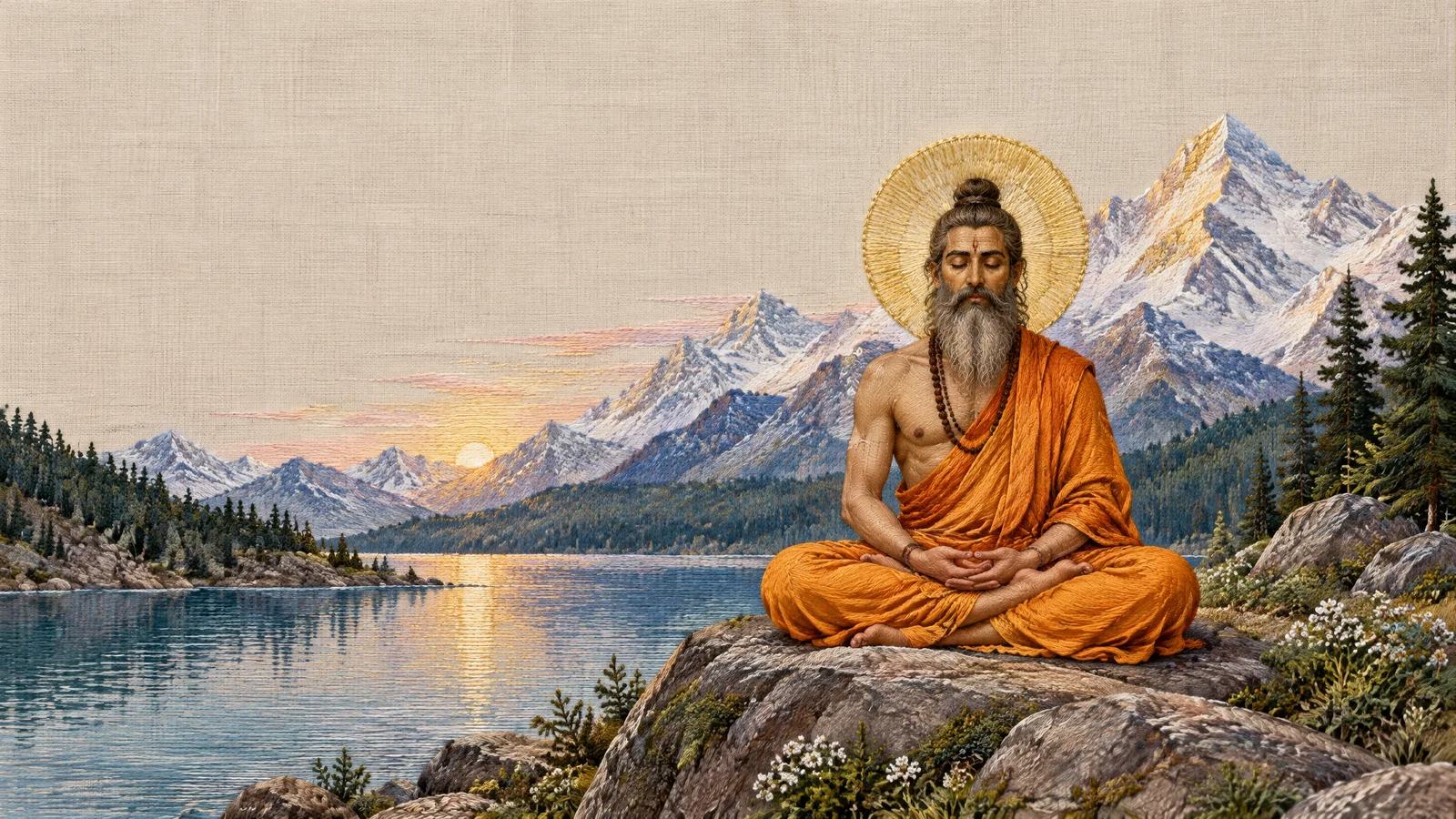
Gaumukh and Tapovan
Glacial Source of the Bhagirathi Ganga
Gaumukh, the glacier snout where the Bhagirathi Ganga emerges, and Tapovan meadow below Mount Shivling, a Himalayan pilgrimage of tapasya.
Quick Devotional Guide (At a Glance)
- •WHAT IT IS: The Himalayan source of the Bhagirathi, the headstream of the holy Ganga. Gaumukh, at about 4,000 metres, is the snout of the Gangotri Glacier, which is roughly 30 km long. Its ice cave was said to resemble a cow's mouth. Tapovan is a high meadow above Gaumukh, lying beneath Mount Shivling, which rises to 6,543 metres. Sadhus have long come to Tapovan for tapasya, or austerity.
- •WHY VISIT: Devotees hold that a respectful touch or sip of the cold Bhagirathi water at Gaumukh cleanses the accumulated karmic impressions of many lifetimes. In Tapovan, the vast silence below Mount Shivling is felt to calm the restless mind and to support meditation.
- •WHEN TO VISIT: The region is open from Akshaya Tritiya in April or May until Diwali. The best months are May and June, and September to mid-October. Heavy snow closes the route in winter.
- •WHERE: Gangotri National Park, Uttarkashi District, Uttarakhand. The trek starts at Gangotri. It runs about 18 km to Gaumukh, passing through Bhojwasa, which is about 14 km from Gangotri. Tapovan lies a further climb across the glacier moraine.
- •HOW (VIDHI AND RULES):
- •Permits and ecology: Entry beyond Gangotri needs a permit from the Forest Department at Uttarkashi. The area is plastic-free and eco-sensitive, so carry out all waste.
- •Snana and Achamana: Take achamana, the sacred sipping of water, and wash gently at safe places on the bank. Never step onto unstable ice near the snout.
- •Conduct: Keep a simple sattvic, or pure vegetarian, diet, chant the Ganga Stotram or the Maha Mrityunjaya Mantra, and maintain mauna, quiet silence, near meditating sadhus.
Sacred Origin and Scriptural Lineage
The descent of Ganga is told in the Bala Kanda of the Valmiki Ramayana and in the ninth canto of the Bhagavata Purana. It is a story of faith held steady through hardship.
The sixty thousand sons of King Sagara of the Ikshvaku line were reduced to ashes near the hermitage of Sage Kapila. Their descendant Bhagiratha wished to free their souls. He performed severe austerities to bring Ganga down from heaven.
Pleased with his devotion, Ganga agreed to descend. She warned that the force of her fall would break the earth. Bhagiratha then prayed to Lord Shiva, who alone could bear her weight. Shiva received Ganga in his matted locks and gentled her flow. He then released her as a gentle stream for the good of all beings.
Pilgrims revere Gaumukh as the place where this stream first emerges from the glacier into the world. The Ramayana tells that Shiva released the river in seven streams, and the river, Bhagirathi, takes her name from the king Bhagiratha and follows his chariot.
Mount Shivling rises just beyond. Its pointed form reminds devotees of a Shivalinga crowned with snow. At its foot spreads Tapovan, which sadhus have long used as a place for meditation.
The Sacred Shrines and Sites
Saints and Pilgrims
The Gaumukh and Tapovan region has drawn ascetics for generations.
Swami Tapovan Maharaj (1889 to 1957) was a Vedanta teacher from Kerala. He spent long periods in the Himalayas and wrote of his travels in Himagiri Viharam, known in English as Wanderings in the Himalayas. Swami Chinmayananda was among his students.
Swami Sundaranand (1926 to 2020) was a disciple of Swami Tapovan Maharaj. He came to Gangotri in 1948 and lived there for most of his life. He is remembered as the sadhu who photographed the glacier and its changes across many decades.
Even today, solitary ascetics keep seasonal retreats in the high valleys. Pilgrims honour them by keeping silence and respecting their privacy.
Sacred Hymn and Contemplation
Seekers sitting beside the waters of Gaumukh often chant the Ganga Stotram, traditionally attributed to Adi Shankaracharya.
देवी सुरेश्वरि भगवति गङ्गे त्रिभुवनतारिणि तरलतरङ्गे।
शङ्करमौलिविहारिणि विमले मम मतिरास्तां तव पदकमले ॥
Devī Sureśvari Bhagavati Gaṅge Tribhuvana-tāriṇi Tarala-taraṅge।
Śaṅkara-mauli-vihāriṇi Vimale Mama Matir-āstāṁ Tava Pada-kamale॥
Meaning: "O Goddess, queen of the gods, O Bhagavati Ganga, you carry the three worlds across, moving in rippling waves. O stainless mother who plays upon Shiva's head, may my mind always rest at your lotus feet."
Did You Know?
The Gangotri Glacier is about 30 km long, and Gaumukh, the Bhagirathi source at its snout, has been retreating. Between 1936 and 1996 it retreated about 1,147 metres, and more recently at over 30 metres a year.
The name Gaumukh means cow's mouth. It comes from the shape of the ice cave from which the Bhagirathi once emerged.
Mount Shivling rises to 6,543 metres. Early European visitors called it the Matterhorn peak. Its first ascent was made in 1974 by an Indo-Tibetan Border Police team.
Swami Tapovan Maharaj, the teacher of Swami Chinmayananda, wrote of his Himalayan journeys in Himagiri Viharam, translated as Wanderings in the Himalayas.
Swami Sundaranand, known as the Sadhu Who Clicks, made over 100,000 photographs of the Gangotri region, recording the retreat of the glacier.
Shiva
More from Yoga
Connected Teachings
The same teaching, echoed across traditions