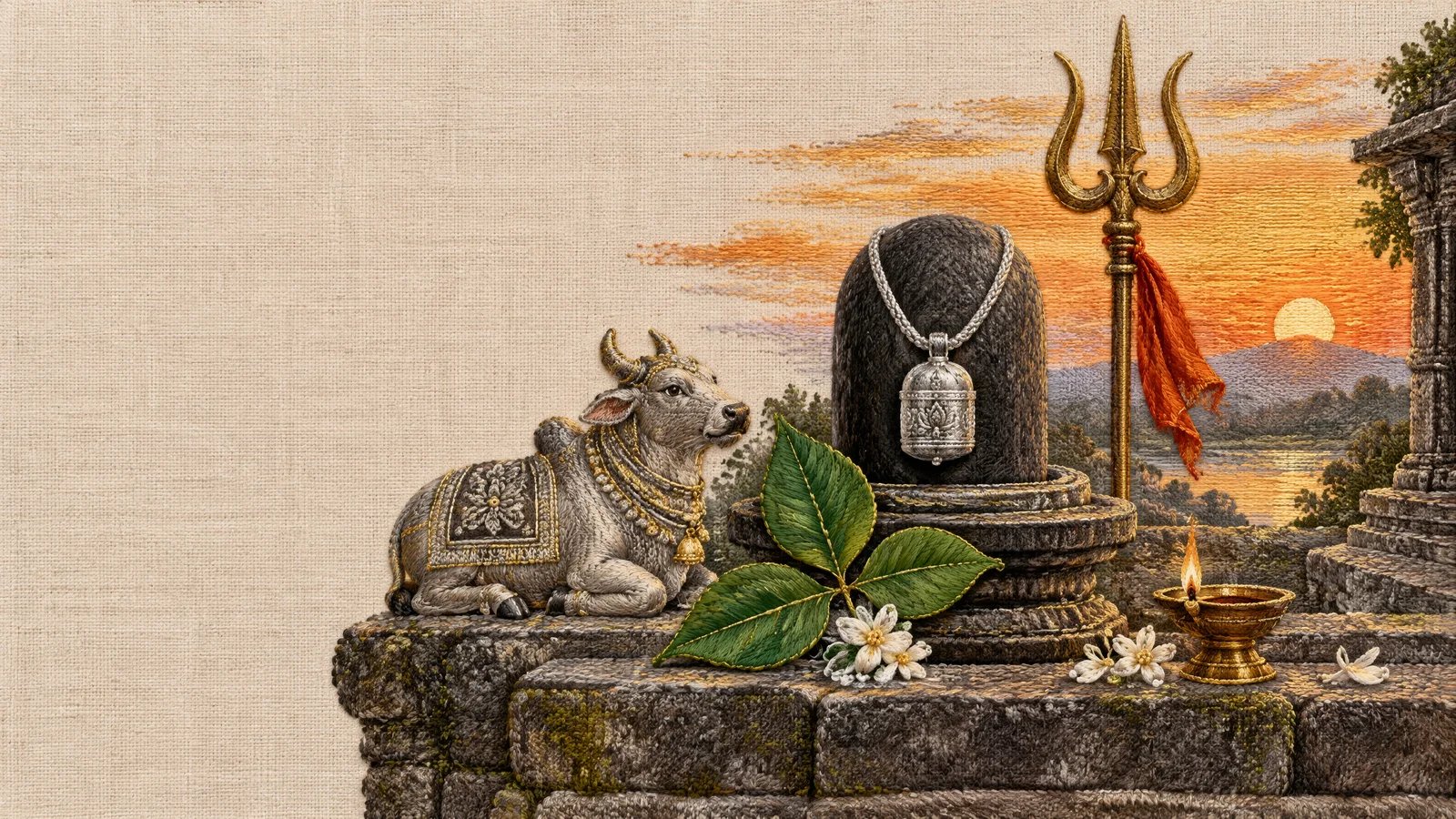
Shatsthala
The Six Stages of the Soul
Shatsthala maps the Lingayat soul's path from first devotion to final union with the divine, systematized in Channabasavanna's Vachanas and his Karana Hasuge.
Shatsthala, from Shat, six, and Sthala, state or stage, names the sequence through which a Lingayat soul is understood to advance toward union with the divine. Channabasavanna, Basavanna's nephew and one of the foremost Sharanas of the Anubhava Mantapa (Vachana #1), systematized the doctrine most fully. He did so across his own body of roughly 1,200 Vachanas, devotional verses in the Sharanas' own form, and in the Karana Hasuge, one of the most sacred texts in the Lingayat tradition. Where Basavanna himself had described the six stages as a sequence generally attained one after another, Channabasavanna redefined the teaching, holding that a soul could reach liberation from any of the six stages rather than only after completing every prior one in strict order.
Bhakta Sthala: The Stage of Devotion
In the first stage, the seeker recognizes the divine and receives Deeksha, formal initiation, along with the Ishtalinga, the personal symbol of God every Lingayat then wears on the body. From this point forward, the devotee commits to an ethical, disciplined life built around this new relationship, the beginning of a path that will unfold across every stage still to come.
Mahesha Sthala: The Stage of Unwavering Resolve
In the second stage, the devotee practices firm discipline, observing the Vratas, ethical vows, strictly, cultivating non-attachment to worldly distraction, and holding to steadfast faith without wavering. Where Bhakta Sthala marks the soul's first recognition of the divine, Mahesha Sthala hardens that recognition into disciplined, tested commitment.
Prasadi Sthala: The Stage of Divine Grace
In the third stage, everything the devotee experiences through the five senses is offered to the Linga and received back as Prasada, sanctified grace. Egoistic ownership over one's own perceptions and experiences begins to dissolve here, since nothing the devotee senses is any longer treated as belonging to the self alone.
Pranalingi Sthala: The Stage of Inner Connection
In the fourth stage, worship moves from the physical Ishtalinga worn in the palm into Prana, the inner vital breath itself. The heart comes to realize God not as an external object of devotion but as the very breath animating consciousness, closing the distance between the worshipper and what is worshipped.
Sharana Sthala: The Stage of Total Surrender
In the fifth stage, the soul lives in a relationship of ecstatic intimacy with the divine, expressed in Lingayat Vachana literature through Sati-Pati Bhava, the soul figured as a loving bride and the Lord as the Beloved. Selfishness, by this stage, has all but disappeared, leaving only the relationship itself.
Aikya Sthala: The Stage of Union
In the sixth and final stage, the soul reaches complete, indivisible oneness with Parabrahma, the supreme reality. Anga, the individual soul, merges into Linga, the divine, in what Lingayat teaching describes as eternal, luminous bliss. Kudalasangama, the site where Basavanna himself is remembered as having reached this final stage, remains the living site most closely associated with Aikya to this day.
Sequence or Any Stage at All
The most significant interpretive question Shatsthala raises is whether these six stages must be traversed strictly in order or whether liberation can be reached from any one of them directly. Channabasavanna's own refinement of the doctrine argued for the latter: a soul firmly established in any Sthala, not only the sixth, could in principle attain Aikya, since the stages describe qualities of relationship with the divine rather than a fixed ladder every soul must climb rung by rung. This distinction matters practically as much as doctrinally, since it means Shatsthala was never meant to measure a devotee's worth by how far along the sequence they had progressed, but to describe the shape devotion itself takes at whatever depth a soul has actually reached.
A Ladder Read as a Mirror
Later Lingayat teachers have often described Shatsthala less as a ladder to be climbed once, rung by rung, toward a single final departure, and more as a mirror a devotee returns to at every stage of an ordinary life, checking where their own practice of devotion, discipline, grace, inwardness, surrender, and union currently stands. A soul might recognize itself mostly in Bhakta Sthala on one day and glimpse something closer to Sharana Sthala on another, without this movement contradicting the doctrine's own logic. What Shatsthala offers, in this reading, is not a scoreboard ranking devotees against each other but a vocabulary precise enough to describe the actual texture of a soul's relationship with the divine at any given moment, whatever stage that turns out to be.
Did You Know?
Scriptural Source
Shatsthala is systematized most fully across Channabasavanna's own Vachanas and in the Karana Hasuge, one of the most sacred texts in the Lingayat tradition.
A Nephew's Redefinition
Where Basavanna described the six stages as generally attained in sequence, his nephew Channabasavanna redefined the doctrine to hold that liberation could be reached from any stage, not only the final one.
A Marriage Metaphor
Sharana Sthala, the fifth stage, is expressed in Vachana literature through Sati-Pati Bhava, imagining the soul as a loving bride and the divine as the Beloved she is wholly given over to.
Worship Moves Inward
Across the six stages, devotion shifts from the physical Ishtalinga worn on the body (Bhakta Sthala) to the inner breath itself (Pranalingi Sthala) — the same divine symbol, held ever closer to the source of life.
Kudalasangama and Aikya
The sixth stage, Aikya, complete union with the divine, is inseparably linked to Kudalasangama, the river confluence where Basavanna himself is remembered as having reached it.
About this Text
Source: en.wikipedia.org
Basavanna
More from Lingayatism
Connected Teachings
The same teaching, echoed across traditions