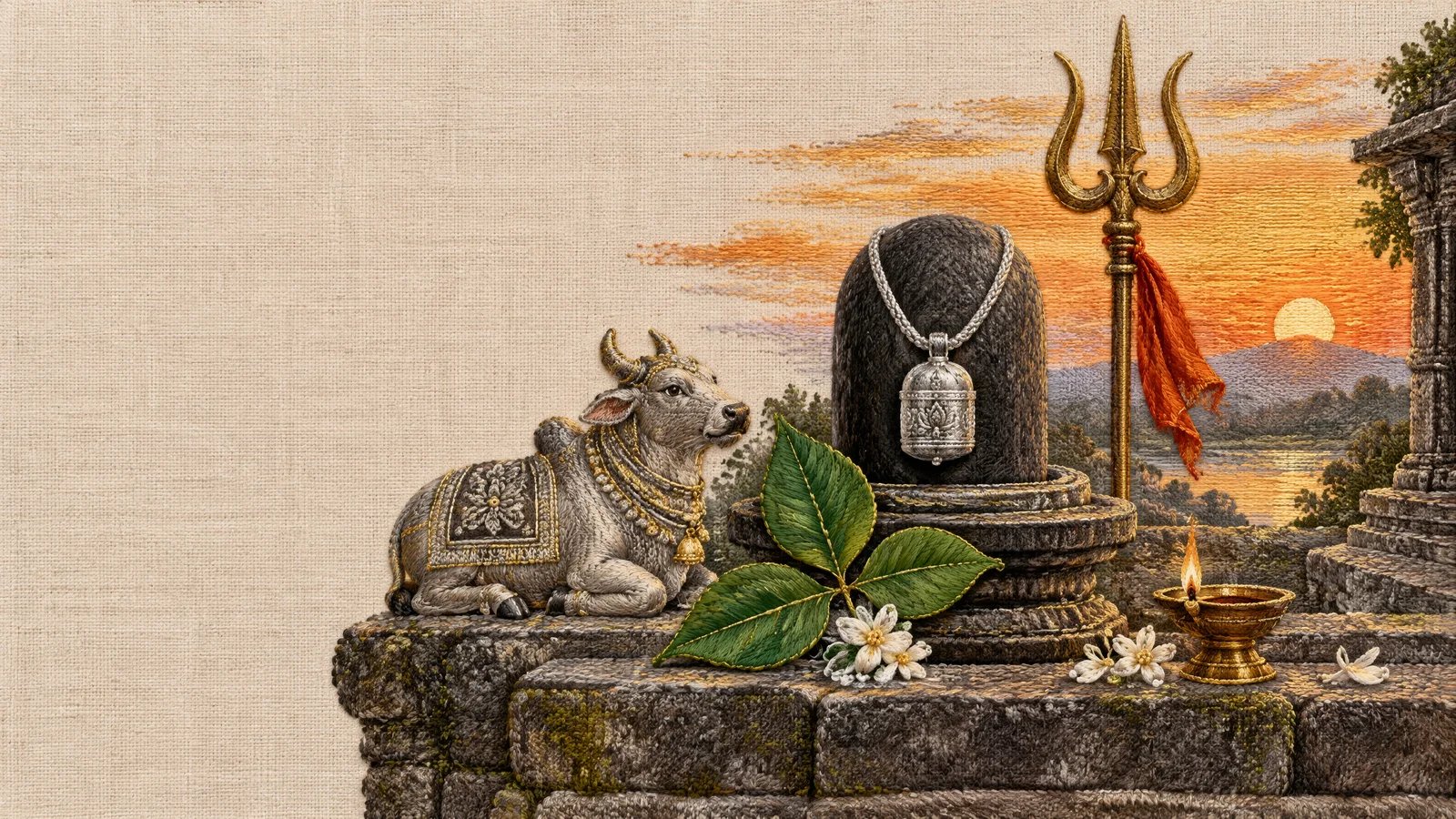
He Is Ours
In this vachana Basavanna asks to be counted among Lord Kudalasangamadeva's own household, in humility rather than as a stranger.
Verses
Do not let me be called 'Who is this? Whose man is this? Who can this be?', O Lord.
Verse 1
Let me be called 'He is ours, he is ours, he is one of ours', O Lord.
Verse 2
O Kudalasangamadeva, let me be called the son of your own house.
Verse 3
Worship Guidelines & Chanting Benefits (Phalashruti)
Daily or auspicious lunar days (Ekadashi, Purnima, Pradosham)
Brahma Muhurta (4:00 AM – 6:00 AM) or Evening Dusk (Sandhya)
Ghee lamp (Deepa), Incense (Dhoopa), Fresh flowers & Water offering
- Peace of mind, spiritual upliftment, and harmonious energy in the home
Background
This is a Vachana, a form of devotional verse composed in Kannada during the 12th-century Bhakti movement in Karnataka, South India. Vachanas were written in simple, everyday language so that anyone could sing them. This one is ascribed to Basavanna, whose signature name (ankita) Kudalasangamadeva refers to Shiva as the Lord of the sacred river confluence at Kudalasangama, a major pilgrimage site of the Veerashaiva tradition. In the Vachana Sanchaya collection it appears under Basavanna in Samagra Vachana Samputa 1 as vachana no. 62. A. K. Ramanujan's Speaking of Siva (1973) is the best-known English anthology of Vachanas.
About this Text
Composed by: Basavanna · Medieval Lingayat Philosopher-Saint · 12th century, Karnataka
A 12th-century Kannada philosopher, poet, and social reformer who founded the Lingayat (Veerashaiva) movement, rejecting caste hierarchy and ritualism in favor of Ishtalinga devotion and dignified labor as worship (Kayakave Kailasa). He also established the Anubhava Mantapa, an early public forum for spiritual and social debate.
Did You Know?
Tradition
This is a Vachana, a short free-verse devotional poem composed in simple Kannada by the 12th-century Lingayat saints. Vachanas reject empty ritual and emphasize direct, personal experience of the divine.
The Plea
The first two lines are mirror images. The speaker asks not to be called 'ivanārava', a stranger whose people no one knows, but 'iva nammava', 'one of ours'. The closing line names the wish plainly, to be known as the son of the Lord's own house.
Sacred Place
Kudalasangama is the confluence of the Krishna and Malaprabha rivers in Karnataka, a major pilgrimage site closely associated with Basavanna, the 12th-century founder of the Lingayat movement, who is said to have merged with the deity there.
Where It Is Found
The Vachana Sanchaya collection lists this vachana under Basavanna in Samagra Vachana Samputa 1, vachana no. 62. The Kannada lines on this page follow that text.
A Humble Longing
Nothing in the vachana asks for wealth or powers. Its only request is belonging, which echoes the Lingayat ideal of welcoming every devotee as one of the household.
Basavanna
More from Lingayatism
Connected Teachings
The same teaching, echoed across traditions