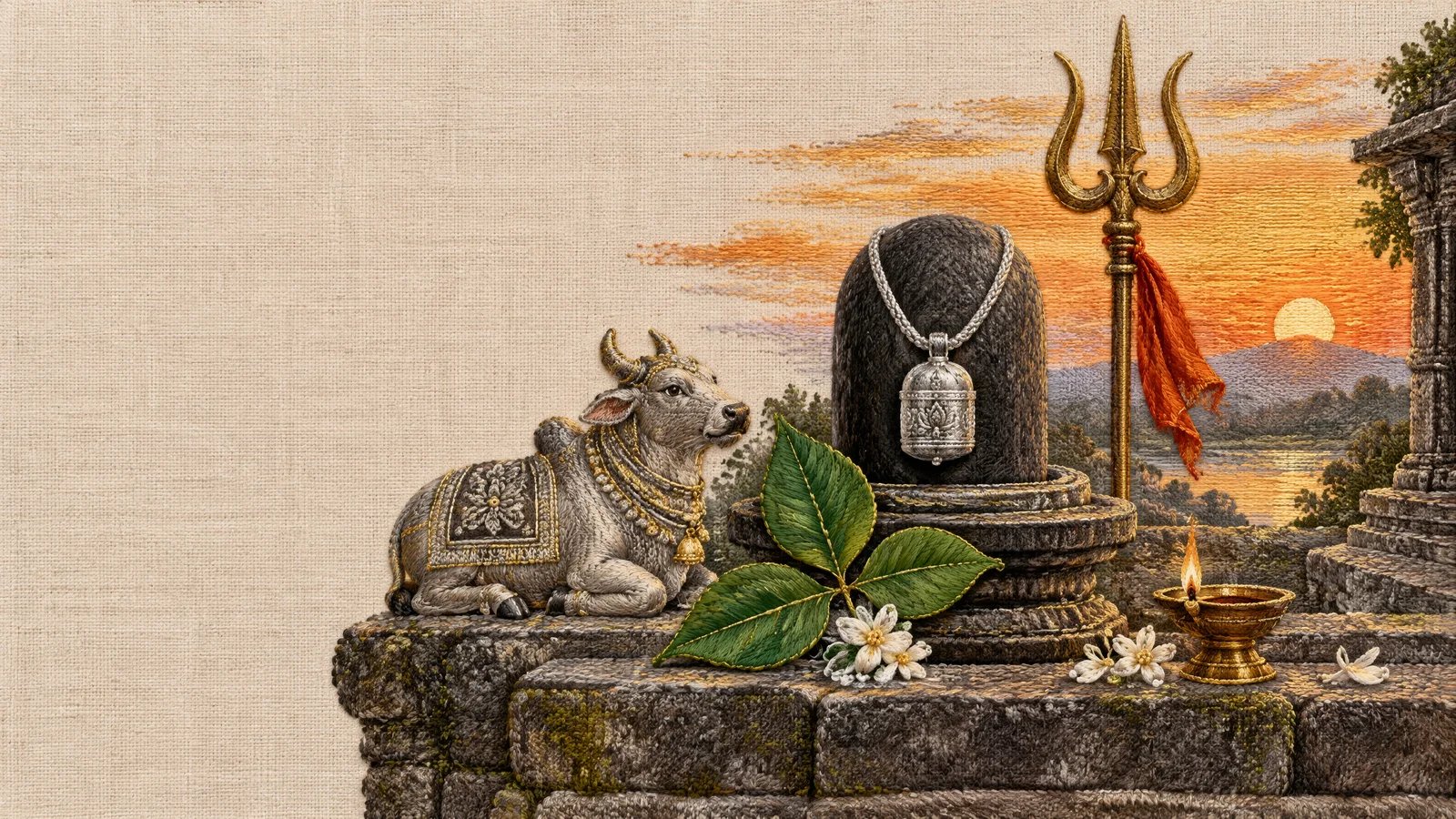
The Body of All Scriptures
A Basavanna vachana: the devotee's body and speech become living scripture, yet even that is less than the dust from the feet of fellow devotees (sharanas).
Verses
Your sacred form and divine visage embody the sacred Vedas, the profound scriptures, the paths of logic, the holy Agamas, and the ancient Puranas; to worship that very embodiment of all sacred knowledge is true worship indeed.
O Lord Kudalasangama, I have come solely to seek the dust of Your holy feet as my ultimate refuge.
Worship Guidelines & Chanting Benefits (Phalashruti)
Monday (Somwar) & Pradosham
Early Morning (Brahma Muhurta) or Evening Twilight (Sandhya)
Bilva leaves, Ganga water, Bhasma (sacred ash), Dhatura & White flowers
- Inner stillness, destruction of negative karma, and freedom from fear of death (Mrityunjaya)
Background
This piece is a vachana, a short devotional poem from the 12th-century Lingayat (Virashaiva) tradition of Karnataka, India. Vachanas were composed in simple Kannada by saints known as Sharanas, who rejected caste and ritual in favor of direct, personal devotion to Shiva. This particular vachana is traditionally attributed to Basavanna, one of the foremost figures of the movement, who revived and energised it in the 12th century, and is addressed to the deity as Kudalasangamadeva (literally “Lord of the Meeting River,” a form of Shiva associated with the town of Kudalasangama). It is often recited in personal worship or during community gatherings as an expression of the devotee’s humility and recognition of the divine as the essence of all sacred knowledge.
About this Text
Composed by: Basavanna · Medieval Lingayat Philosopher-Saint · 12th century, Karnataka
A 12th-century Kannada philosopher, poet, and social reformer who founded the Lingayat (Veerashaiva) movement, rejecting caste hierarchy and ritualism in favor of Ishtalinga devotion and dignified labor as worship (Kayakave Kailasa). He also established the Anubhava Mantapa, an early public forum for spiritual and social debate.
Did You Know?
Author and Tradition
This verse is a vachana (a concise, poetic devotional saying) by Basavanna, the 12th-century saint and social reformer (1131–1196) who revived and energised the Lingayat tradition in Karnataka. The closing signature “Kudala Sangama Deva” is his pen name, referring to the sacred confluence of the Krishna and Malaprabha rivers where he is said to have attained union with Shiva.
Meaning of the Opening Lines
The first five lines declare that the devotee’s body and speech (tanu-vadana) are completely made of the Vedas, Shastras, logic (Tarka), Agamas, and Puranas. This is not a literal claim but a radical statement that true devotion internalizes scripture—the devotee’s very being becomes living scripture, surpassing external study or ritual.
The Core Teaching
The phrase “etan-mayi tanu-vadana naradhana naradhane” means “this body-speech, made of all these, is worship, is worship.” It emphasizes that the highest form of worship is not an external act but the complete transformation of one’s self into a vessel of divine knowledge and devotion.
The Final Line’s Significance
The closing line, “tava sharanara pada-dhuliya nantagane nanyya,” translates to “the dust of the feet of your devotees cannot be obtained by any other means.” This reflects the Lingayat emphasis on the guru and the community of devotees (sharanas) as the sole path to liberation—humility before them is more valuable than any ritual or scripture.
Historical Context
Basavanna’s vachanas were composed in simple Kannada (with Sanskrit loanwords) to reach common people, rejecting the caste hierarchy and priestly authority of his time. This verse, like many others, subverts the idea that only Brahmins can embody scripture—any devotee can become “Veda-mayi” through sincere surrender.
Shiva
More from Lingayatism
Connected Teachings
The same teaching, echoed across traditions