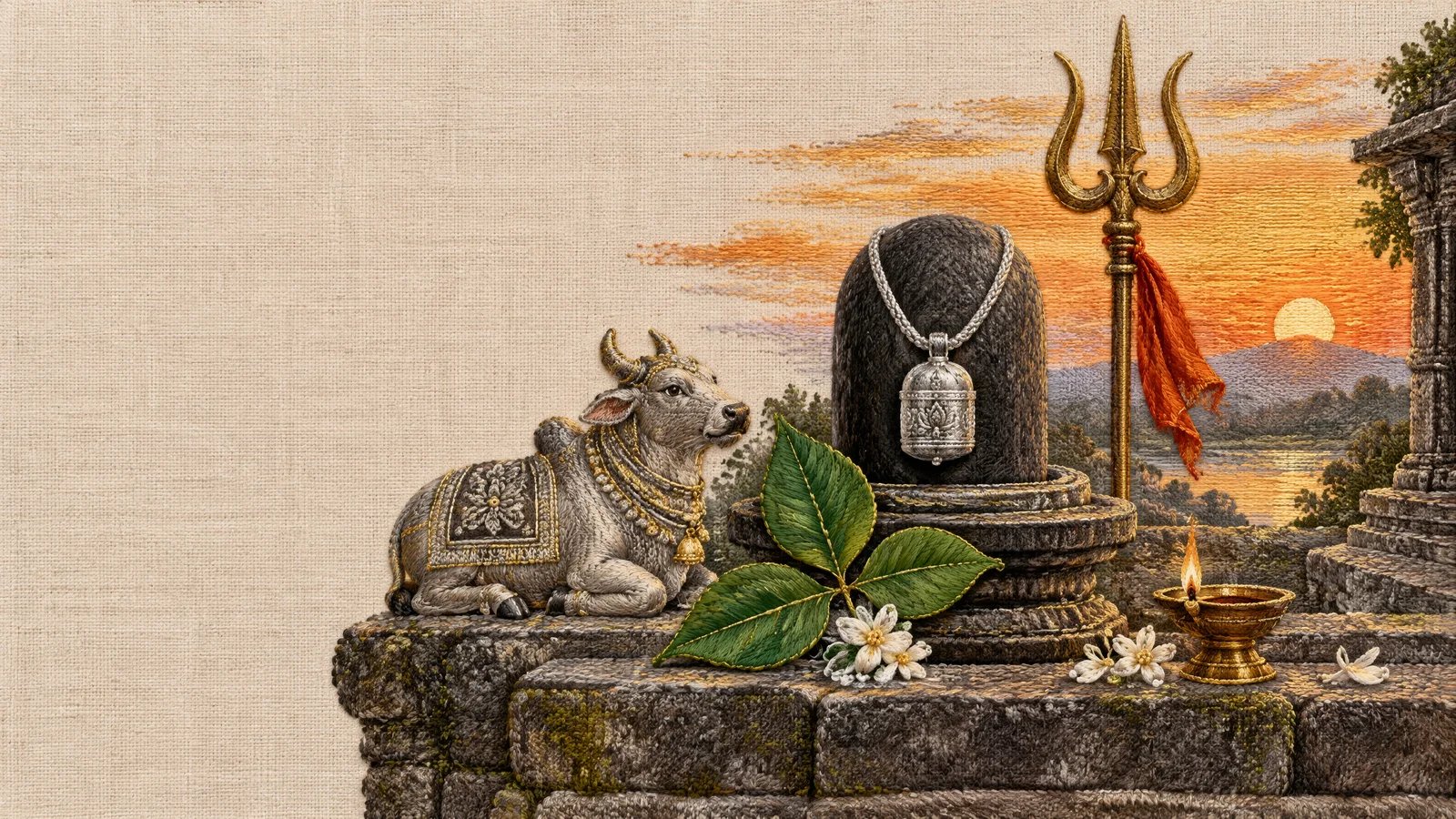
Basavanna's Vachana on Right Conduct
A short vachana by the 12th-century saint Basavanna listing seven ethical prohibitions that make up inner and outer purity and please Koodalasangama Deva.
Verses
Do not steal, do not kill, do not speak falsehood, do not become angry, do not despise others, do not praise yourself, do not slander others. This is inner purity, this is outer purity, this is the way to please our Lord Koodalasangamadeva.
Worship Guidelines & Chanting Benefits (Phalashruti)
Daily or auspicious lunar days (Ekadashi, Purnima, Pradosham)
Brahma Muhurta (4:00 AM – 6:00 AM) or Evening Dusk (Sandhya)
Ghee lamp (Deepa), Incense (Dhoopa), Fresh flowers & Water offering
- Peace of mind, spiritual upliftment, and harmonious energy in the home
Background
This vachana (devotional poem) comes from the Vachana tradition of the Lingayat (Veerashaiva) movement in 12th-century Karnataka, traditionally attributed to the saint Basavanna (1131–1196). It is often recited in Lingayat households and gatherings as a concise guide for ethical living and inner purification, intended to help devotees align their conduct with the will of Shiva, here addressed as Koodalasangama Deva.
About this Text
Composed by: Basavanna · Medieval Lingayat Philosopher-Saint · 12th century, Karnataka
A 12th-century Kannada philosopher, poet, and social reformer who founded the Lingayat (Veerashaiva) movement, rejecting caste hierarchy and ritualism in favor of Ishtalinga devotion and dignified labor as worship (Kayakave Kailasa). He also established the Anubhava Mantapa, an early public forum for spiritual and social debate.
Did You Know?
Author
This vachana is attributed to Basavanna (1131–1196 CE), a 12th-century philosopher and social reformer who revived and energised the Lingayat tradition in Karnataka. Thousands of vachanas, short poetic prose works in Kannada, are attributed to the Sharanas of his circle, and they challenged caste hierarchy and emphasised direct devotion to Shiva.
Poetic Form
Vachanas are a genre of devotional poetry written in simple, rhythmic prose meant to be accessible to all. This vachana (no. 235 in volume 1 of the Samagra Vachana Samputa, as listed on Vachana Sanchaya) gives seven prohibitions: do not steal, do not kill, do not speak falsehood, do not be angry, do not despise others, do not praise yourself, and do not condemn others. It then says that this is inner and outer purity, and it ends with the signature “Koodalasangamadeva”.
Core Teaching
The vachana equates ethical conduct with both inner and outer purity. Basavanna places moral behaviour, honesty, non-violence and humility, ahead of outward ritual as the way to please God. This is a central theme of the Sharana movement.
Signature Line
The closing phrase "Koodalasangamadeva" is Basavanna's ankit (signature) used in all his vachanas. Koodalasangama is a sacred site at the confluence of the Krishna and Malaprabha rivers, where Basavanna is said to have merged with the divine.
Historical Impact
This vachana is among the most quoted in the Lingayat tradition. It sums up the ethical core of the Sharana movement, which rejected caste hierarchy and elaborate ritual and centred worship on the personal Ishtalinga.