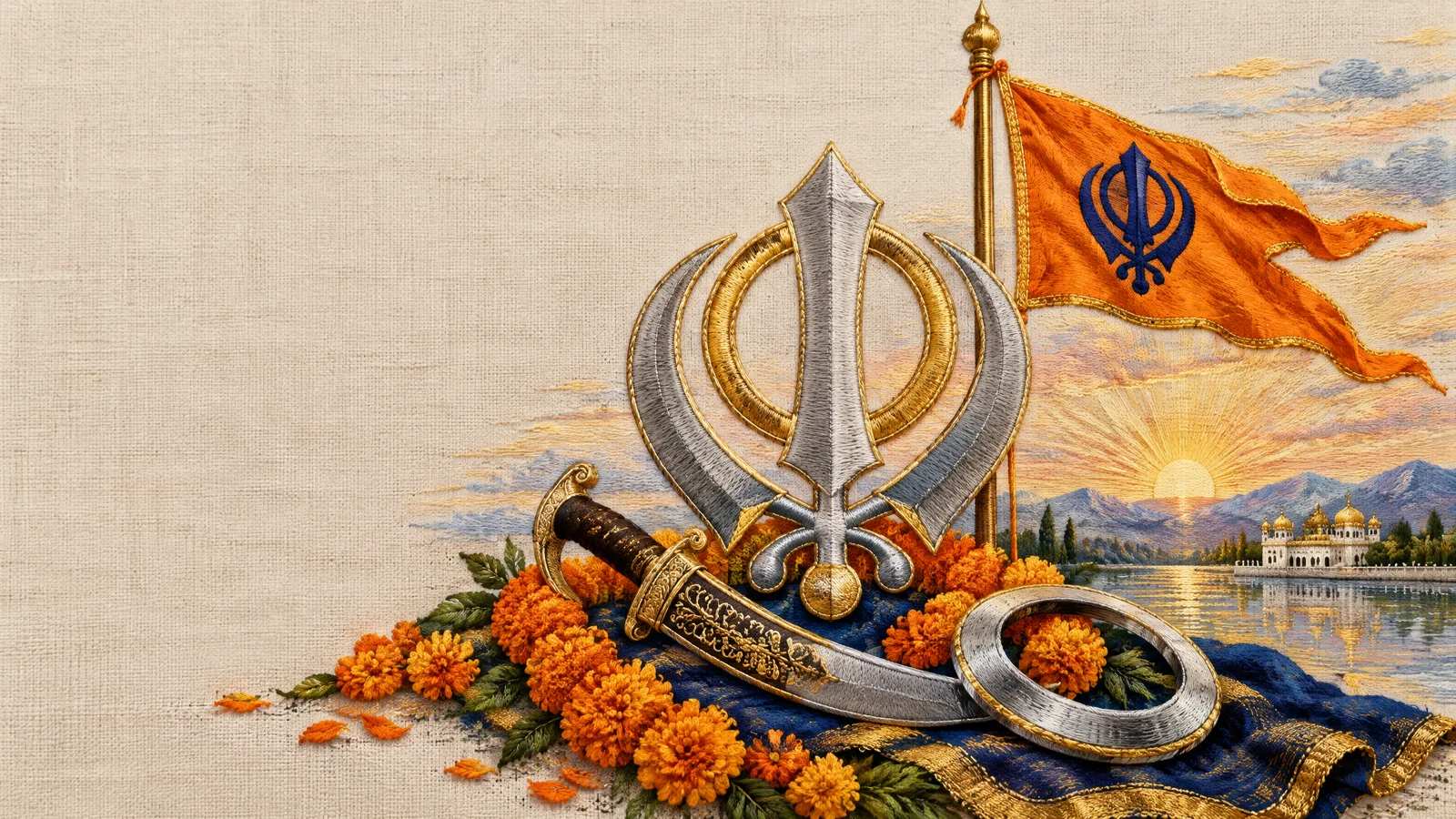
Waheguru
Contemplating the Wondrous Formless Creator
Sikh theology worships One Supreme Creator (Ik Onkar) who is Nirankar (Formless), Timeless (Akaal), and Wondrous (Waheguru).
The Word Itself: Wahe and Guru
Waheguru, the most widely used name for God in Sikhism, is formed from two elements: Wahe, an exclamation of wonder and awe, and Guru, teacher or guide. Taken together, the word names the Divine not as an abstract first cause to be reasoned toward. It names a presence that provokes astonishment, something closer to an exclamation of amazed devotion than a philosophical title. This is part of why Sikh teaching treats the repetition of Waheguru less as the recitation of a label. It is more the rehearsal of wonder itself, each utterance meant to reawaken the awe the word was coined to express.
Bhai Gurdas and the Rise of a Gurmantar
Forms of devotional address to God run throughout Gurbani from Guru Nanak Dev Ji onward. But the specific practice of reciting Waheguru as Gurmantar, the Guru-given mantra of meditation, is closely associated with Bhai Gurdas, who served as scribe during the compilation of the Adi Granth under Guru Arjan Dev Ji. In his composition Varan Bhai Gurdas, a collection of devotional ballads, Bhai Gurdas calls on Sikhs to take up Waheguru as their mantra of remembrance. This call helped establish the word as the center of Sikh meditative practice in the generations that followed. The term's path, from a general exclamation of wonder within Gurbani to the specific, formally recited Gurmantar of later Sikh devotion, unfolded across this period of the tradition's early consolidation.
Ik Onkar: The Mool Mantar's Opening Declaration
Sikh theology does not begin with Waheguru but with Ik Onkar, "One Creator." This is the opening declaration of the Mool Mantar, the foundational root verse of Sikh scripture, found on Ang 1 of Sri Guru Granth Sahib Ji, at the very start of Japji Sahib. Ik Onkar states the foundational truth of Sikh belief in its most compressed form: there is one, undivided, supreme reality underlying all existence. Waheguru does not compete with this declaration or add a second deity beside it. It names the same One, addressed with wonder and intimacy. Ik Onkar states the metaphysical fact; Waheguru is the experiential name a devotee reaches for in prayer and meditation.
Nirankar and Akal: Formless and Beyond Time
Two further terms accompany Waheguru throughout Gurbani: Nirankar, without form, and Akal, beyond time. Together they insist on something important. Whatever wonder and intimacy the word Waheguru carries, it never collapses into the worship of an image, an incarnation, or a being confined to any particular shape or epoch. God as Nirankar cannot be captured in an icon; God as Akal cannot be bound to any one moment of history. Sikh teaching holds these qualities in the same breath as the ecstatic familiarity of Waheguru. Reverence for the formless, eternal One and intimate, wondering address of that One are never treated as being in tension.
Transcendent Yet Dwelling Within
Gurbani describes God in terms that might elsewhere seem contradictory. God is utterly transcendent, beyond the reach of the created universe, and at the same time intimately immanent, dwelling within the heart of every being. Sikh teaching resolves this not by softening either claim but by holding both together as equally true. The same Waheguru who exceeds all categories of human thought is also nearer to the devotee than their own breath. Present within as surely as present beyond, this Waheguru does not require a seeker to travel anywhere distant, only to turn attention inward to a presence already there.
Waheguru in Daily Simran
The word's primary devotional use is as the object of Naam Simran, repeated remembrance of the Divine Name, practiced with attention to the breath rather than as a mechanical formula. Devotees repeat Waheguru quietly or aloud during Nitnem, communal kirtan, and private meditation alike. They treat the sound itself as a focus that steadies the mind and draws attention away from worldly distraction toward the presence the word names. Because Waheguru is a sound rather than a visual symbol, this practice does not depend on any image to contemplate. The devotee's attention rests on the syllables themselves and on the wonder they are meant to evoke.
Why a Sound Rather Than an Image
Sikh teaching's insistence on Nirankar, the formless nature of God, explains why Waheguru functions as a chanted sound rather than a visualized form. Traditions that worship a personal deity with form often meditate on an icon or image. Sikh devotion instead offers the devotee a word to carry inward, one that can be repeated in darkness, in movement, or in the middle of ordinary labor, without requiring any visual object to be held in mind. This makes Waheguru portable in a way an image cannot be, carried silently through a day's work as readily as spoken aloud in a Gurdwara.
Approached through Love, Not Argument
Sikh teaching consistently frames the path to Waheguru as one of love and devotion rather than philosophical argument or ritual technique. Gurbani holds that the intellect alone cannot grasp such a reality. It is simultaneously formless and intimately near, beyond all categories and yet dwelling within the heart. What reasoning cannot settle, sustained loving remembrance is said to open gradually. The devotee comes to know Waheguru not as a conclusion arrived at through debate, but as a presence recognized through the patient, repeated turning of attention and affection toward the One this word was coined, centuries ago, to greet with wonder.
Did You Know?
Meaning of Waheguru
The term is a compound of "Wahe" (wondrous, awesome) and "Guru" (teacher, guide, or God). It is the most common name for the Divine in Sikhism, emphasizing the awe-inspiring and loving nature of the Creator. The word appears in the Guru Granth Sahib, notably in a composition by Guru Arjan.
Ik Onkar and Waheguru
Sikh theology begins with the Mool Mantar's declaration "Ik Onkar" (One Creator). Waheguru is the experiential name for that same One, highlighting the wondrous and personal aspect. While Ik Onkar states the unity of all existence, Waheguru invites the devotee into a relationship of love and meditation.
Formless yet Immanent
God is Nirankar (Formless) and beyond all attributes, yet the article states that God is immanent within every heart. This paradox is central to Sikh practice: the formless is felt through the inner sound of Waheguru during simran (repetitive meditation), allowing the devotee to experience the Divine both within and without.
A Gurmantar Established through Bhai Gurdas
The practice of reciting Waheguru as Gurmantar, the Guru-given mantra of meditation, is closely linked to Bhai Gurdas, scribe during the compilation of the Adi Granth under Guru Arjan Dev Ji, who in Varan Bhai Gurdas called on Sikhs to take up Waheguru as their mantra of remembrance. It is used in daily simran not as a mental image but as a sonic focus on the wondrous nature of the Creator.
Guru Nanak Dev Ji
More from Sikhism
Connected Teachings
The same teaching, echoed across traditions