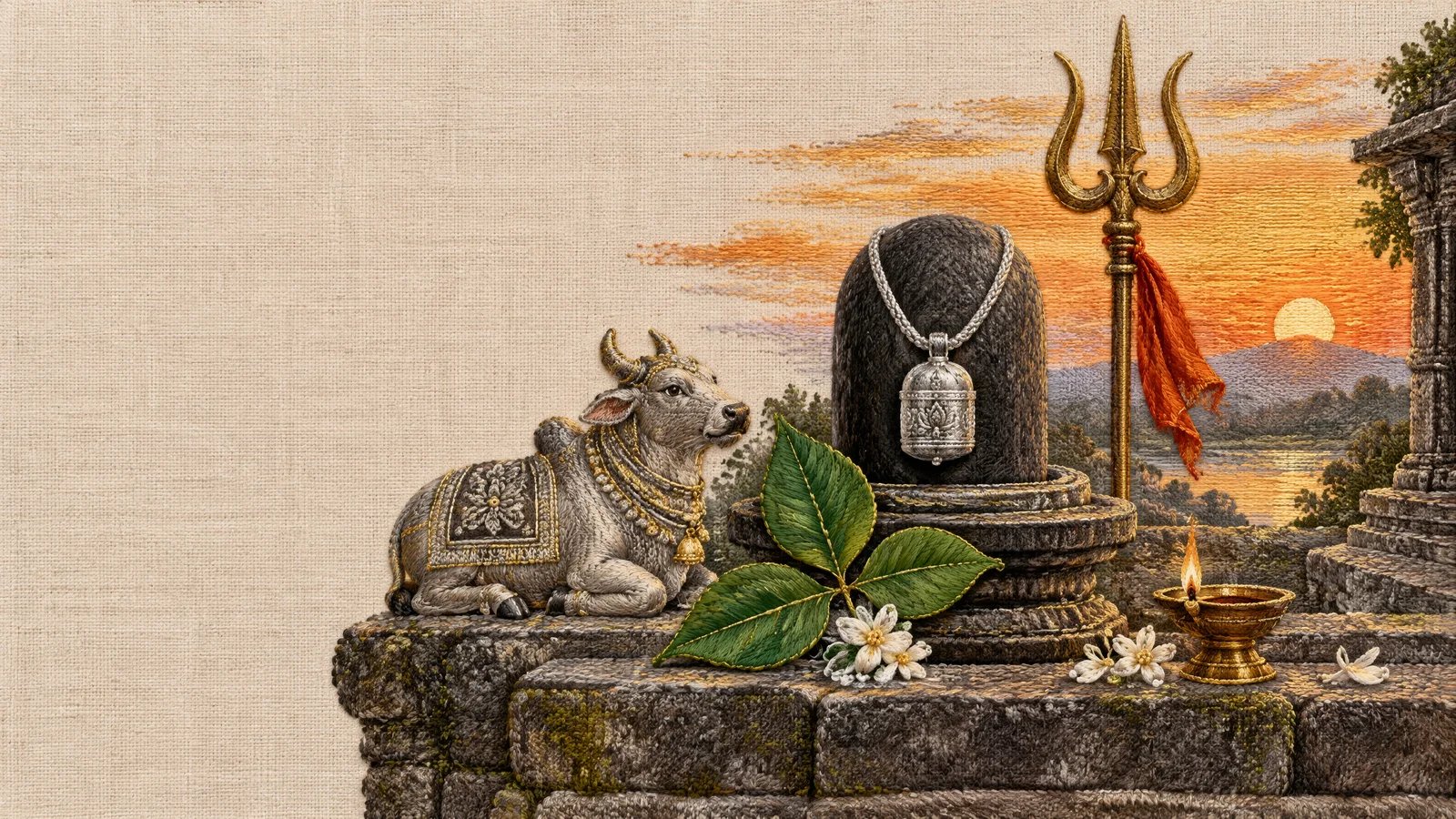
Free from the World's Web
Akka Mahadevi asks a string of rhetorical questions refusing worldly pleasure, vowing never to leave Lord Channamallikarjuna's feet.
Verses
Would I abandon the hollow thread of the serpent’s hood? Would I offer a mare as a horse to a man?
Verse 1
Would I drink the pleasure of the boastful man? Would I listen to the words of Cupid?
Verse 2
Having known Lord Channamallikarjuna, would I leave His feet and go elsewhere?
Verse 3
Worship Guidelines & Chanting Benefits (Phalashruti)
Monday (Somwar) & Pradosham
Early Morning (Brahma Muhurta) or Evening Twilight (Sandhya)
Bilva leaves, Ganga water, Bhasma (sacred ash), Dhatura & White flowers
- Inner stillness, destruction of negative karma, and freedom from fear of death (Mrityunjaya)
Background
This is a Vachana ('that which is said'), a form of spontaneous devotional poetry from the Lingayat (Veerashaiva) tradition of 12th-century Karnataka, in southern India. Its signature name, Channamallikarjuna, is the ankita of Akka Mahadevi, the great woman poet-saint of the movement, who addressed Lord Shiva by this name. Vachanas were composed in simple, everyday Kannada and shared in the Anubhava Mantapa, a spiritual assembly at Kalyana. They remain central to Lingayat worship, and A. K. Ramanujan's anthology Speaking of Siva (1973) introduced Akka's vachanas to English readers.
About this Text
Composed by: Akka Mahadevi
Did You Know?
Author and Context
This is a Vachana (a short, free-verse mystical poem) by Akka Mahadevi, a 12th-century woman poet-saint of the Lingayat tradition in Karnataka. Vachanas were composed in simple, spoken Kannada and were central to the Anubhava Mantapa, a spiritual academy where saints debated philosophy.
The Signature (Ankita)
The name "Channamallikarjuna" is Akka's ankita, a spiritual signature used to seal her poems. It refers to Lord Shiva as her beloved, and it distinguishes her vachanas from those of Allama Prabhu (ankita Guheshwara) and Basavanna (ankita Kudalasangamadeva).
Refusing Desire
The poem names Madana (Cupid), the god of desire, among the lures it refuses to heed, together with the pleasure of the worldly enjoyer. Rejecting these sensory pulls is the heart of the poem.
Rhetorical Structure
The poem is built on a series of rhetorical questions ("Would I...?"). Each question carries its own answer, so the speaker's refusal to return to worldly pleasure grows stronger with every line.
The State of Liberation
Having known Channamallikarjuna, the speaker declares that she will never leave his feet for anything else. This is the triumphant theme of the Vachana: a heart so absorbed in the Lord that Maya (illusion) has nothing left to hold. The Devanagari rendering here is loose, so compare the Kannada original in standard collections of Akka's vachanas.
Shiva
More from Lingayatism
Connected Teachings
The same teaching, echoed across traditions