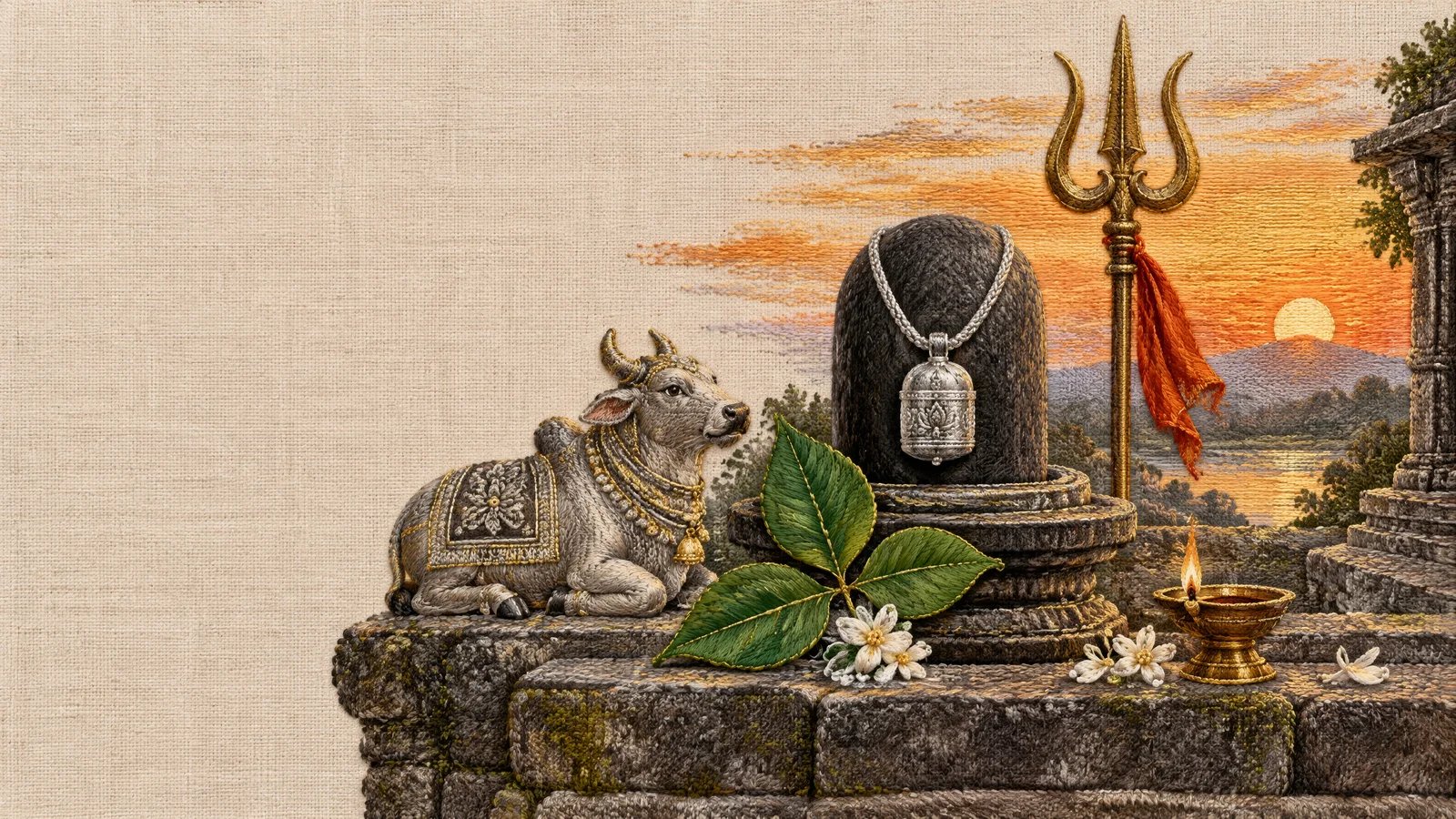
The Body as the True Temple
Basavanna's famed vachana: the rich build temples, the poor devotee offers his body as the shrine; the standing temple perishes, the living Jangama does not.
Verses
The wealthy build temples for Shiva—what can I, a poor soul, build? My legs are the pillars, my body the sanctum, my head the golden kalasha. O Lord Kudala Sangama Deva—what is built will crumble, will it not? But that which is not destroyed remains forever.
Worship Guidelines & Chanting Benefits (Phalashruti)
Daily or auspicious lunar days (Ekadashi, Purnima, Pradosham)
Brahma Muhurta (4:00 AM – 6:00 AM) or Evening Dusk (Sandhya)
Ghee lamp (Deepa), Incense (Dhoopa), Fresh flowers & Water offering
- Peace of mind, spiritual upliftment, and harmonious energy in the home
Background
This vachana is by Basavanna (Basaveshwara), the 12th-century Sharana of Karnataka and a founding figure of the Lingayat (Virashaiva) tradition. It is vachana no. 821 in volume 1 of the Samagra Vachana Samputa, as indexed on Vachana Sanchaya, and it ends with Basavanna's signature name for Shiva, Kudalasangamadeva. Its famous close is "sthavarakkalivuntu, jangamakkalivilla": what stands in one place can perish, the living, moving Jangama cannot. Honest reading note: the wording on this page differs from the source in places (for example "garbhagruha" where the source has "degula") and its closing lines paraphrase the sthavara and jangama couplet rather than quoting it. Devotees recite the vachana in meditation and community gatherings as a statement that the body is itself a temple.
About this Text
Composed by: Basavanna · Medieval Lingayat Philosopher-Saint · 12th century, Karnataka
A 12th-century Kannada philosopher, poet, and social reformer who founded the Lingayat (Veerashaiva) movement, rejecting caste hierarchy and ritualism in favor of Ishtalinga devotion and dignified labor as worship (Kayakave Kailasa). He also established the Anubhava Mantapa, an early public forum for spiritual and social debate.
Did You Know?
Author and tradition
A vachana of the 12th-century Lingayat tradition of Karnataka by Basavanna, who composed in plain Kannada to express personal devotion and social reform, in place of ritualism. In Vachana Sanchaya it is vachana no. 821 (Samagra Vachana Samputa, vol. 1).
The body as temple
In the metaphor, the poor devotee offers his own body: "my legs are the pillars, my body the shrine, my head the golden finial." True devotion needs no external structure.
Sthavara and Jangama
The source ends "sthavarakkalivuntu, jangamakkalivilla". The sthavara, the fixed temple or linga, can perish, while the jangama, the living, moving devotee-teacher, cannot. This is the Lingayat principle that the living bearer of devotion outranks the standing shrine.
Signature line
The vachana ends with "Kudalasangamadeva", Basavanna's signature name (ankita) for Shiva as Lord of the meeting of rivers, which serves as a seal of authorship in his vachanas.
Reading note on the wording
The source reads "ullavaru shivalaya maadiharu" and "dehave degula" and ends with the sthavara-jangama couplet. The page's text uses "maaduvaru" and "garbhagruha" and closes with a paraphrase about what is built crumbling and what is not destroyed remaining.
Basavanna
More from Lingayatism
Connected Teachings
The same teaching, echoed across traditions