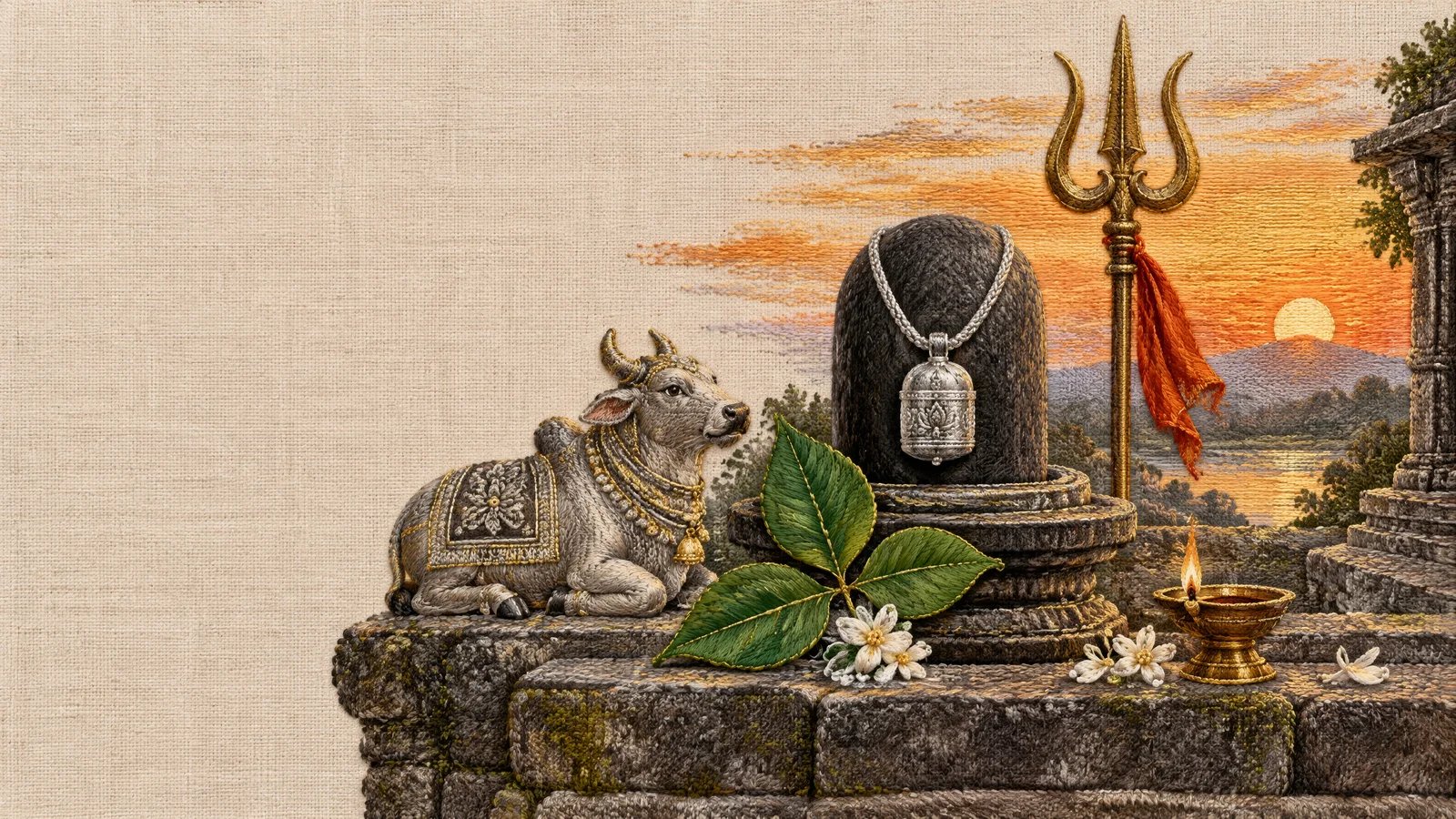
The Threefold Path
Guru, Linga, and Jangama
A Lingayat teaching on guru, linga and jangama and the threefold linga (ishta, prana, bhava); its attribution to Channabasavanna is unverified.
Verses
The Guru being the source, the Linga is to be pierced; the Linga being the source, the body is to be established.
Verse 1
With the individual self as the source, the mobile ascetic is to be worshipped in eight ways.
Verse 2
The Linga is threefold: the Ishtalinga, the Pranalinga, and the Bhavalinga.
Verse 3
The Guru is initiation, the Linga is instruction, and the Jangama is the gracious glance.
Verse 4
Having understood this threefold nature and united with Kudalachangamadevaprabhu, he became absorbed in Him.
Verse 5
Worship Guidelines & Chanting Benefits (Phalashruti)
Monday (Somwar) & Pradosham
Early Morning (Brahma Muhurta) or Evening Twilight (Sandhya)
Bilva leaves, Ganga water, Bhasma (sacred ash), Dhatura & White flowers
- Inner stillness, destruction of negative karma, and freedom from fear of death (Mrityunjaya)
Background
This text belongs to the Lingayat (Veerashaiva) tradition, a devotional movement within Hinduism that emerged in 12th-century Karnataka, and it summarises doctrine usually linked with Basavanna's circle of Sharanas, including his nephew Channabasavanna. Honest reading note: the page gives the teaching in a Sanskrit-style formulation in Devanagari, and we could not match it to any Kannada vachana. The concordance on Vachana Sanchaya has none of its key phrases ("guru-purvaka", "linga-purvaka", "anga-purvaka"), and the signature "Kudalachangamadeva" is not Channabasavanna's ankita, which is "Kudalachennasangamadeva". Its attribution to him is therefore unverified, although the doctrine itself (guru, linga and jangama, and the ishta, prana and bhava lingas) is genuinely Lingayat.
About this Text
Composed by: Channabasavanna
Did You Know?
Three types of linga
The linga is understood in three forms: Ishta Linga (the personal emblem worn on the body), Prana Linga (the inner vital presence in the heart) and Bhava Linga (the felt presence in devotion). This division leads the devotee from outward ritual to inward experience.
Guru, Linga and Jangama
The text defines Diksha (initiation) as the Guru, Shiksha (instruction) as the Linga and Kataksha (the gracious glance) as the Jangama (the wandering ascetic). Together they form a complete spiritual path in Lingayat teaching.
Eightfold worship of the Jangama
The text instructs worshipping the Jangama in eight ways (ashtadha samarchayet), honouring the living ascetic as the embodiment of the divine, a central Lingayat practice.
Ankita (signature) and attribution
Channabasavanna's own vachanas close with the signature "Kudalachennasangamadeva". The form "Kudalachangamadeva" in this text does not match it, and the Sanskrit-style wording has no Kannada vachana counterpart in the Vachana Sanchaya concordance, so the attribution to Channabasavanna is unverified.
Union with the Divine
The close says that the devotee who has understood the threefold teaching becomes absorbed in the Lord, the goal of oneness that the Lingayat path names as linga-aikya.
Shiva
More from Lingayatism
Connected Teachings
The same teaching, echoed across traditions