Sikh Rehat Maryada
The Code of Conduct
The Sikh Rehat Maryada, adopted by the SGPC in 1945 after a decade of drafting, sets out how Sikhs worldwide practice the Gurus' teachings in daily life.
The Sikh Rehat Maryada is the official code of conduct governing the religious and social life of Sikhs. The Shiromani Gurdwara Parbandhak Committee (SGPC), the body that administers Sikh shrines, formally adopted it by Resolution 97 on 3 February 1945. That adoption was the culmination of a drafting process begun in 1932, one that drew on earlier codes and traditions passed down from the time of the Sikh Gurus. Its purpose is to give a clear, unified guide so that Sikhs everywhere practice their faith consistently, preserving a shared identity regardless of where in the world they live.
Why a Written Code Was Needed
Over the centuries, different Sikh communities had developed varying local customs and interpretations of practice. To keep the Panth, the Sikh community as a whole, united, the SGPC compiled a standard document grounded in the teachings of the Gurus, above all Guru Gobind Singh, who founded the Khalsa order in 1699. The Rehat Maryada does not replace the Guru Granth Sahib, the Sikh holy scripture; it explains how to apply its teachings in daily life, covering everything from daily prayer and the conduct of weddings and funerals to diet and how a Sikh should treat others.
Living as Khalsa
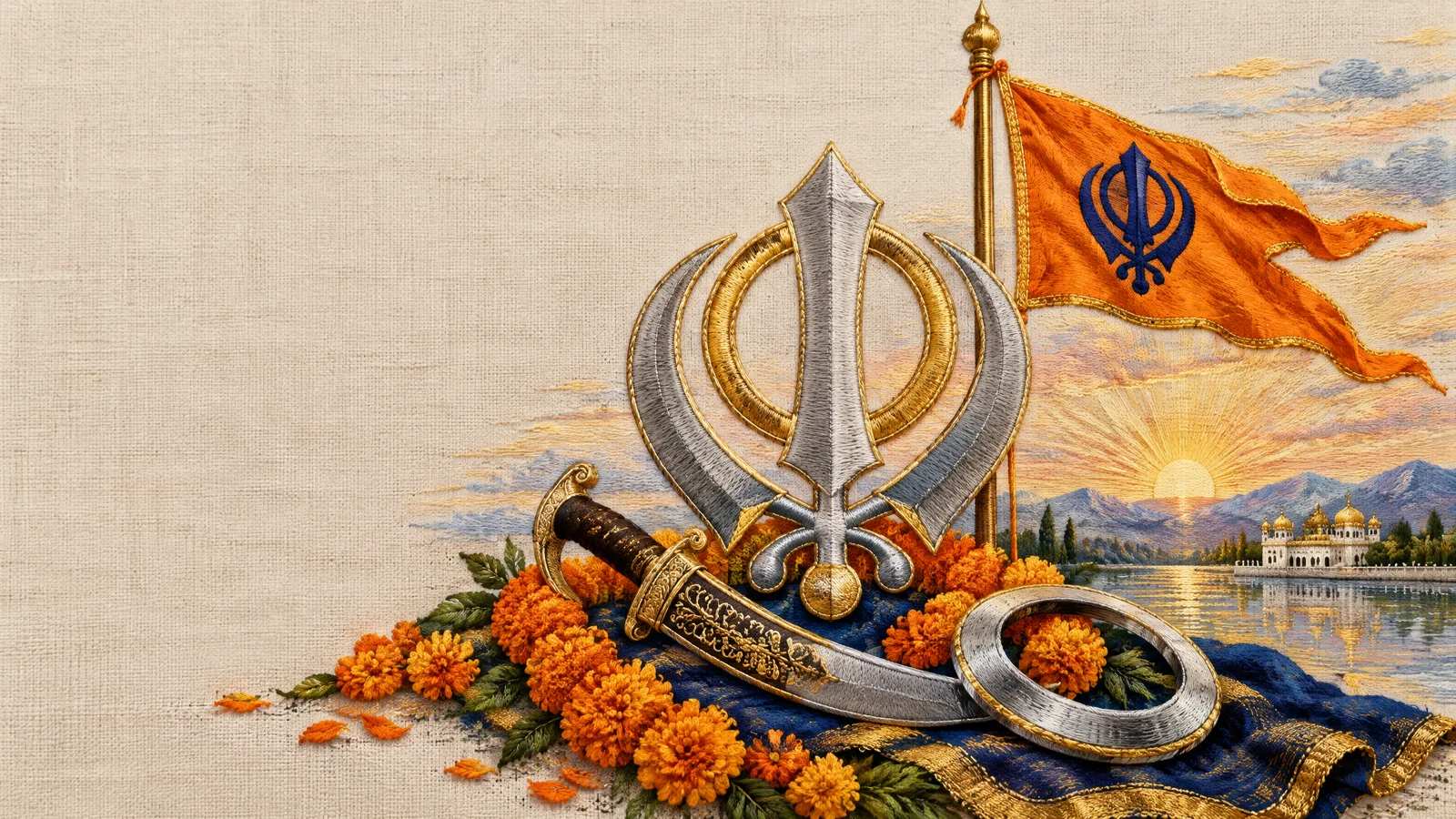
Among its central principles is that a Sikh should live as Khalsa, a pure and devoted disciple of the Guru. This includes wearing the Five Ks, or Kakaars: Kesh, uncut hair; Kanga, a small wooden comb; Kara, a steel bracelet; Kachera, a specific style of undergarment; and Kirpan, a ceremonial sword. Together these symbols remind a Sikh of their commitment to the Guru and to a disciplined life of service and equality. The Rehat Maryada also places weight on Naam Simran, meditating on God's name, on reading from the Guru Granth Sahib daily, and on Sewa, selfless community service.
Clear Prohibitions
The code sets out clear prohibitions alongside its positive duties. A baptized Sikh should not cut their hair, use tobacco, or consume alcohol or other intoxicants. The Rehat Maryada also names four specific transgressions, the Bajjar Kurehats, that a Khalsa Sikh must never commit: dishonoring the hair, eating meat slaughtered by ritual methods (kutha meat), engaging in adultery, and using tobacco. These prohibitions exist to keep a Sikh's mind and body oriented toward a truthful, disciplined life, not as an arbitrary set of restrictions. The Rehat Maryada is equally explicit that Sikhs should live with humility and love toward all people, regardless of caste, creed, or gender, and that the code exists to support this life rather than to burden it.
One Standard, Living Diversity
The SGPC's Rehat Maryada is the widely accepted official standard. Even so, Sikh practice was never perfectly uniform after 1945. Some Sikh groups continue to follow older customary codes that differ in detail, and individual scholars have offered their own interpretations of particular provisions over the decades since. What remains constant across every version, however, is the core commitment: devotion to the one God taught by the Gurus, the equality of all human beings, and a life built on service and honesty. The Rehat Maryada functions as a practical guide precisely because it holds this core steady while leaving room for Sikh communities across very different regions and eras to live it out in their own particular circumstances.
The Structure of the Document
The Rehat Maryada is organized into thirteen chapters gathered under six broader sections. It moves from the definition of a Sikh and the conduct expected of an individual, through congregational worship at the Gurdwara, to the specific ceremonies of birth, marriage, and death, and finally to the governance of the Panth itself through institutions such as the Akal Takht, the Panth's central seat of temporal authority in Amritsar. This structure matters as much as its content: rather than a loose collection of sayings, the Rehat Maryada was deliberately built as a single, navigable reference a Sikh anywhere in the world could consult on nearly any question of practice, from how to name a newborn child to how a local Gurdwara committee should be run.
A Document That Still Gets Revisited
Since 1945, the Rehat Maryada has not been treated as a text frozen beyond all further discussion. Sikh scholars, the SGPC itself, and various Sikh organizations have continued to debate points of interpretation and, at times, propose amendments. This has mattered especially as Sikh communities established themselves in new countries, facing legal and social circumstances the original drafters in Punjab could not have fully anticipated. That the core document has needed so little revision across eight decades is itself taken within the Panth as a sign of how carefully its original framers balanced fixed principle against the practical flexibility a global community would eventually require.
A Living Framework, Not a Static Rulebook
The Sikh Rehat Maryada is more than a list of rules; it is a comprehensive framework for living a disciplined, devotional life. It lets Sikhs in India and across the global diaspora share the same core practices. This matters especially in central ceremonies such as Amrit Sanchar, the rite of Khalsa initiation, and Anand Karaj, the Sikh marriage ceremony. By following this code, Sikhs strengthen their connection to the Guru and to each other, sustaining a global community united in faith and purpose even as it spans dozens of countries and languages the Gurus themselves never anticipated having to address directly. That balance is what allows the same document, drafted in Punjab in the 1930s, to still speak directly to a Sikh household in Punjab, in Toronto, or in Nairobi today, without needing a separate rulebook for each.
Did You Know?
A Decade in the Drafting
The Sikh Rehat Maryada's drafting began in 1932 and was not formally adopted by the SGPC until 1945 — thirteen years of consultation across the Panth before a single standard text was settled.
Resolution 97
The SGPC adopted the Rehat Maryada through a specific, recorded resolution, Resolution 97, passed on 3 February 1945 — not an informal custom, but a deliberate act of the Panth's own governing body.
Explains, Does Not Replace
The Rehat Maryada never claims scriptural authority equal to the Guru Granth Sahib — its explicit role is to explain how to live out the Guru Granth Sahib's teaching in daily practice, not to add to or substitute for it.
Four Bajjar Kurehats
Beyond general guidance, the Rehat Maryada names four specific transgressions a Khalsa Sikh must never commit: dishonoring the hair, eating ritually slaughtered meat, adultery, and using tobacco.
One Code, Many Communities
Even after 1945, some Sikh groups kept older customary codes rather than adopting the SGPC standard exactly — the Rehat Maryada unifies the Panth's core commitments without erasing every regional variation in practice.
Guru Gobind Singh Ji
More from Sikhism
Connected Teachings
The same teaching, echoed across traditions