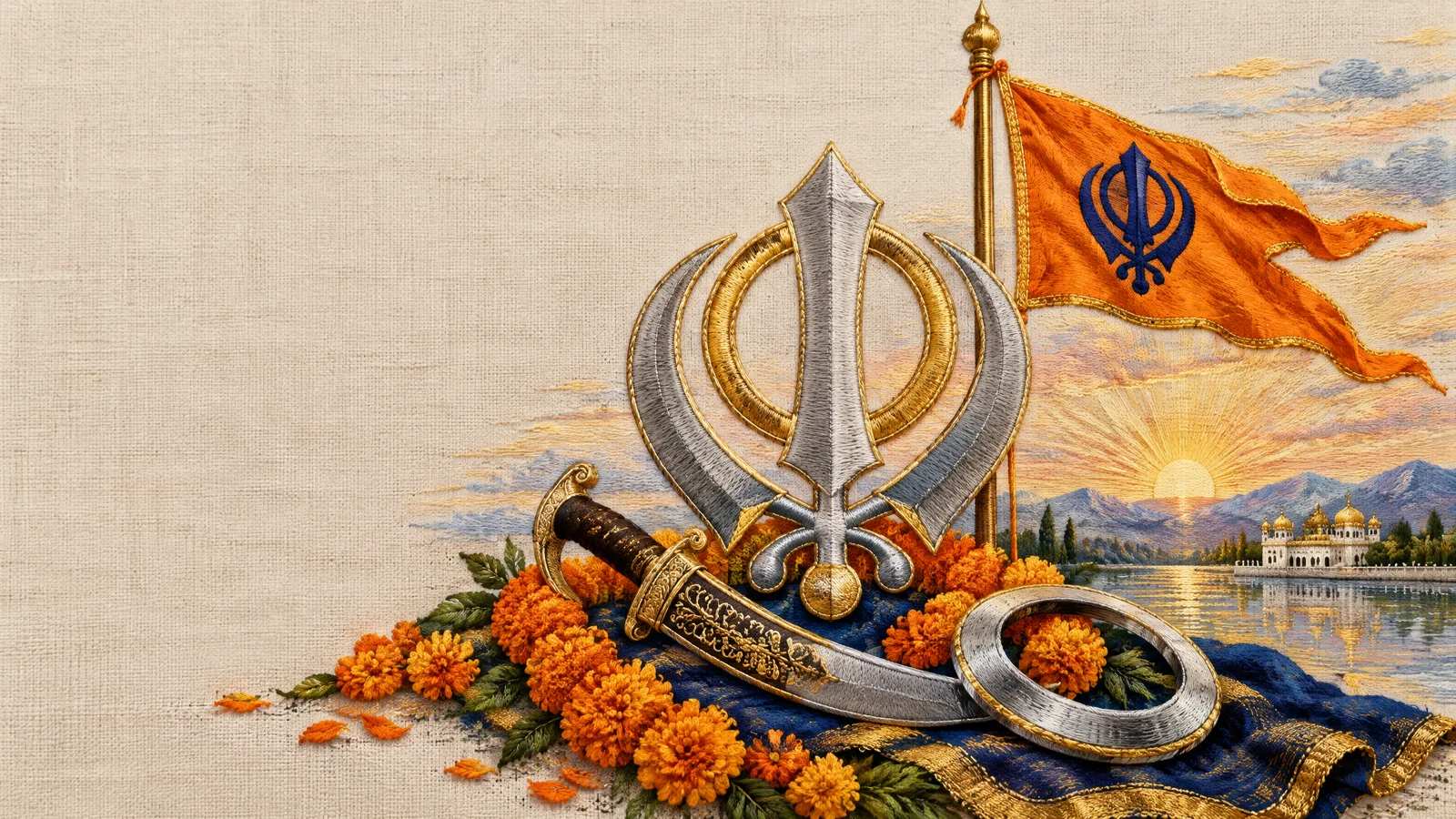
Amrit Vela
The Ambrosial Hours of Dawn Meditation
Guru Nanak's Japji Sahib names the pre-dawn hours as Amrit Vela, the ambrosial time most suited to Naam Simran and contemplation of the True Name.
A Name That Means Ambrosial Time
Amrit Vela, literally the ambrosial hour, refers to the quiet period before sunrise, traditionally understood as the last pehr, or watch, of the night, roughly between three and six in the morning. Sikh tradition holds this stretch of darkness-before-dawn as the time when the mind is least cluttered by the day's demands and therefore most receptive to turning fully toward the Divine Name.
Named in Japji Sahib Itself
The grounding for this practice comes directly from Guru Nanak Dev Ji's own words in Japji Sahib, pauri 4. There he instructs: Amrit Vela Sach Naao Vadiaee Vichaar, at the ambrosial hour, chant the True Name and contemplate the Divine Greatness. This single line from the opening composition of the Guru Granth Sahib gives Amrit Vela both its name and its purpose, naming the hour itself after the practice it is meant to hold.
Why the Hour Before Dawn
Sikh teaching reasons that the hours before sunrise carry a particular stillness unmatched by any other part of the day, free of the noise, obligation, and distraction that accumulate once the world fully wakes. A mind approaching meditation in this quiet is held to settle more readily into remembrance of the Divine Name, Naam Simran, than it could at any later hour already crowded with the day's first demands. This is understood as a practical observation about when the mind is actually capable of the stillness devotion requires, not as a claim about the clock itself holding any special power.
The Daily Discipline
Observant Sikhs who rise during Amrit Vela typically begin with Ishnan, a bath taken before any other activity, understood as a preparation of the body that mirrors the clearing of the mind about to follow. After bathing, the practitioner recites the Nitnem, the fixed daily set of scriptural compositions that includes Japji Sahib itself alongside Jaap Sahib and the Tav-Prasad Savaye. This is followed by continued Naam Simran, the quiet, sustained repetition and contemplation of the Divine Name that Guru Nanak's own verse names as the hour's central purpose.
A Practice Written Into the Rehat Maryada
The Sikh Rehat Maryada, the code of conduct governing communal and personal practice, names rising during Amrit Vela as part of the daily discipline expected of a practicing Sikh. This places the pre-dawn observance alongside the other pillars of a disciplined devotional life, rather than treating it as an optional flourish reserved for the unusually devout. This formal inclusion reflects how central the practice has remained since Guru Nanak first named it in Japji Sahib.
Why the Instruction Still Holds
The deeper reasoning behind Amrit Vela rests on an observation about attention rather than any claim about the clock possessing spiritual power of its own. Guru Nanak's verse does not say the hour itself is holy in some magical sense that other hours lack. It says that contemplation of the True Name is what the hour is for, and that the stillness naturally available before dawn makes that contemplation more fully possible than it would be once the day's obligations have already claimed the mind's attention. A Sikh who practices Naam Simran at Amrit Vela is not performing a ritual tied to a specific clock reading so much as choosing the one part of the day least likely to interrupt the remembrance Guru Nanak asked of every seeker.
A Beginning Carried Into the Rest of the Day
Practitioners often describe the discipline of Amrit Vela as shaping everything that follows it. A mind that has already spent its first waking hour in contemplation of the Divine Name carries something of that stillness forward into the demands the rest of the day will inevitably bring. In this sense, the ambrosial hour functions less as an isolated devotional exercise than as the foundation upon which the remainder of a disciplined Sikh life is built each morning, renewed before the world itself has fully woken.
Stillness Chosen, Not Commanded by the Clock
Guru Nanak's own life offers the clearest model for why this hour was singled out at all. Tradition holds that his own transformative encounter with the Divine at the Kali Bein river took place during these same early hours. He had gone out before dawn for his customary bath and did not return for three days, emerging afterward to begin his mission with the words that there is no Hindu, no Musalman. Whatever the precise hour of that encounter, the association between pre-dawn stillness and his own closest communion with the Divine has shaped how Sikhs since have understood Amrit Vela, as an invitation to seek, in the same quiet hours, something of what their first Guru himself found there.
Did You Know?
Etymology
“Amrit” means “immortal nectar” in Punjabi/Sanskrit, and “Vela” means “time.” So Amrit Vela is literally “the time of nectar,” referring to the pre-dawn hours when the mind is naturally calm and receptive to divine connection.
Scriptural Basis
Guru Nanak Dev Ji’s Japji Sahib opens with the instruction to chant the Creator’s name during Amrit Vela, emphasizing that this hour is optimal for realizing the “Sach Nao” (True Name). This is a core daily practice for Sikhs.
Timing and Practice
Traditionally, Amrit Vela falls between 3:00 AM and sunrise (around 6:00 AM). Devotees rise, bathe, and then recite Gurbani (scriptural hymns) and meditate on the divine name (Naam Simran), often in a congregation or individually.
Spiritual Significance
The quiet, dark hours before dawn are believed to be when the mind is least distracted and the spiritual atmosphere is purest. Sikhs consider this time as the most effective for cleansing the mind and attuning to God’s presence.
Global Practice
While the exact timing shifts with seasons and location, the principle remains: waking before the world stirs, setting aside daily worries, and focusing on the divine. It is a discipline that fosters humility, inner peace, and devotion.
Guru Nanak Dev Ji
More from Sikhism
Connected Teachings
The same teaching, echoed across traditions