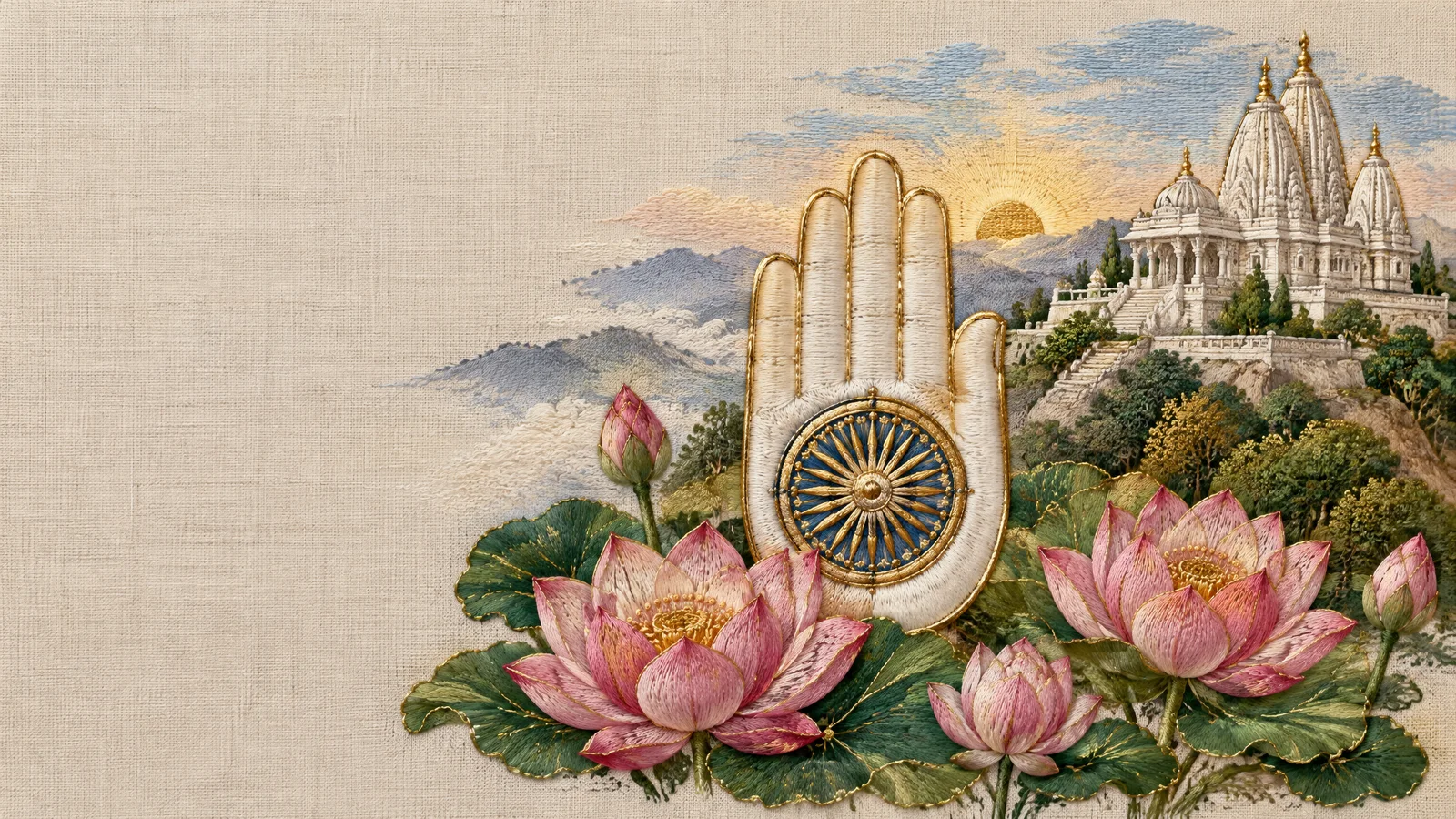
Dilwara Temples of Mount Abu
Marble Jain Sanctuaries
The five white marble Jain temples of Mount Abu, built between the 11th and 15th centuries, are revered for devotion, Navkar worship and Aparigraha.
Quick Devotional Guide (At a Glance)
- •WHAT IT IS: A sacred complex of five white marble Jain temples on Mount Abu, dedicated to the Tirthankaras. It is known worldwide for its fine carving and its quiet atmosphere of Vitaraga, the state of complete detachment.
- •WHY VISIT: Pilgrims come to contemplate Aparigraha, non-possession, and to loosen pride and worldly attachment. Reciting the Navkar Mantra and the Bhaktamara Stotra here is held to bring Punya, spiritual merit.
- •WHEN TO VISIT: October to March brings cool, pleasant mountain weather. Special days include Mahavir Janma Kalyanak in Chaitra, Paryushana Parva in Bhadrapada, and Kartik Poornima.
- •WHERE: Mount Abu, ancient Arbuda Parvat, in Sirohi District, Rajasthan. The town lies in the Aravalli Range at about 1,220 metres. The nearest railhead is Abu Road.
- •HOW (VIDHI AND RULES):
- •Dress: For puja, Jain worshippers wear clean, unstitched white cloth, such as dhoti and khes for men and simple modest dress for women. Leather items, mobile phones and cameras are not allowed inside the temples, and footwear is left outside.
- •Purity: Worshippers bathe before entering. They then offer Dravya Puja, the worship with saffron, flowers and unbroken rice.
- •Parikrama: Walk around the inner shrine clockwise three times. The three rounds stand for the Three Jewels of Jainism: Samyak Darshana (Right Faith), Samyak Jnana (Right Knowledge) and Samyak Charitra (Right Conduct).
Sacred Origin and Historical Lineage
Jain tradition remembers Mount Abu as Arbuda Parvat, a hill of ascetics and a place of tapasya since ancient times. Pilgrims revere it as a Kshetra, a sacred ground, where seekers can turn inward in silence.
The five temples that stand here today were raised over several centuries. The earliest, Vimal Vasahi, was built mostly between 1026 and 1031 by Vimal Shah, a minister of the Chaulukya king Bhima I of Gujarat. He gave his wealth to create a temple for Rishabhanatha, the first Tirthankara.
Luna Vasahi followed in 1230. The brothers Vastupala and Tejpala, ministers of the Vaghela ruler Viradhavala, built it in memory of their late brother Lunig. Tradition says the sculptors were paid in gold equal to the weight of the marble dust they carved away. This is why the ceilings and domes look so delicate, as if stone had turned into frozen prayer.
Visitors often feel that the carved lotuses, Vidyadevis and Tirthankara figures draw the eye inward, toward the main image and toward quiet reflection.
The Sacred Shrines and Sites
Builders, Patrons and Pilgrims
The Dilwara temples were shaped by lay devotees who gave their wealth and care to Dharma.
- 1.Vimal Shah: Minister of Bhima I. He built Vimal Vasahi in the early 11th century.
- 2.Prithvipal: A descendant of Vimal Shah. He added the Hastishala, the elephant hall, between 1147 and 1149.
- 3.Vastupala and Tejpala: Brother ministers who built Luna Vasahi in 1230.
- 4.Bhima Shah and Mandlik: Patrons of the Pittalhar and Parshvanatha temples in later centuries.
- 5.Jain monks and nuns: Generations of Svetambara munis and sadhvis who travel here on foot, keep their discourse on the Agamas, and teach the path to Kevala Jnana, perfect knowledge.
Sacred Hymn and Contemplation
At Dilwara, pilgrims standing before the Tirthankaras chant the Navkar Mantra. This is the central prayer of Jainism. It bows to spiritual qualities, not to individuals.
णमो अरिहंताणं । णमो सिद्धाणं । णमो आयरियाणं ।
णमो उवज्झायाणं । णमो लोए सव्वसाहूणं ।
एसोपंचणमुक्कारो, सव्वपावप्पणासणो ।
मंगलाणं च सव्वेसिं, पढमं हवइ मंगलं ॥
Ṇamō Arihantāṇaṁ | Ṇamō Siddhāṇaṁ | Ṇamō Āyariyāṇaṁ |
Ṇamō Uvajjhāyāṇaṁ | Ṇamō Lōē Savva Sāhūṇaṁ |
Ēsō Pañca Ṇamukkārō, Savva Pāvappaṇāsaṇō |
Maṅgalāṇaṁ Ca Savvēsiṁ, Paḍhamaṁ Havai Maṅgalaṁ ||
Devotional Meaning:
"I bow to the Arihantas, who have conquered the inner enemies. I bow to the Siddhas, the liberated souls without bodies. I bow to the Acharyas, the spiritual masters. I bow to the Upadhyayas, the teachers of scripture. I bow to all Sadhus in the world. This fivefold salutation destroys all sins and is the first among all auspicious things."
Did You Know?
The hanging pendant in the dome of Luna Vasahi is carved so finely that the marble looks almost translucent. A circular band around it shows 72 seated Tirthankaras, and below that band are 360 small figures of Jain monks.
Tradition says the sculptors were paid in gold equal to the weight of the marble dust they scraped away, which pushed them to carve ever more delicate detail.
The large Pittalhar image of Rishabhanatha is cast from five metals, mostly brass, and is said to weigh about 108 maunds, roughly 4 metric tons.
The Derani-Jethani niches in Luna Vasahi are named for the wives of the two builder brothers. Each niche holds a Lakshmi image with Tirthankara figures.
Luna Vasahi was built in memory of Lunig, the brother of Vastupala and Tejpala, so the whole temple is an offering of remembrance.
Mahavira
More from Jainism
Connected Teachings
The same teaching, echoed across traditions