Act Now, for Time Waits for No One
This is a short, urgent verse from the poet Kabir, calling on the listener to act without delay because life can end at any moment.
Verses
Do tomorrow's work today, and today's work right now. In an instant, the world may end; then when will you ever do it again?
Worship Guidelines & Chanting Benefits (Phalashruti)
Daily or auspicious lunar days (Ekadashi, Purnima, Pradosham)
Brahma Muhurta (4:00 AM – 6:00 AM) or Evening Dusk (Sandhya)
Ghee lamp (Deepa), Incense (Dhoopa), Fresh flowers & Water offering
- Peace of mind, spiritual upliftment, and harmonious energy in the home
Background
This couplet is from the doha (a two-line verse form) tradition of the 15th-century mystic poet Kabir, who is revered in the Bhakti and Sant movements of North India. Kabir’s verses are often sung or recited in devotional gatherings and are known for their direct, urgent spiritual counsel. The doha here is traditionally used as a reminder of life’s fragility and the need for immediate, sincere spiritual effort. It appears as doha 24 on the first page of the Kabir Dohavali anthology on Kavitakosh, where it is ascribed to Kabir; the Dohavali is a later compilation, so the attribution rests on that printed tradition.
About this Text
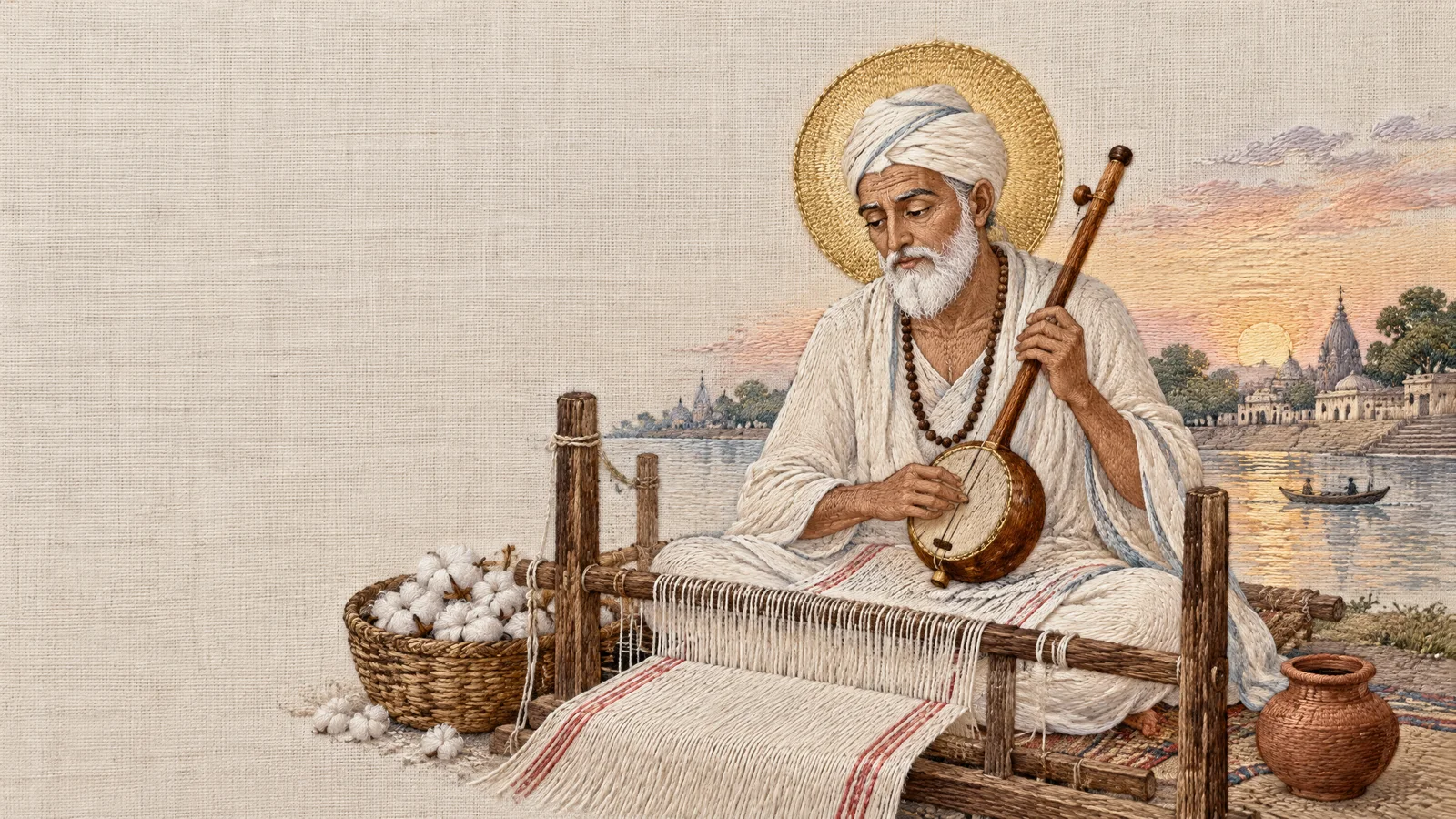
Composed by: Sant Kabir · Medieval Nirguna Bhakti Poet-Saint · 15th century, Varanasi
A mystic poet and weaver by trade from Varanasi, whose blunt, image-rich couplets (dohas) rejected ritualism and caste distinctions in favor of direct, formless (nirguna) devotion. His verses are revered across Hindu, Sikh (many appear in the Guru Granth Sahib), and Sufi-influenced traditions alike.
Did You Know?
Attribution
This couplet is widely attributed to the 15th-century mystic poet Kabir, though it also appears in the oral traditions of other North Indian saint-poets. Kabir’s verses are known for their direct, urgent spiritual advice, often using everyday language to drive home a point about mortality and detachment.
Poetic form
The verse is a doha — a two-line rhyming couplet common in Hindi and other North Indian languages, with a fixed meter of 24 syllables (13+11). Dohas were traditionally sung or recited, making them easy to memorize and pass down orally.
Core message
The couplet stresses the urgency of spiritual or moral action. It warns that death (here called pralay, meaning “dissolution” or “catastrophe”) can strike in an instant — “in a moment” — so one should never postpone what can be done now. This echoes a theme found across many religious traditions, from the Buddhist “deathbed repentance” to the Christian “watch therefore, for you know neither the day nor the hour.”
Cultural resonance
In modern India, this couplet is often quoted in self-help contexts, time-management advice, and even in political speeches. Its simple structure and stark warning make it a favorite for reminding people not to procrastinate — whether in worldly duties or spiritual practice.
Linguistic note
The phrase pal mein pralay hogi uses pralay (प्रलय), which in Hindu cosmology means the periodic destruction of the universe. Here it is used metaphorically for an individual’s death, emphasizing that one’s personal “end” can come as suddenly and completely as a cosmic dissolution.
Sant Kabir
More from Kabir Panth
See allConnected Teachings
The same teaching, echoed across traditions