The Coolness of Gentle Speech
This is a short devotional couplet from the saint-poet Kabir, teaching that gentle, ego-free speech brings peace to others and to oneself.
Verses
Speak such words that you lose all pride of the mind; let your speech bring coolness to others, and you yourself become cool as well.
Worship Guidelines & Chanting Benefits (Phalashruti)
Daily or auspicious lunar days (Ekadashi, Purnima, Pradosham)
Brahma Muhurta (4:00 AM – 6:00 AM) or Evening Dusk (Sandhya)
Ghee lamp (Deepa), Incense (Dhoopa), Fresh flowers & Water offering
- Peace of mind, spiritual upliftment, and harmonious energy in the home
Background
This couplet is attributed to the 15th-century mystic poet Sant Kabir, a central figure in the Bhakti movement of North India. Kabir’s dohas (two-line verses) are widely recited in devotional and moral contexts, often as daily reminders for humble, compassionate speech. The verse is traditionally used in spiritual discourse and everyday life to encourage selfless, cooling words that benefit both speaker and listener. It appears as doha 34 on the first page of the Kabir Dohavali anthology on Kavitakosh, where it is ascribed to Kabir; the Dohavali is a later compilation, so the attribution rests on that printed tradition.
About this Text
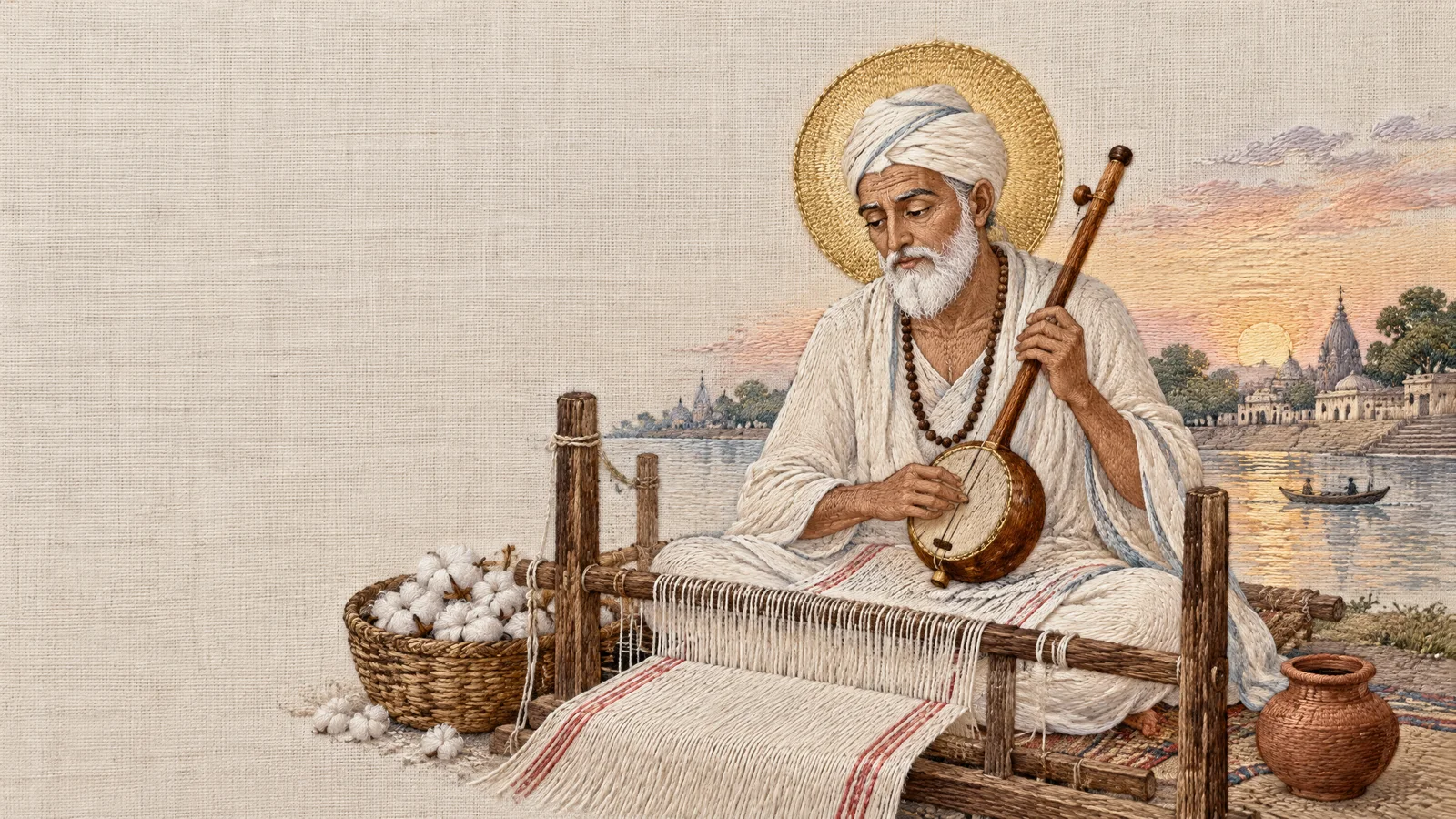
Composed by: Sant Kabir · Medieval Nirguna Bhakti Poet-Saint · 15th century, Varanasi
A mystic poet and weaver by trade from Varanasi, whose blunt, image-rich couplets (dohas) rejected ritualism and caste distinctions in favor of direct, formless (nirguna) devotion. His verses are revered across Hindu, Sikh (many appear in the Guru Granth Sahib), and Sufi-influenced traditions alike.
Did You Know?
Author
This couplet is attributed to the 15th-century mystic poet Kabir, whose verses are revered in both Hindu and Sikh traditions. Kabir's dohas (two-line poems) often convey profound spiritual truths in simple, memorable language.
Core Teaching
The verse teaches that speech should be free from ego ("आपा" – self-importance) and should bring coolness (peace, comfort) to both the listener and the speaker. It emphasizes that gentle, mindful words benefit everyone involved.
Poetic Form
This is a classic example of a "doha," a rhyming couplet in Hindi and other North Indian languages. Dohas are traditionally used for moral and spiritual instruction, and this one is among the most frequently quoted.
Cultural Impact
This saying is widely used in everyday life in India to encourage polite and thoughtful communication. It appears in school textbooks, self-help literature, and even in corporate training on effective communication.
Spiritual Context
In Kabir's philosophy, controlling the tongue is a key step in overcoming the ego. The word "शीतल" (cool) symbolizes a state of inner calm and detachment, contrasting with the "heat" of anger and desire.
Sant Kabir
More from Kabir Panth
See allConnected Teachings
The same teaching, echoed across traditions