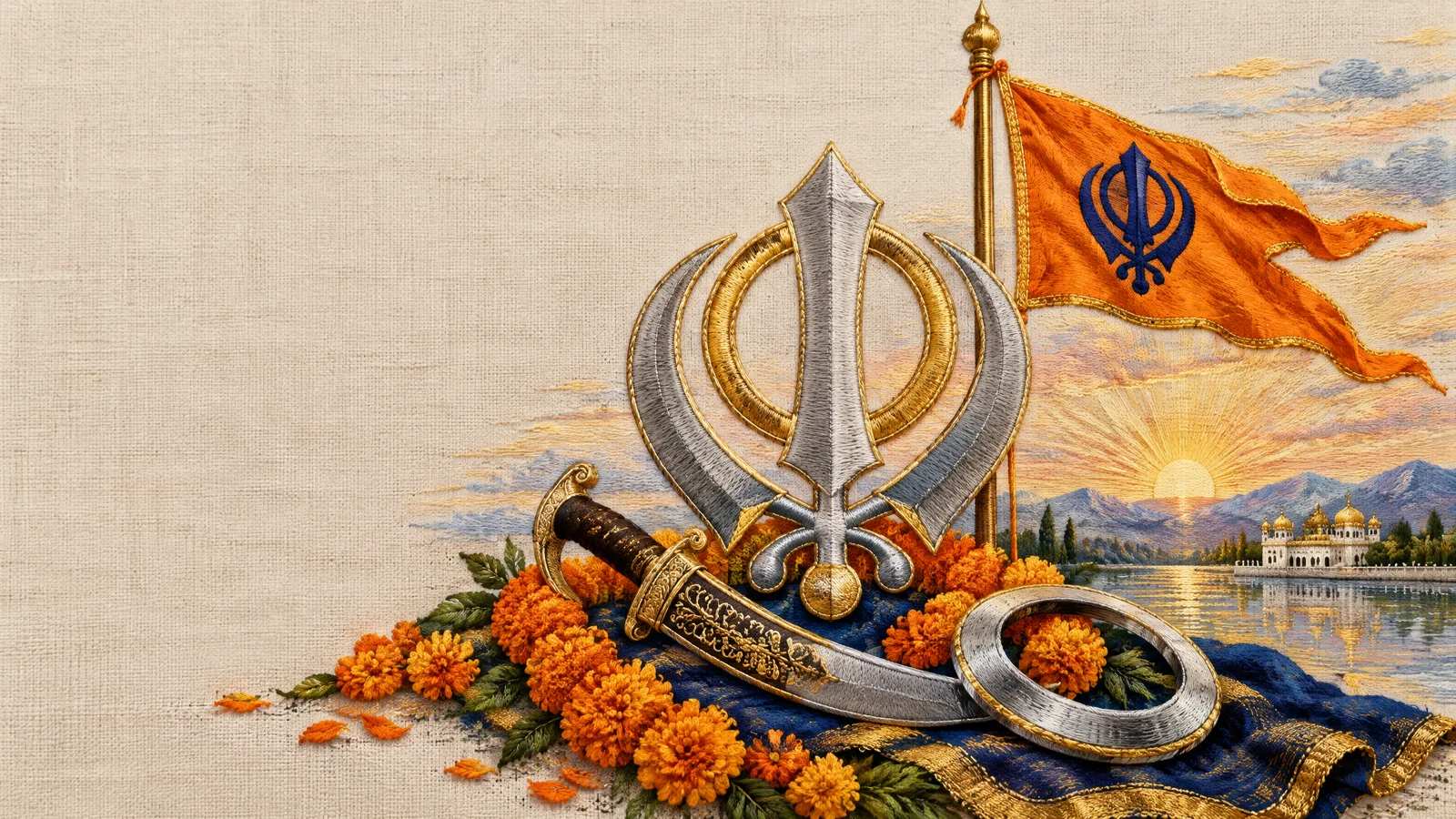
The Mul Mantar (Mool Mantra)
The Foundational Creed of Sikhism
The Mool Mantar, root creed of Sikhism at Ang 1 of the Guru Granth Sahib, by Guru Nanak: One Creator, True Name, fearless, without enmity, timeless, unborn.
Verses
There is One Universal Creator-God, the Supreme Truth, the Eternal Reality, the All-Pervading Spirit, without fear, without enmity, the Timeless Being, beyond birth and death, self-existent, realized by the Guru's grace.
Worship Guidelines & Chanting Benefits (Phalashruti)
Daily or auspicious lunar days (Ekadashi, Purnima, Pradosham)
Brahma Muhurta (4:00 AM – 6:00 AM) or Evening Dusk (Sandhya)
Ghee lamp (Deepa), Incense (Dhoopa), Fresh flowers & Water offering
- Peace of mind, spiritual upliftment, and harmonious energy in the home
Background
The Mool Mantar (Mool Mantra) stands at Ang 1 of the Guru Granth Sahib, ahead of Japji Sahib, and is attributed to Guru Nanak Dev Ji, the founder of Sikhism. The same invocation, in full or in a shorter form, also heads many raag sections of the scripture. Sikhs recite it daily at the start of the morning prayer Japji Sahib and at the beginning of many ceremonies, and it is regarded as the root of Sikh theology.
About this Text
Composed by: Guru Nanak Dev Ji · Sikh Guru (First of the Ten) · 1469–1539 CE, Punjab
The founder of Sikhism and the first of the Ten Sikh Gurus, born in Talwandi (present-day Nankana Sahib, Pakistan). He undertook long journeys (Udasis) across South Asia and beyond to share his teachings on the oneness of God and the equality of all people, and composed hymns later included in the Guru Granth Sahib.
Did You Know?
Location and author
The Mool Mantar is at Ang 1 of the Guru Granth Sahib (1,430 Angs), under Guru Nanak Dev Ji, and heads Japji Sahib. The same invocation recurs at the head of other raag sections, in full (for example Ang 151) or in a shorter form (for example Ang 137).
Ik Onkar
The symbol joins the numeral one with Onkar and means that God is one, all-pervading, and that there is no second.
A chain of attributes
Sat Naam (whose Name is truth), Karta Purakh (the Creator), Nirbhau (without fear), Nirvair (without enmity), Akaal Moorat (form beyond time), Ajooni (unborn) and Saibhang (self-existent).
Gur Prasad
The closing words mean "by the Guru's grace": God is realised through the grace of the Guru, which makes the Guru central to the Sikh path.
Thirteen words
The Gurmukhi text of the Mool Mantar has thirteen words, and each points to an attribute of the Divine or to the way to reach it.
Daily practice
Sikhs begin the morning recitation of Japji Sahib with this mantar and also repeat it to steady the mind in meditation.
Guru Nanak Dev Ji
More from Sikhism
See allConnected Teachings
The same teaching, echoed across traditions