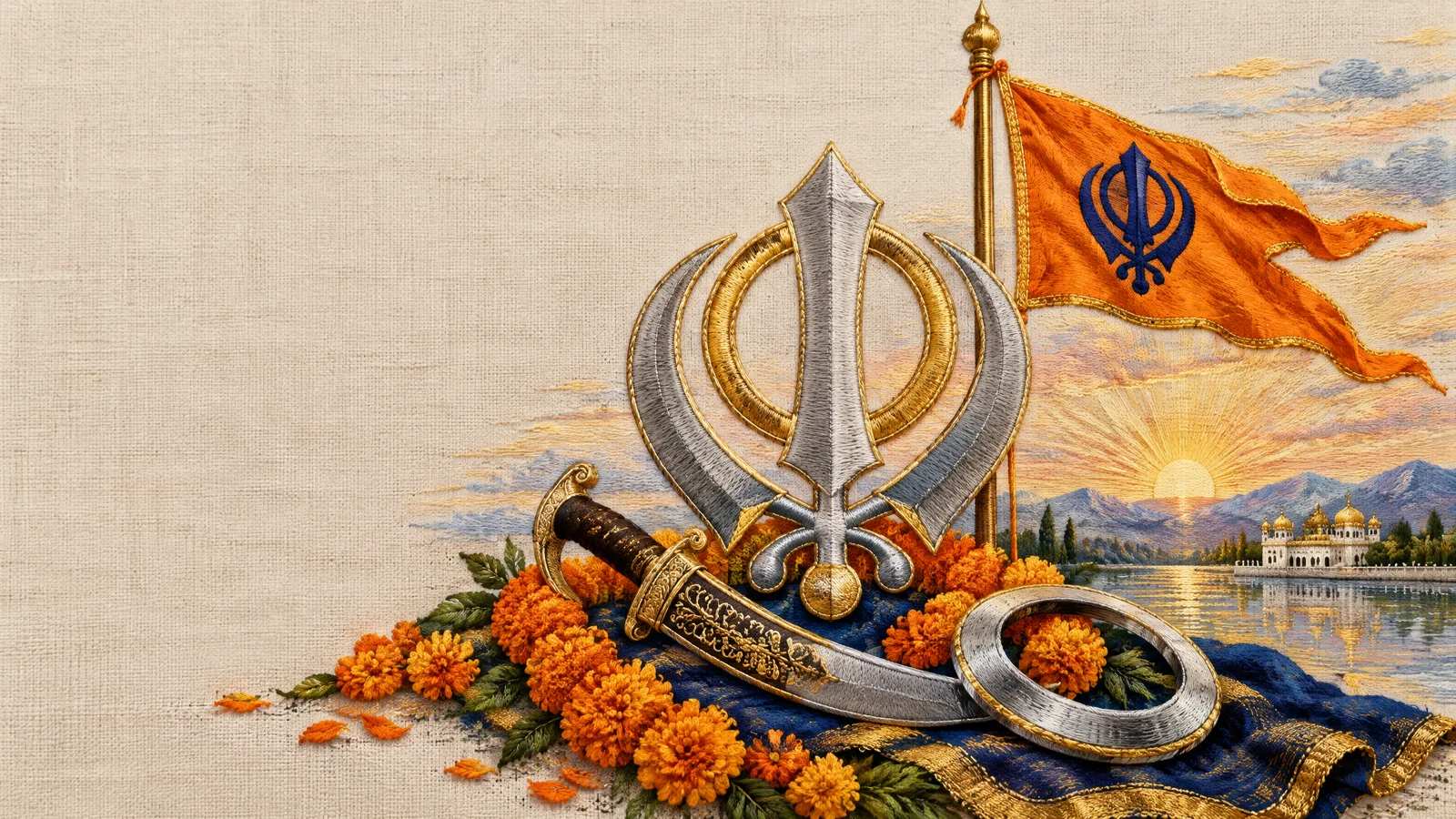
Sri Harmandir Sahib
The Golden Temple of Amritsar
Sri Harmandir Sahib, designed by Guru Arjan Dev Ji with its foundation laid by Mian Mir in 1589, welcomes all through four open doors around the Amrit Sarovar.
The Architecture of Humility and Light
When Guru Arjan Dev Ji envisioned Sri Harmandir Sahib in the late 16th century, he deliberately built it on a level lower than the surrounding city ground. To reach the sanctum, devotees must walk downwards, symbolizing the fundamental virtue of humility and surrendering one's ego before the Divine. Guru Amar Das Ji had first identified the site, and Guru Ram Das Ji began excavating the sacred pool that would surround it. Guru Arjan Dev Ji, the fifth Guru, then designed the temple itself and oversaw its construction, completing a vision three successive Gurus had shaped together across decades.
Unlike traditional medieval fortress shrines with a single entrance, Harmandir Sahib features entrances facing all four cardinal directions, north, south, east, and west, welcoming people of every caste, race, nation, and spiritual background. Guru Arjan Dev Ji chose Mian Mir, a revered Sufi saint of Lahore, to lay the foundation stone in 1589. It was a deliberate choice that made the temple's first physical act an interfaith gesture rather than a purely Sikh ceremony, consistent with the four open doors that would rise around that same stone. The temple's completed structure also sits lower than the Sarovar around it, a further layer of the same symbolism: a pilgrim descends the steps to the causeway approaching the sanctum, physically enacting the surrender of status the architecture was built to teach before a single word of prayer is spoken.
Sacred Landmarks of the Harmandir Sahib Complex
The Sacred Daily Routine
Every day at Harmandir Sahib follows an unbroken spiritual schedule that has continued for centuries. At Amrit Vela, around three in the morning, the sanctum is washed with milk and water, and Sri Guru Granth Sahib Ji is carried from the Akal Takht in a golden palanquin to be enthroned for the day. The Asa Di Var Kirtan follows, the morning hymns Guru Nanak composed for this time of day, classical stringed instruments accompanying the singing that fills the marble circumambulatory path around the Sarovar. At night, the Sukhasan ceremony, literally the Guru Granth Sahib's "rest," closes the day: the Holy Scripture is reverently closed and returned to the Akal Takht amid joyful prayers, only to be carried back out again before dawn the following morning. This rhythm has repeated, essentially unbroken, since the Guru Granth Sahib was first installed here in 1604. Pilgrims who arrive in the deep hours of the night sometimes witness this procession directly, the palanquin moving slowly along the marble parikrama surrounding the Sarovar while Kirtan continues, a scene visitors often describe as the moment Harmandir Sahib feels most like a living household rather than a monument.
Sacred Gurbani on the Sarovar
Guru Arjan Dev Ji himself composed a verse in praise of the sacred pool, recorded on Ang 1362 of the Guru Granth Sahib in the Phunhe meter:
Dithe Sabhe Thaav, Nahi Tudh Jeha,
Baddhohu Purakh Bidhaate, Tan Tun Sohaya।
I have seen all places across the earth,
but none compares to You.
The Creator Lord established You,
and blessed You with radiant grace.
That the temple's own architect composed this verse about the site he was still building gives the hymn an unusual immediacy. It reads less as praise offered from a distance than as the testimony of someone who had walked the ground himself and judged it, among everywhere he had seen, without equal.
Gold, Generosity, and the Langar
In 1830, Maharaja Ranjit Singh donated 750 kilograms of pure gold to plate the upper domes and marble walls of the sanctum, the origin of the name by which the temple is known across the world, though Sikhs themselves refer to it primarily as Harmandir Sahib or Darbar Sahib. The Langar at the Golden Temple serves free hot vegetarian meals to more than 100,000 devotees daily, entirely staffed by volunteers, Sevadars, without regard for the visitor's faith, nationality, or status. It is a living continuation of the same four open doors carved into the temple's original design nearly four and a half centuries ago.
Did You Know?
Scriptural Source
Guru Arjan Dev Ji's own verse praising the sacred pool, "Dithe Sabhe Thaav, Nahi Tudh Jeha," is recorded on Ang 1362 of the Guru Granth Sahib in the Phunhe meter.
Foundation Laid by a Muslim Sufi Saint
Guru Arjan Dev Ji specifically invited the revered Sufi saint Mian Mir of Lahore to lay the foundation stone of Harmandir Sahib in 1589.
Gold Foil by Maharaja Ranjit Singh
In 1830, Maharaja Ranjit Singh donated 750 kg of pure gold to plate the upper domes and marble walls of the sanctum.
World's Largest Free Kitchen
The Langar at the Golden Temple serves free hot vegetarian meals to more than 100,000 devotees daily, entirely staffed by volunteers, Sevadars.
Continuous Gurbani Kirtan
Live classical acoustic singing of Gurbani Kirtan continues without interruption throughout the day, from Amrit Vela to the Sukhasan ceremony at night.
Guru Arjan Dev Ji
More from Sikhism
Connected Teachings
The same teaching, echoed across traditions