Sonagiri
The Golden Hill of 103 Jain Temples
Sonagiri, the Golden Peak near Datia in Madhya Pradesh, is a Digambara Jain Siddha Kshetra where Nang Anang Kumar and millions of ascetics attained Moksha, its 103 white temples crowning the hill.
The Hill of Five and a Half Crore Liberated Souls
In Jain sacred geography, Sonagiri is venerated as an unbroken power vortex of spiritual liberation. Ancient Jain tradition records that Prince Nang Anang Kumar attained unconditioned Moksha here, along with five and a half crore ascetic disciples, during the era of Bhagwan Chandraprabha, the eighth Tirthankara. Tradition further holds that Chandraprabha's Samavasarana, the divine teaching assembly, convened on this hill seventeen times. Few sites carry so repeated a sanctification in the memory of the Digambara tradition, one of the two major branches of Jainism. The Prakrit Nirvana Kanda, which lists Jain liberation sites, places the Nirvana of the twenty Tirthankaras, Chandraprabha among them, on Sammed Shikhar (verse 2); the Sonagiri tradition is distinct, holding that many ascetics of his era attained liberation on this hill.
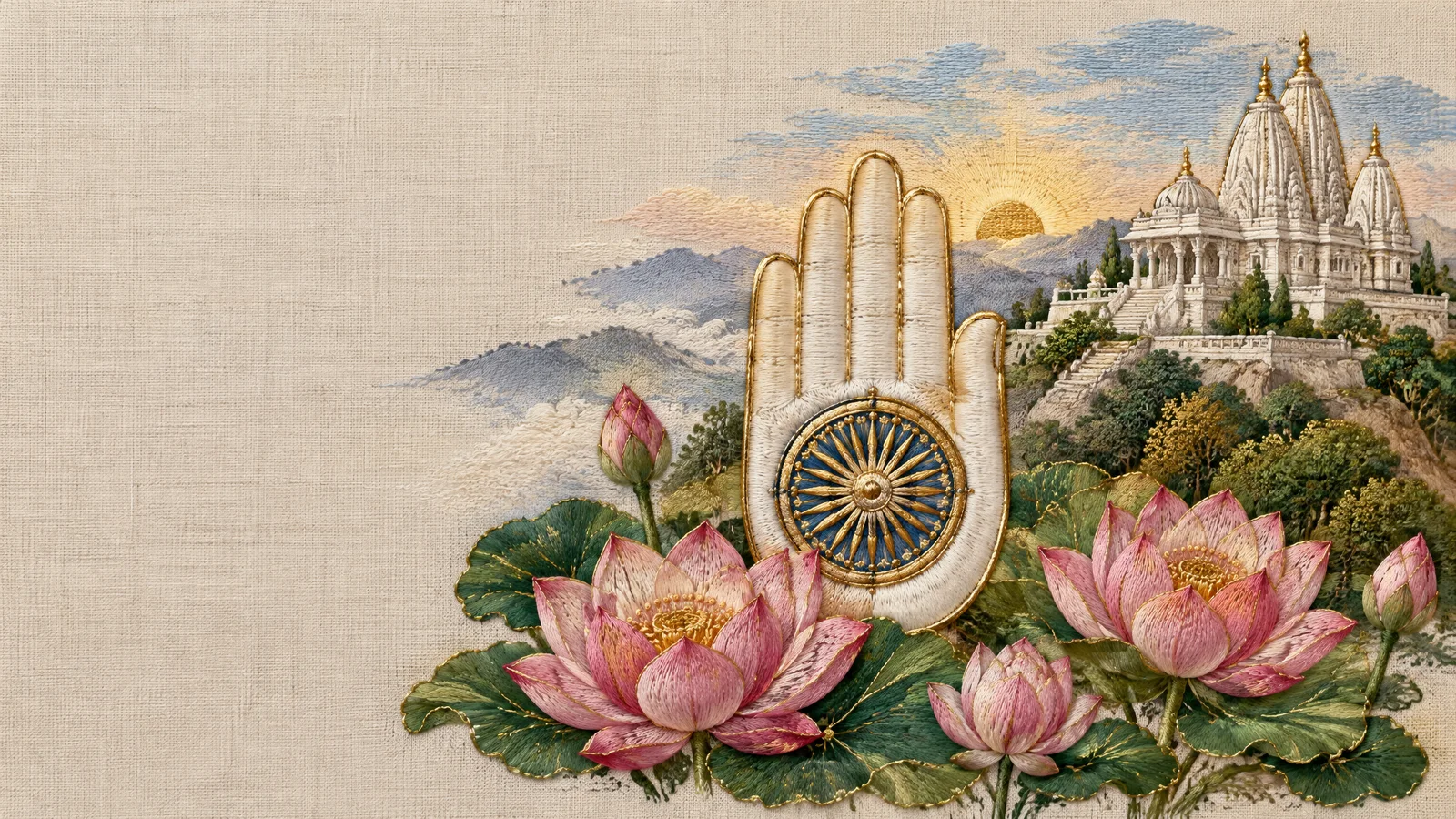
The temple spires rising against the blue sky atop the rocky ridge represent the ascent of the liberated soul, the Siddha. They point toward the highest realm of existence, the Siddhashila. For Digambara pilgrims, simply beholding this skyline from the base of the hill is an act of darshan in its own right, long before the climb begins. The name Sonagiri, the Golden Peak, is traditionally explained by the way its whitewashed spires catch the morning and evening sun, turning the ridge soft gold at dawn and dusk.
A Pilgrimage Town Woven into History and Geography
Sonagiri rises near Datia in Madhya Pradesh, about 65 kilometers from Gwalior along the Gwalior-Jhansi road. Sonagiri railway station, on the Agra-Jhansi line, serves it directly, a convenience that has made the hill accessible to pilgrims for well over a century. The temples that cover its slopes today date predominantly from the 9th century onward. The hill's sanctity reaches further back still: a rock-cut image of Chandraprabha carved directly into the hillside is dated by scholars to the 5th or 6th century CE. Devotees were already venerating this ridge centuries before most of the standing shrines were built. The site's importance in modern times is reflected in its list of visitors, which has included foreign heads of state. Alongside them runs the steady stream of Digambara pilgrims who have never stopped climbing it.
Key Sacred Shrines of Sonagiri
The Architecture and Ascetic Heritage of the Hill
Across its hill and village together, Sonagiri holds 103 temples in all. Seventy-seven cluster along the climbing path and summit, and twenty-six more stand at the foot of the hill in the village itself. Each is whitewashed and crowned with its own rising shikhara, so that the whole ridge reads, from a distance, as a single continuous crown of spires. This architectural rhythm is deliberate. No single temple dominates the skyline, reflecting the Digambara emphasis on the equal worth of every liberated soul over the glorification of any one shrine. The Kundakunda Cave partway up the hill preserves the memory of Acharya Kundakunda, among the most revered teachers in the Digambara tradition. Pilgrims still pause there in silent study on their way to the summit.
Barefoot Ascendance and Ritual Purity
Pilgrims undertake the pilgrimage in profound silence and physical austerity, in keeping with the hill's character as a place of renunciation:
- •Devotees climb the white stone pathways barefoot early in the morning before the sun heats the granite rocks.
- •Ascetics in white or in Digambara unclad simplicity sit in silent Kayotsarga meditation under rocky overhangs along the path.
- •The recitation of the Bhaktamara Stotra echoes across the tranquil valley as pilgrims ascend.
- •Some senior ascetics, in the final stage of a long monastic life, observe Sallekhana here. This is the Jain vow of gradually relinquishing food under a teacher's guidance, undertaken only at life's end as a final act of detachment, never as an ordinary pilgrimage practice.
Sacred Hymn: Chandraprabha Jina Stotram
Pilgrims who complete the climb traditionally pause at Temple 57 to offer this verse before beginning their descent, closing the pilgrimage the same way countless generations before them have closed it.
The traditional Sanskrit verse in praise of Bhagwan Chandraprabha:
Shrimat Chandraprabham Vande
Jagadananda Dayakam
Chandra Kanti Samam Shantam
Moha Dhwanta Vinashanam।
I bow before the glorious Chandraprabha,
Who bestows supreme bliss upon the world,
Serene as the soothing rays of the full moon,
Dispelling the dark delusions of ignorance.
Did You Know?
77 Hilltop + 26 Valley Temples
Sonagiri houses a total of 103 temples—77 dotting the hillside and 26 situated in the peaceful village at the base.
Chandraprabha 11-foot Idol
The magnificent rock-carved idol of the 8th Tirthankara Bhagwan Chandraprabha in Temple 57 dates back to the 5th-6th century CE.
Famous Annual Fair
An enormous annual fair takes place on Chaitra Shukla 14 to Chaitra Krishna 1, attracting devotees from all corners of India.
Gleaming White Aesthetic
Every temple on the hill is painted gleaming white, symbolizing absolute mental purity and freedom from worldly stains.
Mahavira
More from Jainism
Connected Teachings
The same teaching, echoed across traditions