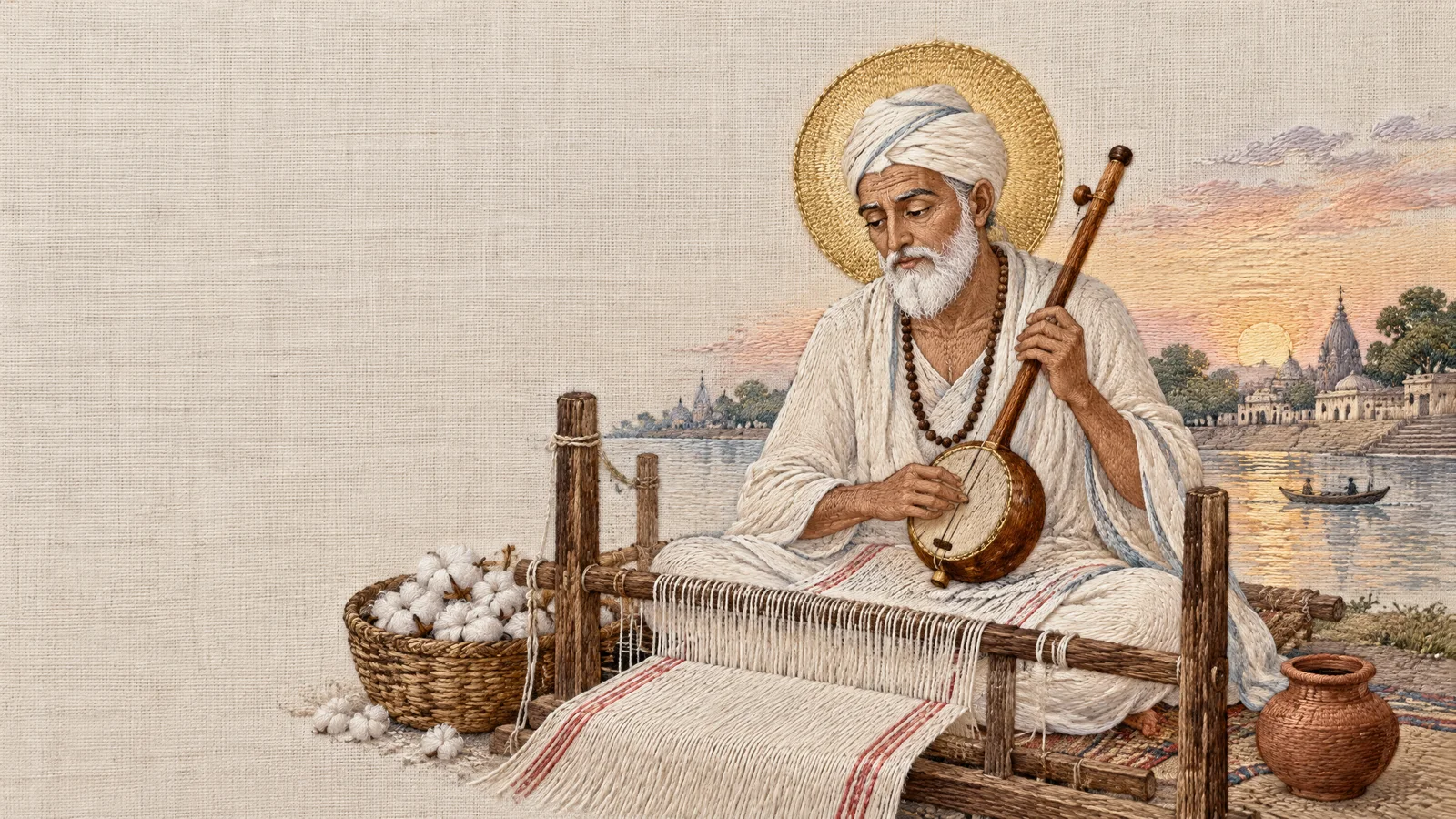
The Mirror Within
A popular couplet attributed to Kabir: seeking the bad in others he found none, but searching his own heart he found no one worse than himself.
Verses
I went out to see the bad in others, but found no one bad. When I searched my own heart, I found none worse than myself.
Worship Guidelines & Chanting Benefits (Phalashruti)
Daily or auspicious lunar days (Ekadashi, Purnima, Pradosham)
Brahma Muhurta (4:00 AM – 6:00 AM) or Evening Dusk (Sandhya)
Ghee lamp (Deepa), Incense (Dhoopa), Fresh flowers & Water offering
- Peace of mind, spiritual upliftment, and harmonious energy in the home
Background
This couplet is popularly attributed to Kabir (c. 1440–1518), the weaver-poet of Varanasi and a voice of the Nirguna Sant tradition. The Kavita Kosh page of Kabir's “Niti ke Dohe” (couplets on conduct) includes it, with the second line reading “jo man khoja apna, mujh-sa bura na koy”. Sourcing note: we could not confirm it in the Kabir Dohavali text on Kavita Kosh, so its attribution rests on that popular compilation and on tradition rather than a verified manuscript. An introduction to a Kabir Granthavali edition on Hindi Wikisource quotes it among sample sakhis under his name, with the line worded “jag mein bura na koy” (no one in the world is bad). It does not appear in the Guru Granth Sahib and is not a composition of any Sikh Guru. It is widely recited in satsangs as a lesson in humility: before judging others, look into your own heart.
About this Text
Composed by: Sant Kabir · Medieval Nirguna Bhakti Poet-Saint · 15th century, Varanasi
A mystic poet and weaver by trade from Varanasi, whose blunt, image-rich couplets (dohas) rejected ritualism and caste distinctions in favor of direct, formless (nirguna) devotion. His verses are revered across Hindu, Sikh (many appear in the Guru Granth Sahib), and Sufi-influenced traditions alike.
Did You Know?
Author
Popularly attributed to Kabir, the 15th-century weaver-poet of Varanasi and a leading voice of the Nirguna Sant tradition. Its place in a verified Kabir collection is not established (see the sourcing note above); it is not a Sikh scripture text.
Form
A doha, a two-line couplet of the North Indian Sant tradition in which each line falls into two halves of about 13 and 11 beats. Dohas were made for oral transmission, so a line like this travels in several wordings.
Meaning
The poet turns the common habit of judging others upside down: searching outward for someone bad he found no one, but searching his own heart he found no one worse than himself. It is a lesson in humility and self-examination.
Textual variant
The version here reads “jo dil khoja apna” in the second line. The Kavita Kosh page reads “jo man khoja apna, mujh-sa bura na koy”, and the Granthavali introduction on Hindi Wikisource gives the first line as “jag mein bura na koy”. The sense is the same.
Significance
The couplet is among the lines most often quoted under Kabir's name, in schools and satsangs, as a call to inner purification before criticism of others. The Nirguna tradition places inner purity above outward show, and this doha is that outlook in its simplest form.
Sant Kabir
More from Kabir Panth
See allConnected Teachings
The same teaching, echoed across traditions