Satsang and Sadh Sangat in Ravidassia Practice
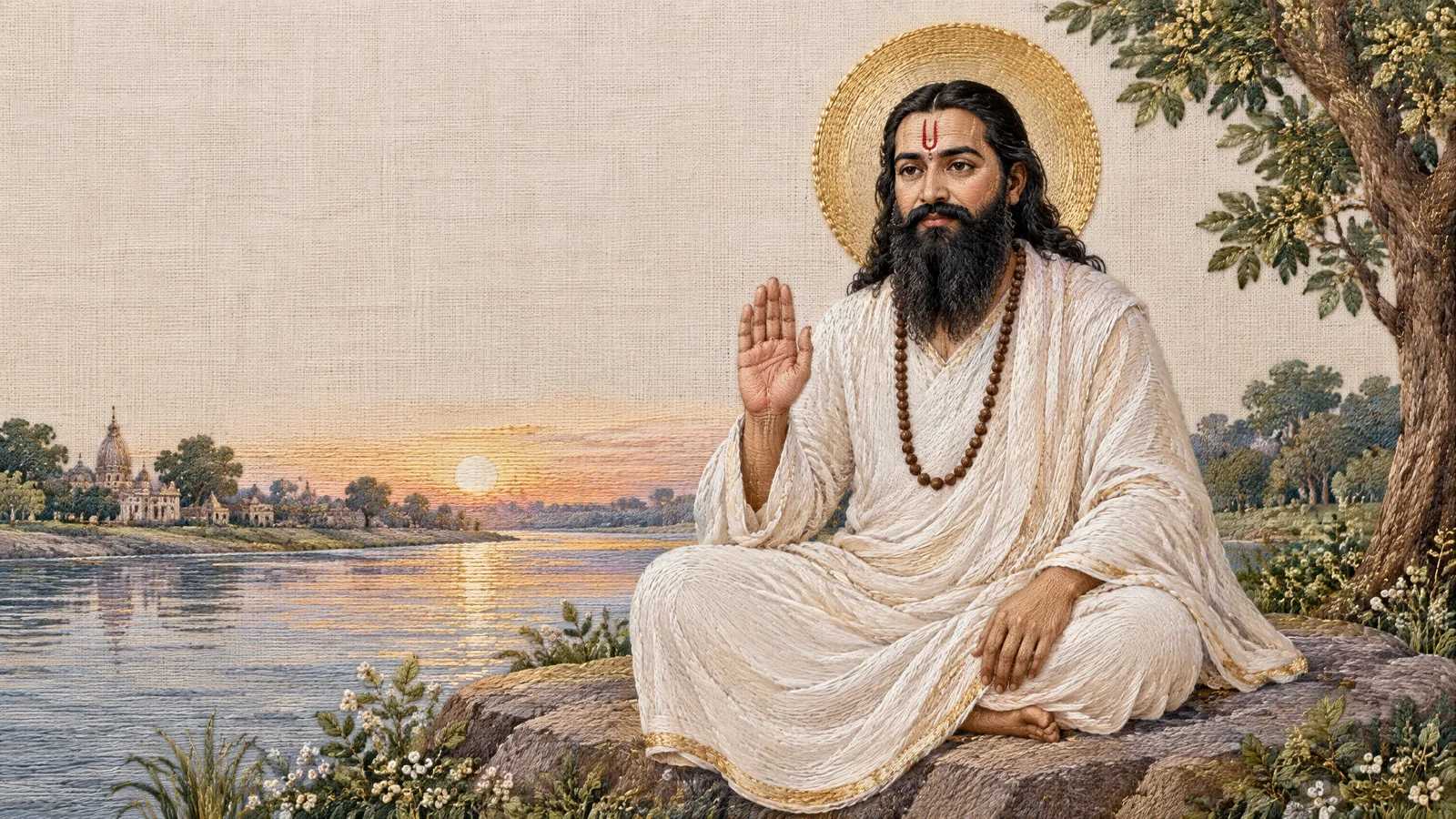
Guru Ravidass taught that even a brief moment in sadh sangat, the company of true saints, can elevate a devotee toward the Supreme Being.
A Moment Weighed Against a Lifetime
Guru Ravidass taught that a person need not spend years in solitary practice to draw near the Divine. A single brief moment spent in true sadh sangat, the company of holy saints, could itself become the occasion of spiritual elevation. His own verse, preserved in the Amritbani Satguru Ravidas Maharaj Ji alongside the forty-one (41) hymns of his enshrined in the Guru Granth Sahib, states this directly. Ravidass pal sadh sangat mil, puran Braham sada pritpali: one who spends even a moment in the pious company of holy saints with genuine devotion comes to know the Supreme Being who sustains all things with love forever.
Why a Moment Could Matter So Much
This teaching places remarkable weight on a single encounter precisely because it locates the transformative power in the company itself rather than in the duration spent within it. A devotee does not need years of accumulated merit to benefit from sadh sangat; the quality of the company, genuinely holy, genuinely devoted, matters more than the clock. This made satsang, the devotional gathering built around sadh sangat, accessible in a way that lengthy ascetic discipline never could be, since even the briefest encounter with true sangat carried real spiritual weight.
A Gathering That Recognized No Caste
For Ravidass's own community, born into a caste barred from temple worship and priestly instruction, satsang carried a significance beyond the purely devotional. A gathering built around sadh sangat rather than around birth or priestly credential offered genuine participation to people the surrounding social order had excluded from every other avenue of worship. Ravidass's teaching that the company of saints itself transforms the devotee, regardless of who that devotee was born as, made satsang one of the few spiritual spaces his own community could enter without first being told they did not belong there.
Sangat as Tested Against Begumpura
Ravidass's vision of Begumpura, the sorrowless city free of caste and suffering, imagined a social order structured around exactly the principle sadh sangat already embodied in miniature: genuine fellowship unconcerned with birth, caste, or inherited status. Satsang functioned as a working demonstration, available immediately rather than only in some distant imagined future, of what Begumpura's broader promise would look like if it were ever fully realized. A gathering in sadh sangat was, in this sense, Begumpura practiced for an hour rather than merely described in verse.
Singing Shabads as the Shared Activity
Within satsang, devotees gather specifically to sing shabads, hymns, and to discuss the Divine wisdom those hymns carry. This activity gives the gathering its shared focus, rather than leaving it as unstructured socializing dressed in spiritual language. The singing itself is understood to purify the thoughts of everyone present, carrying Ravidass's own teaching through melody into the body of the congregation rather than leaving it confined to private reading or solitary reflection.
Strengthening Faith Through Repetition and Company
Ravidassia tradition holds that regular participation in satsang strengthens faith in a way solitary devotion struggles to sustain on its own. Doubt and discouragement that might overwhelm a devotee alone often soften considerably in the presence of others pursuing the same path with the same sincerity. This is not treated as a substitute for personal devotion but as its necessary companion, the communal gathering renewing a commitment that private practice alone can quietly erode over time without anyone noticing until the erosion is well advanced.
A Teaching That Still Shapes Gathering Today
Ravidassia communities continue to organize their devotional life around regular satsang precisely because Guru Ravidass located so much spiritual weight in the gathering itself. It functions not as a supplement to individual practice but as one of its central pillars. A devotee who attends satsang today, singing the same shabads and sitting in the same sadh sangat Ravidass once described, participates in a practice whose core claim has remained unchanged since Ravidass first made it. Holy company, however brief, is never spiritually wasted time.
Why Brevity Does Not Mean Superficiality
It would be a mistake to read the teaching's emphasis on a single moment as license for shallow or occasional participation. Ravidass's point was never that satsang requires little, but that its power does not depend on duration the way other disciplines might. A devotee who treats a single moment of sadh sangat as sufficient reason to neglect regular gathering altogether has misunderstood the teaching rather than applied it faithfully. The verse honors how quickly transformation can occur in true company, not how rarely a devotee needs to seek that company out.
Did You Know?
Meaning of Satsang
The term Satsang combines Sat (truth) and Sang (company), literally meaning “fellowship with truth.” In Ravidassia practice, it is not just any gathering but a disciplined congregation focused on singing the sacred hymns (shabads) of Guru Ravidass Ji and meditating on divine wisdom.
Guru Ravidass’s Promise
Guru Ravidass Ji taught that even a single moment spent in the company of holy saints (sadhus or sants) can purify a person’s mind and elevate their spiritual life. This teaching underscores the transformative power of collective devotion over solitary practice.
Core Practice
A typical Ravidassia Satsang involves the singing of shabads from the Guru Ravidass Bani, often accompanied by harmonium and tabla. The congregation listens, reflects, and sometimes discusses the meaning of the verses, making it both a musical and intellectual act of worship.
Social and Moral Role
Beyond personal purification, Satsang strengthens community bonds and reinforces the Ravidassia values of equality, compassion, and rejection of caste hierarchies. It serves as a weekly or daily reminder that divine truth is accessible to all, regardless of social background.
Contrast with Solitary Worship
While individual prayer or meditation is encouraged, Satsang is considered uniquely powerful because the collective energy and shared focus on truth help overcome personal distractions and doubts. Guru Ravidass Ji emphasized that the company of the virtuous is a rare and precious gift.
Guru Ravidas Ji
More from Ravidassia
Connected Teachings
The same teaching, echoed across traditions