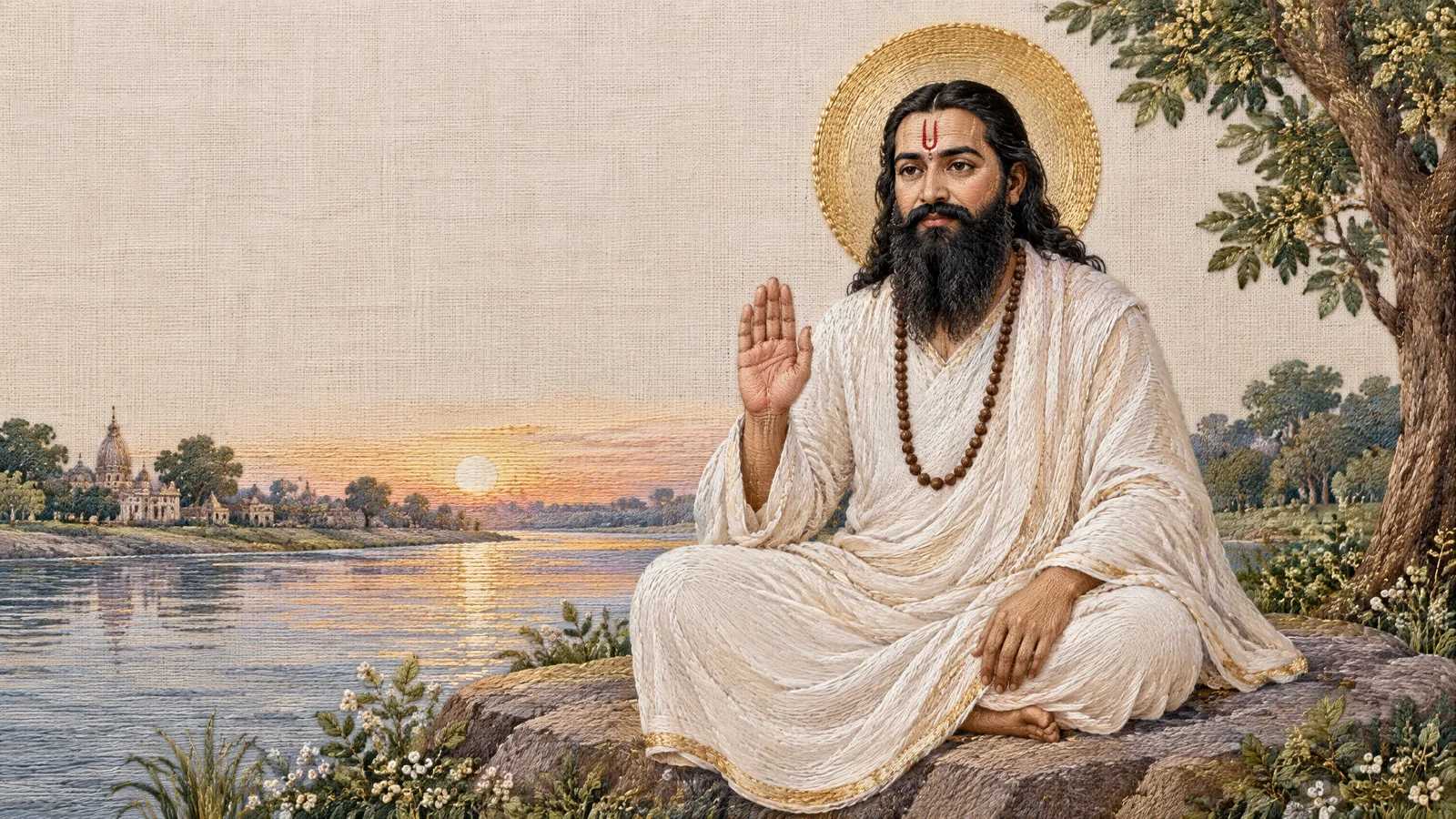
Bahut Janam Bichhure the Madho (Bhagat Ravidas)
Bhagat Ravidas's Raag Dhanasari hymn (Ang 694) on separation from the Lord and longing for union; see the reading note on the wording.
Verses
In Rag Dhanasari: After many births of separation, O Lord Madhava, this humble soul is counted among Yours. The body, breath, and treasure of life—the mind blossoms with even a trace of the Lord’s essence. ||1||
Verse 1
O supremely wise, beautiful, and incomparable Lord! Out of love for worldly beings, I forgot You. Deluded by doubt, my mind became mad, just as the chatrik bird is crazed with love for the rain-drop. ||1||Pause||
Verse 2
In whatever way You engaged in countless pleasures, in that same way You have now brought about our union. After many efforts, when I meditated on You, then my loving attachment never left me. ||2||
Verse 3
You assume countless forms and many colors; the nine treasures cannot be described. Without devotion, separation is of no avail; meeting the Lord comes naturally to His servant. ||3||
Verse 4
Meeting and merging, the soul becomes immortal and is never born again. Says Ravidas, I live in the hope that by meeting You, one attains the supreme state. ||4||1||
Verse 5
Worship Guidelines & Chanting Benefits (Phalashruti)
Daily or auspicious lunar days (Ekadashi, Purnima, Pradosham)
Brahma Muhurta (4:00 AM – 6:00 AM) or Evening Dusk (Sandhya)
Ghee lamp (Deepa), Incense (Dhoopa), Fresh flowers & Water offering
- Peace of mind, spiritual upliftment, and harmonious energy in the home
Background
The line "Bahut janam bichhure the Madhau" belongs to the Raag Dhanasari shabad of Bhagat Ravidas at Ang 694 of the Guru Granth Sahib, the central scripture of Sikhism. Ravidas was a 15th-century saint-poet of the North Indian Bhakti movement, and shabads like this are sung as kirtan in Sikh and Ravidassia gatherings. Honest reading note: the shabad at Ang 694 has two stanzas and a refrain, and reads "ih janam tumhare lekhe" and ends "kahi Ravidas as lag jivau chir bhaio darsan dekhe ||2||1||". The wording given on this page matches the line "Bahut janam bichhure the Madhau" but then runs on into four stanzas that are not in the scripture, so it should be read as a devotional paraphrase, and the verbatim text is to be read at Ang 694.
About this Text
Composed by: Bhagat Ravidas · Medieval Nirguna Bhakti Poet-Saint · 15th–16th century, Varanasi
A poet-saint and leather worker by trade from Varanasi, whose hymns envisioned Begampura — a utopian realm free of sorrow, fear, and caste-based inequality. His compositions are included in the Guru Granth Sahib and form the devotional core of the modern Ravidassia tradition.
Did You Know?
Author and location
The shabad is by Bhagat Ravidas (c. 15th to 16th century), a saint-poet of the Bhakti movement whose hymns, about forty in number, are included in the Guru Granth Sahib. This one is in Raag Dhanasari at Ang 694.
Raag Dhanasari
Dhanasari is the tenth raag of the Guru Granth Sahib.
The line itself
"Bahut janam bichhure the Madhau" means "for many births I was parted from You, O Madhav". Madhav is a name of the Lord, and the Ang 694 text continues "ih janam tumhare lekhe", this life is laid at Your account.
What Ang 694 says
The refrain is "hau bal bal jau Ramaiya karane", a sacrifice to Ramaiya, the Lord. The shabad closes with Ravidas saying that he lives in the hope of Your sight, so long has it been since he saw You.
Reading note on the wording
The text on this page continues past that line into four stanzas (the chatrik bird, the nine treasures, merging of souls) that we could not find at Ang 694 or elsewhere in the Guru Granth Sahib. Read it as a devotional paraphrase and take the verbatim shabad from Ang 694.
Guru Ravidas Ji
More from Ravidassia
Connected Teachings
The same teaching, echoed across traditions