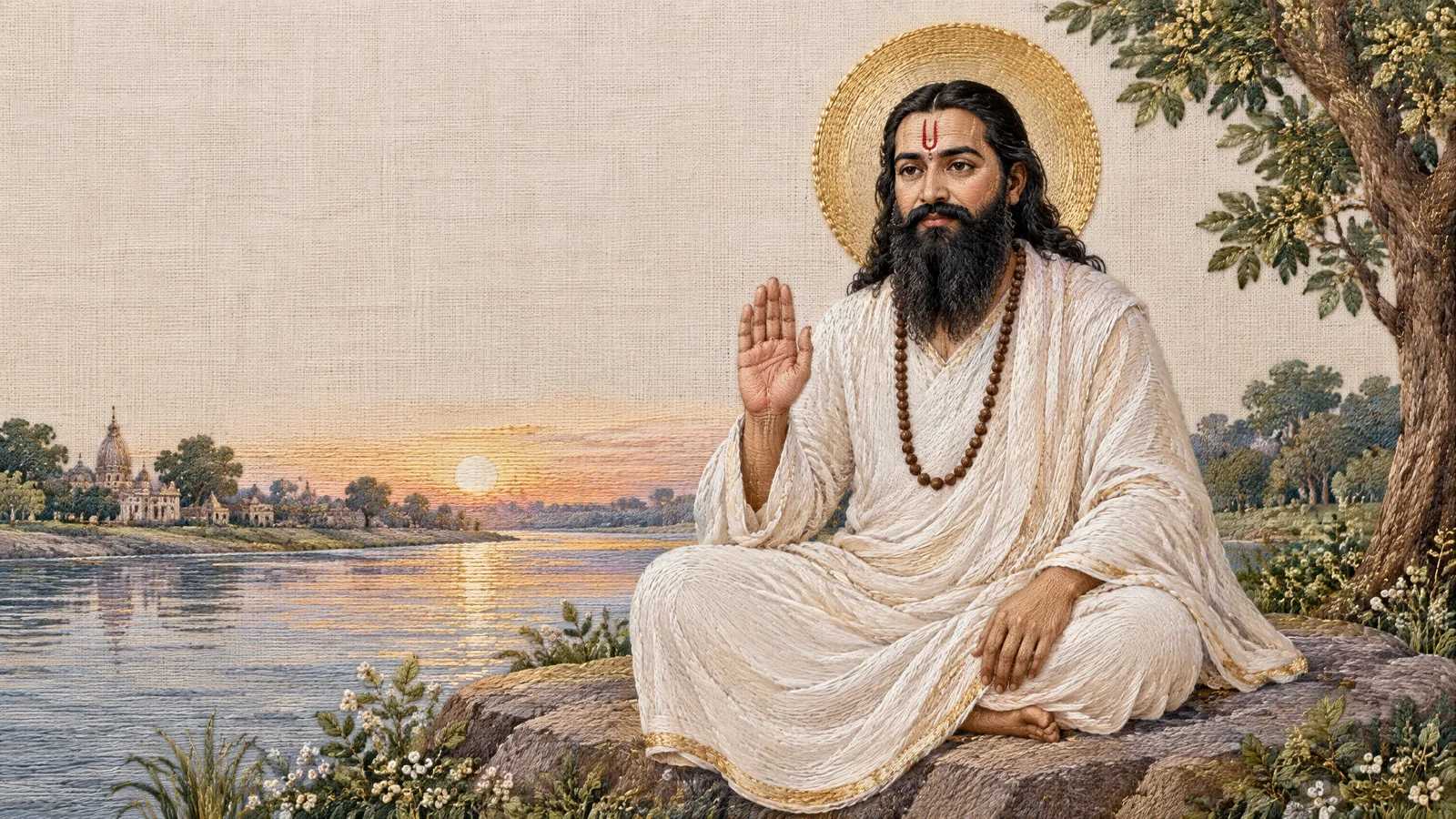
Begampura Shehar Ko Naao
A shabad by Bhagat Ravidas describing Begampura, a perfect city free from pain, taxes, and fear — a vision of social equality and spiritual liberation.
Verses
Begampura — 'the city without sorrow' is its name. There is no suffering or anxiety there.
Verse 1
There is no anxiety over taxes, property, fear, error, or decline.
Verse 2
Worship Guidelines & Chanting Benefits (Phalashruti)
Daily or auspicious lunar days (Ekadashi, Purnima, Pradosham)
Brahma Muhurta (4:00 AM – 6:00 AM) or Evening Dusk (Sandhya)
Ghee lamp (Deepa), Incense (Dhoopa), Fresh flowers & Water offering
- Peace of mind, spiritual upliftment, and harmonious energy in the home
Background
This passage is from a shabad by Bhagat Ravidas, the 15th-16th century cobbler-saint of the Bhakti movement, found in Raag Gauri on Ang 345 of the Guru Granth Sahib, the central scripture of Sikhism. The verses describe a metaphorical city called Begampura (literally "the city without sorrow"), a vision of a just, egalitarian society where suffering, fear, taxes, and worldly burdens do not exist. Traditionally, this shabad is recited or sung as a devotional reflection on social equality and spiritual liberation, and is especially revered by the Ravidassia community and in Sikh devotional gatherings.
About this Text
Composed by: Bhagat Ravidas · Medieval Nirguna Bhakti Poet-Saint · 15th–16th century, Varanasi
A poet-saint and leather worker by trade from Varanasi, whose hymns envisioned Begampura — a utopian realm free of sorrow, fear, and caste-based inequality. His compositions are included in the Guru Granth Sahib and form the devotional core of the modern Ravidassia tradition.
Did You Know?
Author and Source
This shabad is composed by Bhagat Ravidas and appears in Raag Gauri on Ang 345 of the Guru Granth Sahib, the central scripture of Sikhism.
Meaning of Begampura
“Begampura” translates to “city without sorrow” or “city without grief.” It is a metaphorical realm of spiritual and social perfection, free from taxes, fear, and punishment.
Poetic Structure
The verses are written as a couplet (salok) with a consistent meter. Each line lists what is missing from this ideal city, creating a stark contrast with the hardships of earthly life.
Theological and Social Significance
Begampura represents both a spiritual state of union with God and a vision of an egalitarian society free from caste and social hierarchy, reflecting Bhagat Ravidas's own life as a cobbler-saint who challenged caste discrimination.
Historical Context
Bhagat Ravidas composed this hymn amid the social and economic burdens of his time. The mention of “no tax” (khiraj) and “no fear” (khauf) directly reflects the hardships faced by the common people of 15th-16th century India.
Guru Ravidas Ji
More from Ravidassia
Connected Teachings
The same teaching, echoed across traditions