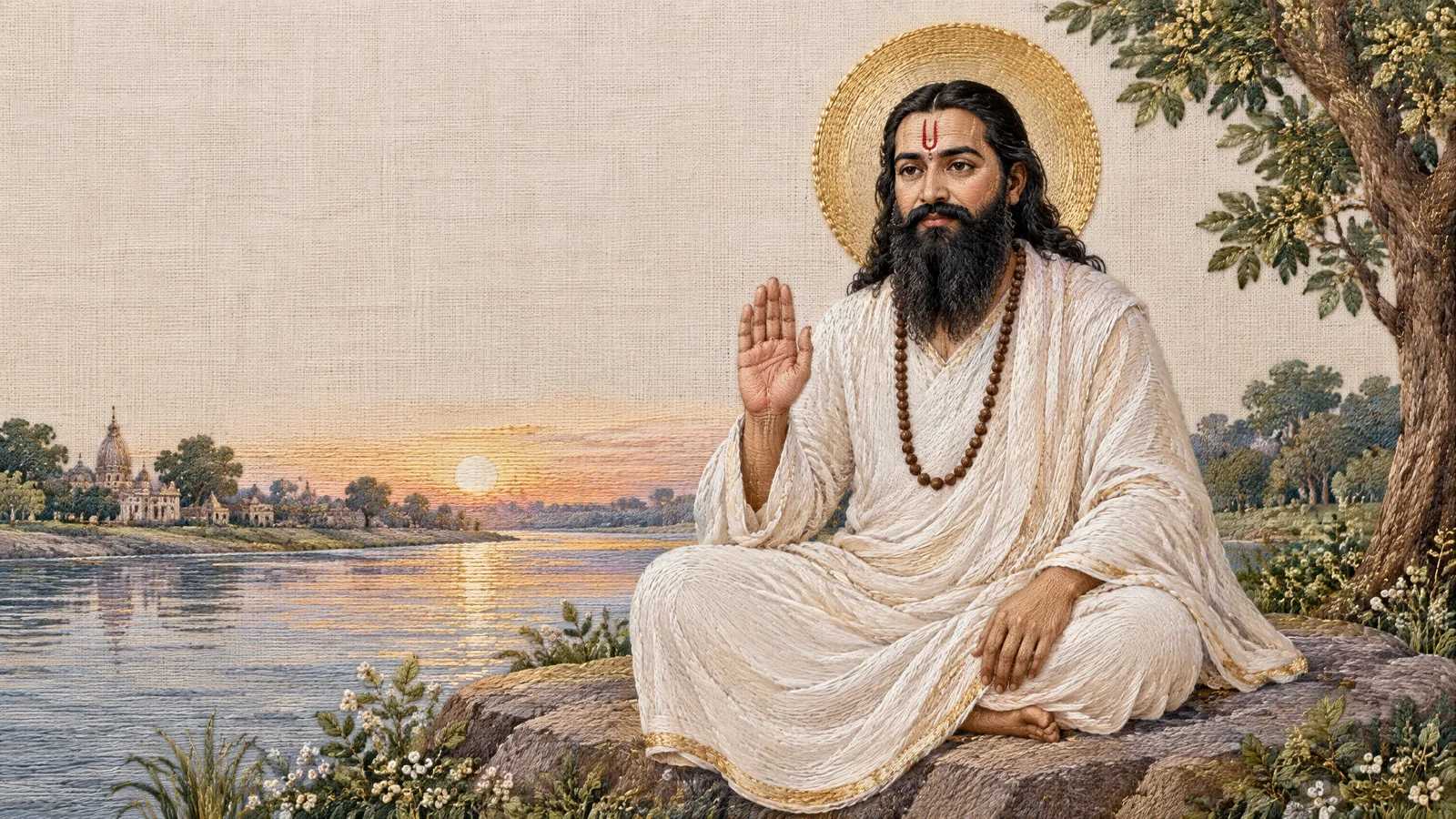
经文段落
贝甘普拉——'没有悲伤的城市'是它的名字。那里没有痛苦或焦虑。
第节 1
没有对税收、财产、恐惧、错误或衰退的焦虑。
第节 2
Worship Guidelines & Chanting Benefits (Phalashruti)
Daily or auspicious lunar days (Ekadashi, Purnima, Pradosham)
Brahma Muhurta (4:00 AM – 6:00 AM) or Evening Dusk (Sandhya)
Ghee lamp (Deepa), Incense (Dhoopa), Fresh flowers & Water offering
- Peace of mind, spiritual upliftment, and harmonious energy in the home
经典背景
这首赞美诗出自锡克教经典《古鲁·格兰特·萨希卜》,由第五代古鲁阿尔琼·德夫创作。传统上,它被用于锡克教聚会的吟唱和冥想,引导信徒向往超越世俗苦难的灵性家园。诗中“贝甘普拉”一词源自波斯语,意为“无苦之城”,是锡克教中一个著名的灵性隐喻。
关于此经文
作者: Bhagat Ravidas · Medieval Nirguna Bhakti Poet-Saint · 15th–16th century, Varanasi
A poet-saint and leather worker by trade from Varanasi, whose hymns envisioned Begampura — a utopian realm free of sorrow, fear, and caste-based inequality. His compositions are included in the Guru Granth Sahib and form the devotional core of the modern Ravidassia tradition.
Bhagat Ravidas的更多作品
您知道吗?
出处与作者
这首诗出自锡克教圣典《古鲁格兰特·萨希卜》,由第一代古鲁纳纳克创作,是锡克教核心赞美诗之一。
名称含义
“Begampura”字面意为“无忧之城”,在锡克教中象征通过虔诚修行达到的精神解脱境界,没有世俗的烦恼与恐惧。
诗句结构
采用两行一对的简洁对仗形式,每行列举一种世俗苦难的缺失(如痛苦、税收、恐惧),形成强烈的对比效果。
宗教意义
该诗描绘的理想国度对应锡克教“真理之境”(Sach Khand),强调通过冥想和古鲁的教导,信徒可在现世体验内在的安宁与自由。