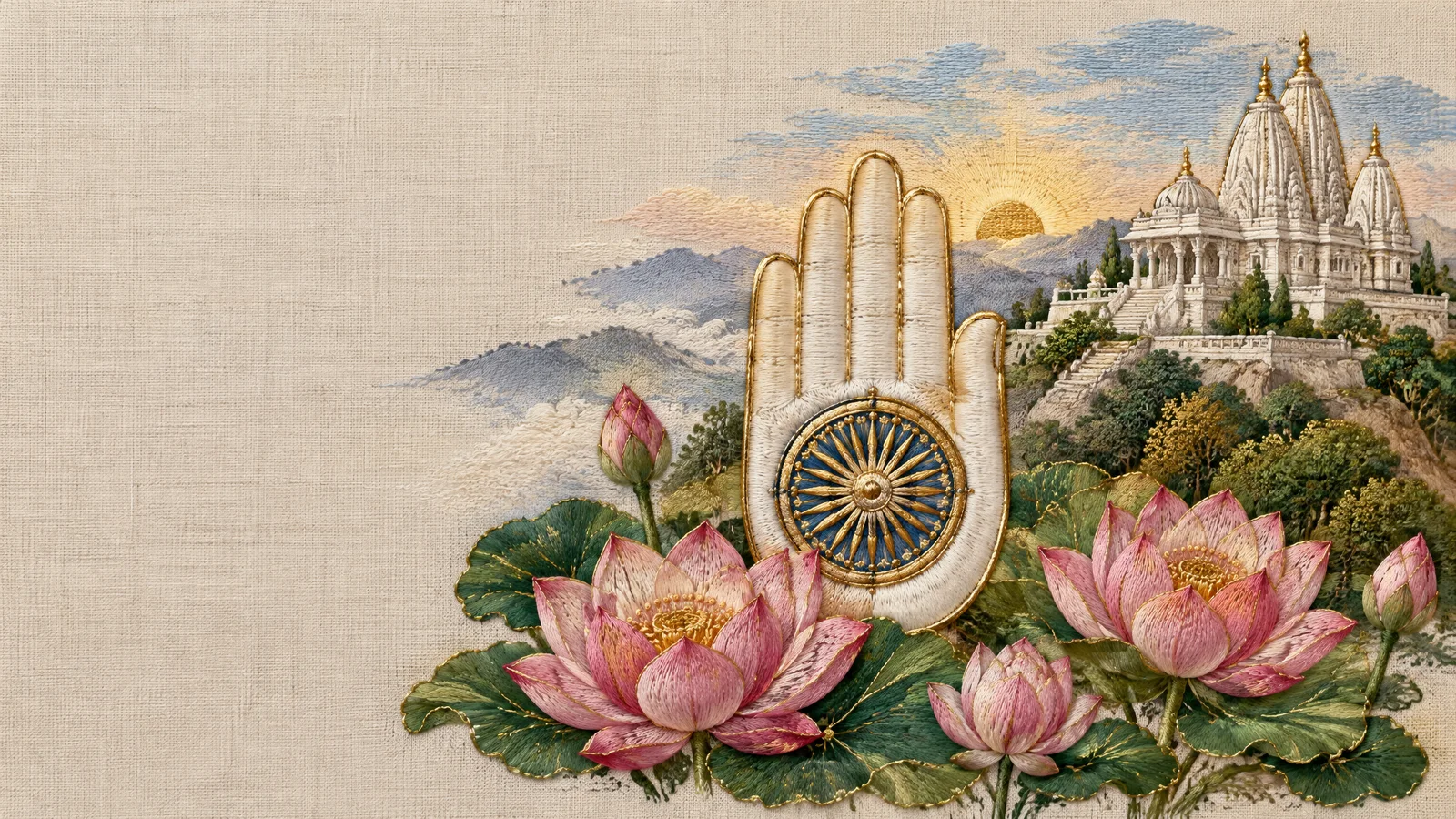
Shikharji
The Supreme Mountain of Twenty Tirthankaras
Sammed Shikharji in Jharkhand is the holiest tirtha in Jainism, where twenty of the twenty-four Tirthankaras attained eternal Moksha through a 27-kilometer barefoot pilgrimage.
Quick Devotional Guide (At a Glance)
- •WHAT IT IS: The supreme Siddha Kshetra, Land of Liberation, of Jain cosmology. It is the sanctified mountain where twenty of the twenty-four universal spiritual teachers, the Tirthankaras, beginning with Bhagwan Ajitanatha up to Bhagwan Parshvanatha, cast off their mortal bodies and attained Nirvana, eternal liberation from Samsara.
- •WHY VISIT / CHANT: Scriptural tradition asserts that even a single step taken with pure faith upon this holy soil incinerates countless lifetimes of accumulated karmic bondage. Chanting the Navkar Mantra and meditating at each Tonk, a sacred shrine with sacred foot impressions, the Charan Padukas, grants ultimate spiritual purification, inner tranquility, and seeds the path to eternal Moksha.
- •WHEN TO VISIT: The ideal pilgrimage season extends from October through March when the climate is cool and comfortable for mountain trekking. The most auspicious occasions include Kartik Purnima, Chaitra Sud Teras, also Mahavir Jayanti, Paush Dashami, the Parshvanath Nirvana Kalyanak, and Paryushana or Dashlakshana Parva.
- •WHERE: Giridih District, Jharkhand, India. Situated on Parasnath Hill in the Parasnath Wildlife Sanctuary, the highest peak elevation is approximately 1,350 meters. Base camp is Madhuban town, accessible via Parasnath Railway Station, about 22 km away.
- •HOW (VIDHI & RULES):
- 1.Sanctity & Dress Code: Strict adherence to Ahimsa, non-violence: no leather, silk, or animal products. Wear clean, simple, unstitched white cotton clothes, Dhoti-Kurta for men and a simple Sari or Salwar for women.
- 2.Yatra Timings: Pilgrims awaken in Brahma Muhurta, around 2:30 AM to 3:30 AM, from Madhuban to begin the 27-kilometer barefoot pilgrimage, the Vandana, before the sun rises.
- 3.Strict Fasting & Silence: Devotees often maintain a vow of fasting, Upvas, or drink only boiled water before sunset, Chauvihar, observing silence, Mauna, and reciting the Bhaktamara Stotra or Navkar Mantra at every summit.
- 4.The Sacred Parikrama: Climb via the Gandharva Nala route to the mountain ridge, perform circumambulations, Pradakshina, and Chaitya Vandana at all 31 holy Tonks, paying supreme homage at Parshvanatha Tonk, the Swarnbhadra Summit, and descend via the Sheetal Nala route before dusk.
Sacred Origin & Puranic / Scriptural Lineage
In the sacred temporal cycle (Kalachakra) of Jain cosmology, the earth is blessed by twenty-four omniscient teachers (Tirthankaras) during each era. The first Tirthankara, Bhagwan Rishabhanatha, also called Adinatha, attained liberation atop Mount Ashtapada, Kailash. Bhagwan Vasupujya attained it at Champapuri, Bhagwan Neminatha at Mount Girnar, and Bhagwan Mahavira at Pavapuri. The remaining twenty Tirthankaras all chose the solemn, pristine crests of Sammed Shikharji for their final deep meditation, Shukla Dhyana, and eternal liberation.
According to ancient Jain scriptures, including the Avasyaka Sutra, Nirvana Kanda (whose verse 2 names Sammeda as the Nirvana site of twenty Jinas), and Tirthankara Charitras, Sammed Shikharji has served as an imperishable axis of Moksha through successive universal time-cycles (Avasarpini and Utsarpini). The mountain is so deeply infused with the ascetical vibrations of perfected beings, the Siddhas, that its very soil is revered as being as sacred as Bhasma, holy ash, itself. When a Tirthankara renounced food and water for his final meditation, Anashana, the demigods, the Devas, descended from heaven to construct divine pavilions and witness the Moksha Kalyanak.
The highest ridge of the mountain, Swarnbhadra Summit, is eternally dedicated to Bhagwan Parshvanatha—the 23rd Tirthankara. It was here, upon a rock slab surrounded by dense wilderness, that Bhagwan Parshvanatha attained Nirvana in the 8th century BCE after liberating innumerable souls from spiritual ignorance. Because of his profound penance, the entire mountain range came to be revered across India as Parasnath Hill.
The Sacred Shrines & Sites
Saints, Mystics & Historical Lineage
For millennia, Shikharji has been sanctified by the footsteps of royal ascetics, great Acharyas, and devout monarchs. In ancient times, King Bharata and subsequent rulers across the Magadha and Maurya empires preserved the holy trails. Great spiritual luminaries such as Acharya Kundakunda, Acharya Samantabhadra, Acharya Hemachandra, and Acharya Haribhadrasuri sang celestial hymns praising the Siddha Kshetra's unfathomable sanctity.
During the medieval era, devout laymen (Shravakas) like Seth Anandji Kalyanji and Seth Jagdusha organized grand Sanghas (pilgrimage caravans) of thousands of monks and householders across hundreds of miles to safeguard and restore these sacred shrines. In modern history, both the Digambara and Svetambara traditions unite in revering every stone and leaf of this mountain as living embodiments of ascetic purity, ensuring the hill remains a sanctuary free from all non-spiritual contamination.
Sacred Hymn & Contemplation
Nirvana Kanda, verse 2 (Prakrit):
वीसं तु जिणवरिंदा अमरासुरवंदिदा धुदकिलेसा ।
सम्मेदे गिरिसिहरे णिव्वाणगया णमो तेसिं ॥
Transliteration:
Vīsaṃ tu jiṇavariṃdā amarāsuravaṃdidā dhudakilesā .
Sammede girisihare ṇivvāṇagayā ṇamo tesiṃ .
English Contemplation:
"The twenty lords of the Jinas, worshipped by gods and asuras, their afflictions destroyed, attained Nirvana on the summit of Mount Sammeda. I bow to them."
Did You Know?
Out of the twenty-four Tirthankaras of the current Avasarpini era, twenty attained Moksha from Shikharji, making it the most concentrated site of spiritual liberation in Jain cosmology.
The barefoot pilgrimage path covers a grueling 27 kilometers up, across the ridgeline, and down the mountain, traditionally completed in a single continuous day of fasting.
Parasnath Hill is the highest mountain peak in the state of Jharkhand, standing majestically at 1,350 meters (4,430 feet) above sea level.
Every single Tonk on the mountain marks the exact rock formation where a specific Tirthankara entered deep Shukla Dhyana and cast off their final karmic body.
Devotees never consume food or drink after sunset on the mountain and carry strictly pure cloves (Lavang) and camphor to offer at the Charan Padukas.
Mahavira
More from Jainism
Connected Teachings
The same teaching, echoed across traditions