經詩內容
卡比爾立於市集之中,願眾人皆得安好。不與任何人結交,也不與任何人結怨。
Worship Guidelines & Chanting Benefits (Phalashruti)
Daily or auspicious lunar days (Ekadashi, Purnima, Pradosham)
Brahma Muhurta (4:00 AM – 6:00 AM) or Evening Dusk (Sandhya)
Ghee lamp (Deepa), Incense (Dhoopa), Fresh flowers & Water offering
- Peace of mind, spiritual upliftment, and harmonious energy in the home
背景介紹
這首詩屬於印度中世紀的虔信傳統(巴克蒂運動),由詩人卡比爾(約15世紀)創作。卡比爾的詩作常以市井語言傳達覺悟智慧,被錫克教的《古魯·格蘭特·薩希卜》及印度教的許多文獻收錄。傳統上,這首詩被用作冥想或誦讀,提醒修行者放下自私的依附,以無分別心利益眾生。
關於此經文
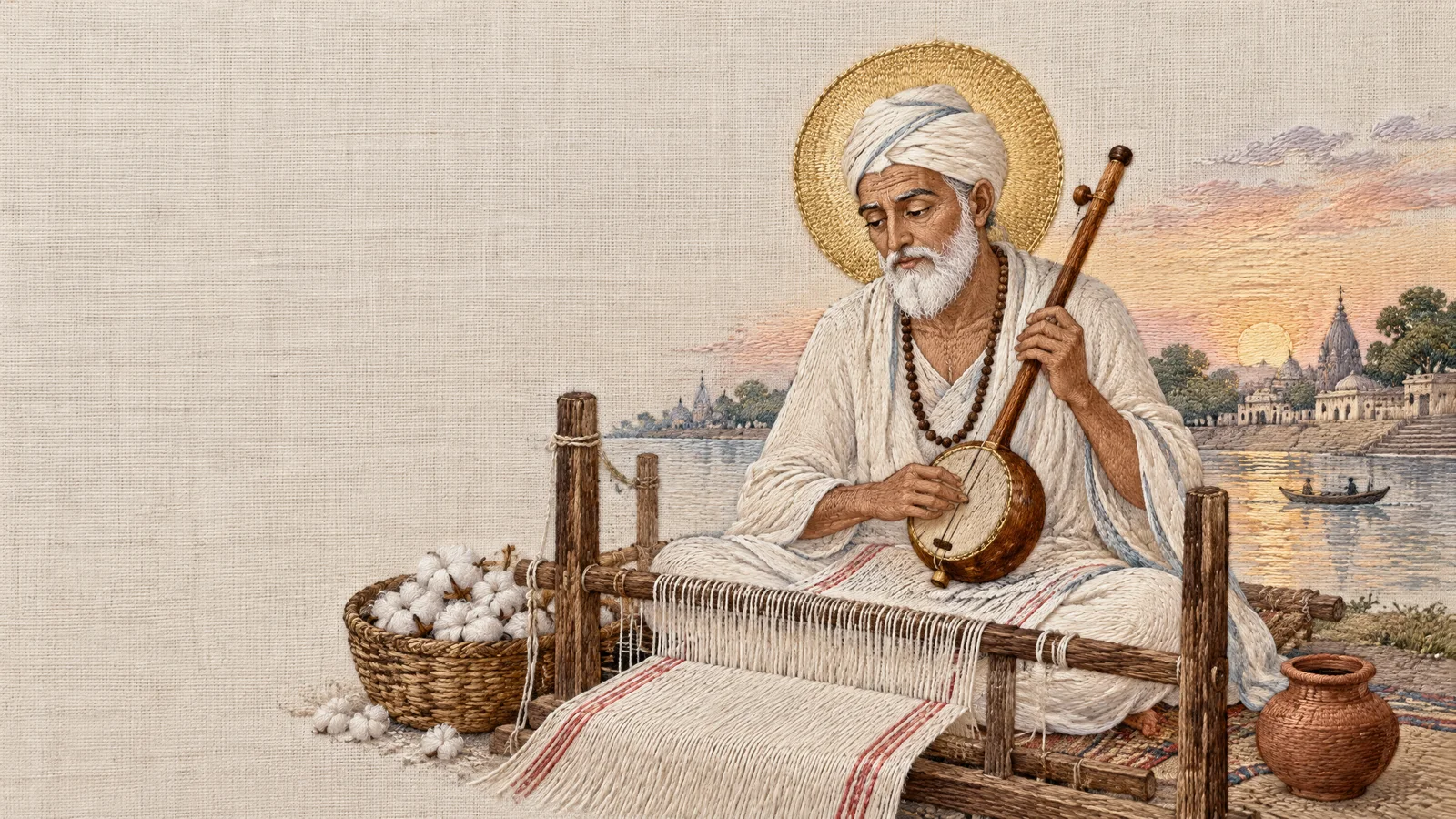
作者: Sant Kabir · Medieval Nirguna Bhakti Poet-Saint · 15th century, Varanasi
A mystic poet and weaver by trade from Varanasi, whose blunt, image-rich couplets (dohas) rejected ritualism and caste distinctions in favor of direct, formless (nirguna) devotion. His verses are revered across Hindu, Sikh (many appear in the Guru Granth Sahib), and Sufi-influenced traditions alike.
您知道嗎?
詩人背景
卡比爾(Kabir)是15世紀印度神祕主義詩人,其作品融合印度教與伊斯蘭教思想,強調內在修行而非外在儀式。此段「多哈」(doha,兩行詩)為其常見創作形式。
核心信息
詩中「站在市場」象徵活在世俗中卻不執著人際關係的對立,表達對眾生無差別的祝福——既不刻意交友,也不樹敵,體現平等心。
語言與文化
原文使用北印度語(Hindi)及布拉傑方言(Braj Bhasha),「कैर」指「福祉」。這首詩廣為傳誦,常被引用來說明修行者如何在日常生活中保持超然態度。