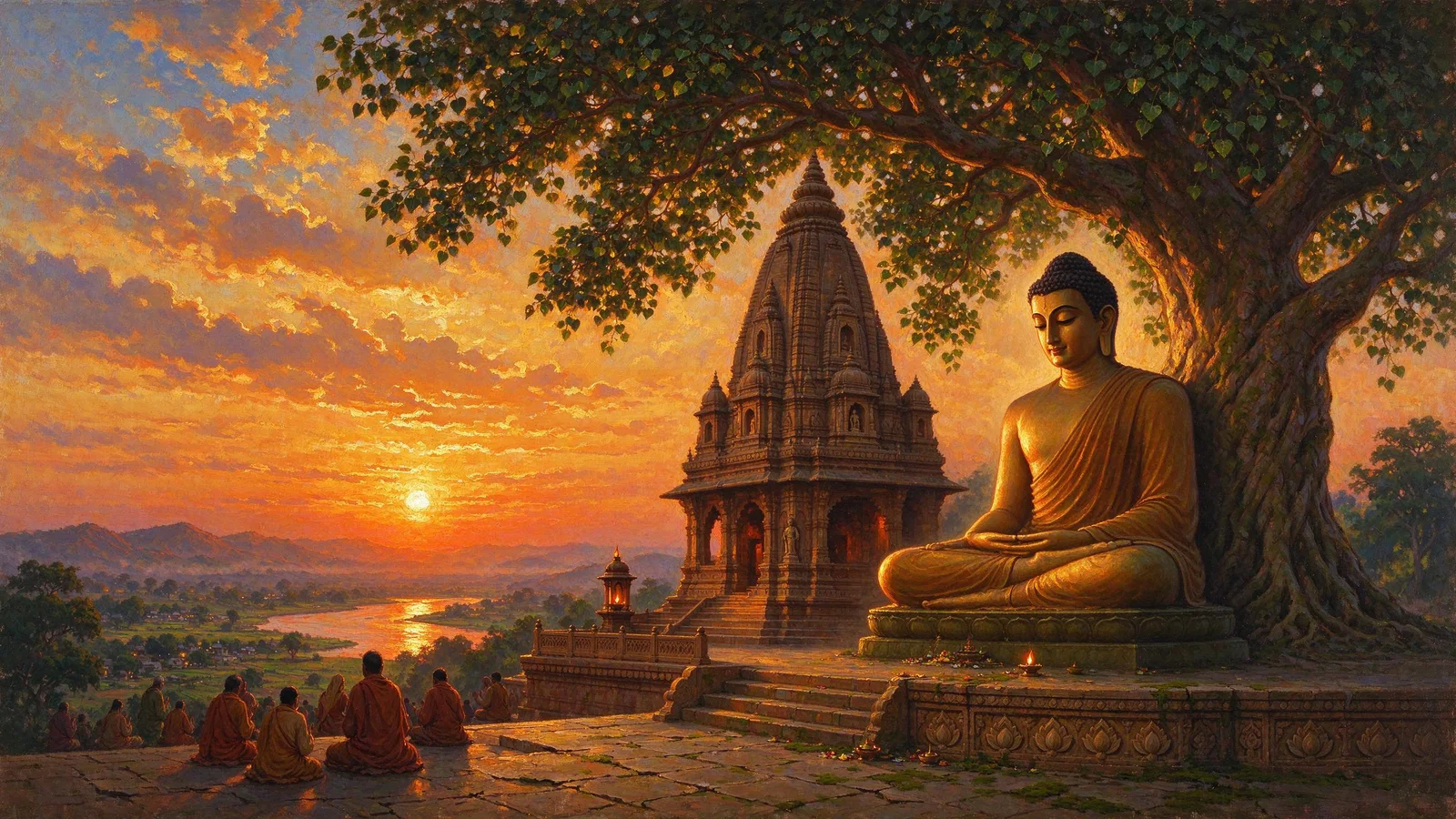
The Enlightenment of the Buddha at Bodh Gaya
Under the Bodhi tree, Siddhartha resolved not to rise until he found the truth, withstood Mara's temptations, and awakened to the Four Noble Truths.
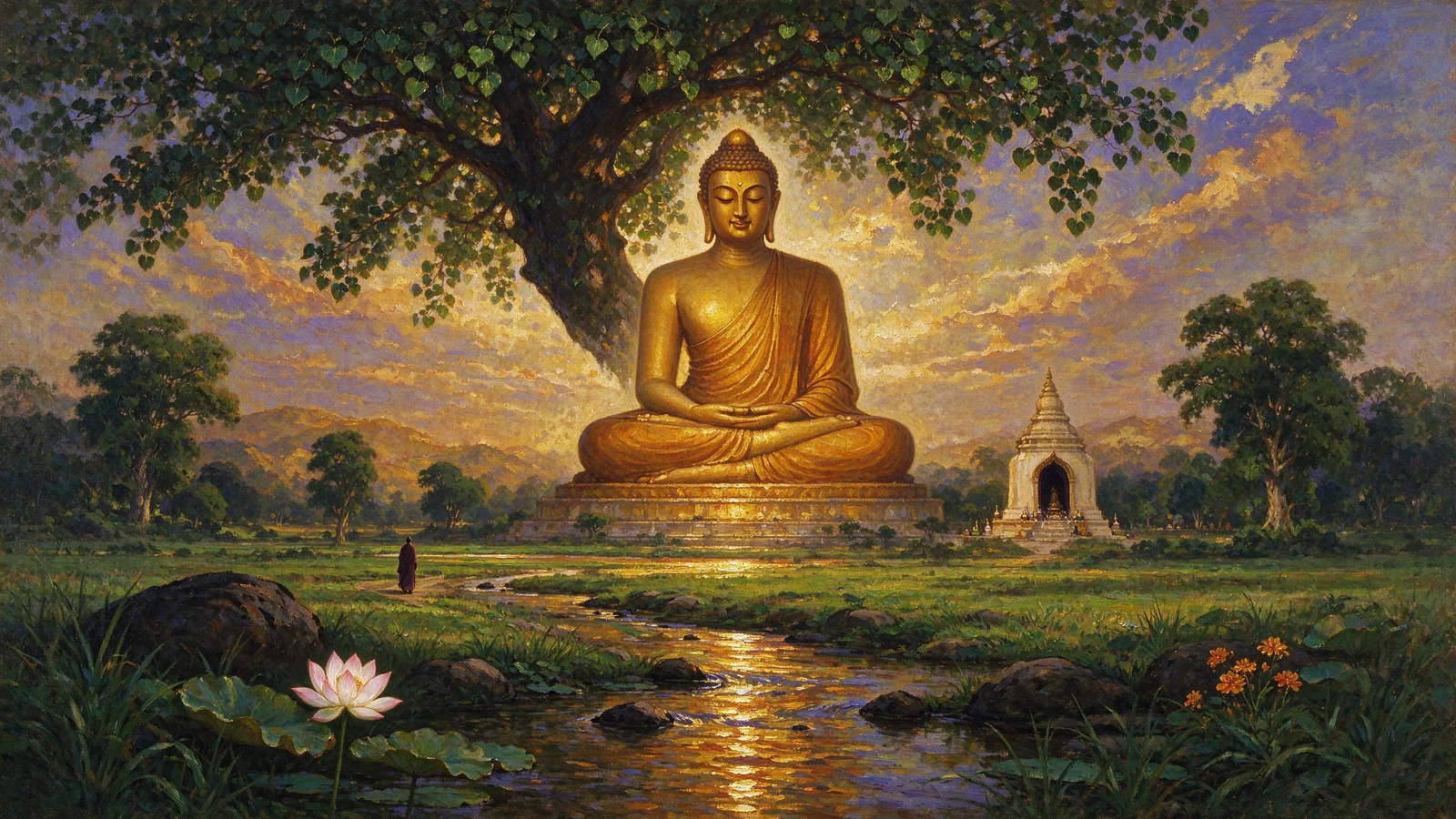
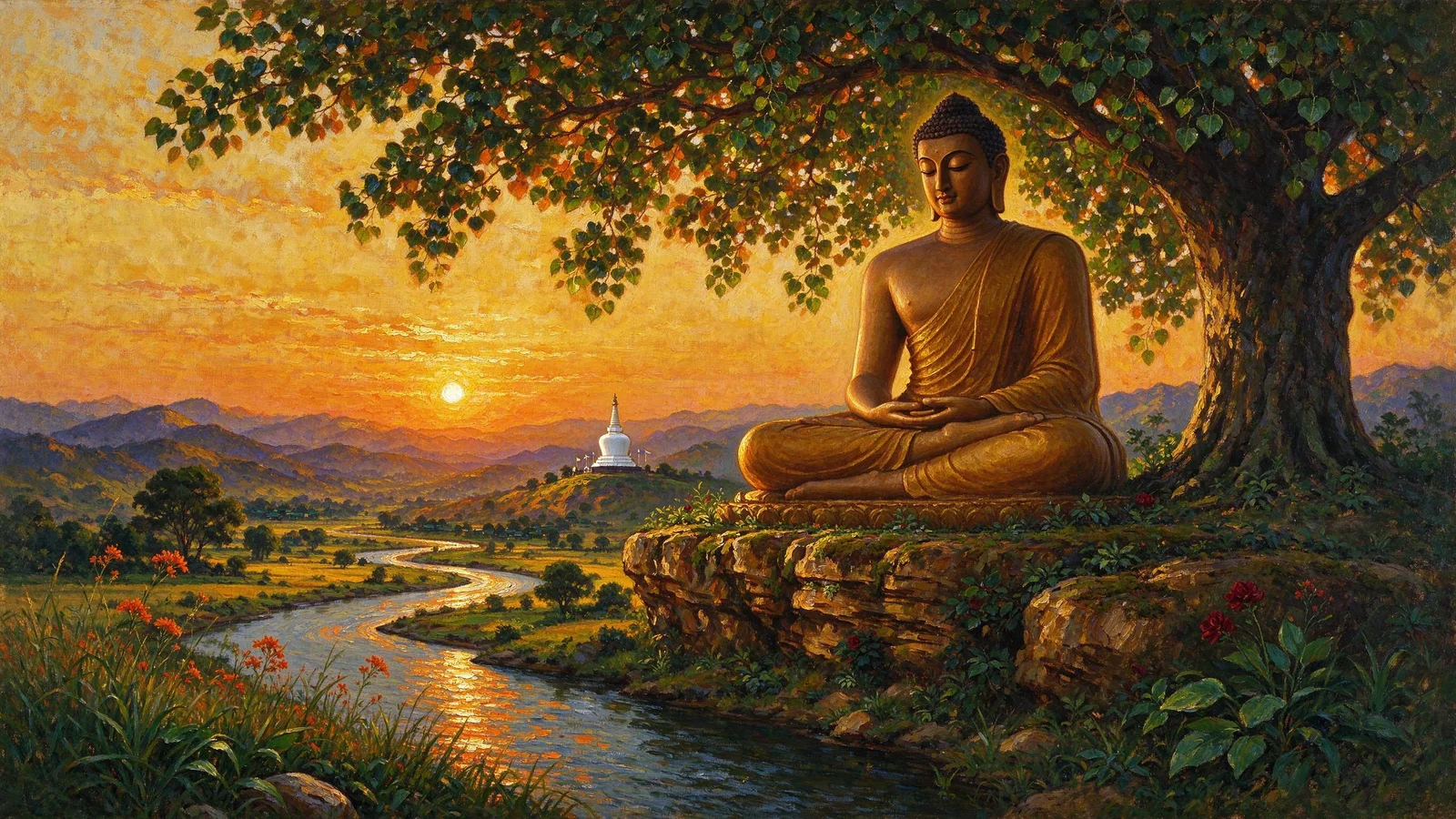
After years of seeking truth through extreme asceticism, and then rejecting that path as fruitless, Siddhartha Gautama sat down beneath a large fig tree, now known as the Bodhi tree, in Bodh Gaya. Ashvaghosha's Buddhacarita, Canto 13, records the resolve he made before settling into meditation: he would not rise from that spot until he had discovered the way to end suffering, birth, old age, sickness, and death. Alone, he entered deep meditation, determined to uncover the ultimate nature of reality.
Mara's Challenge
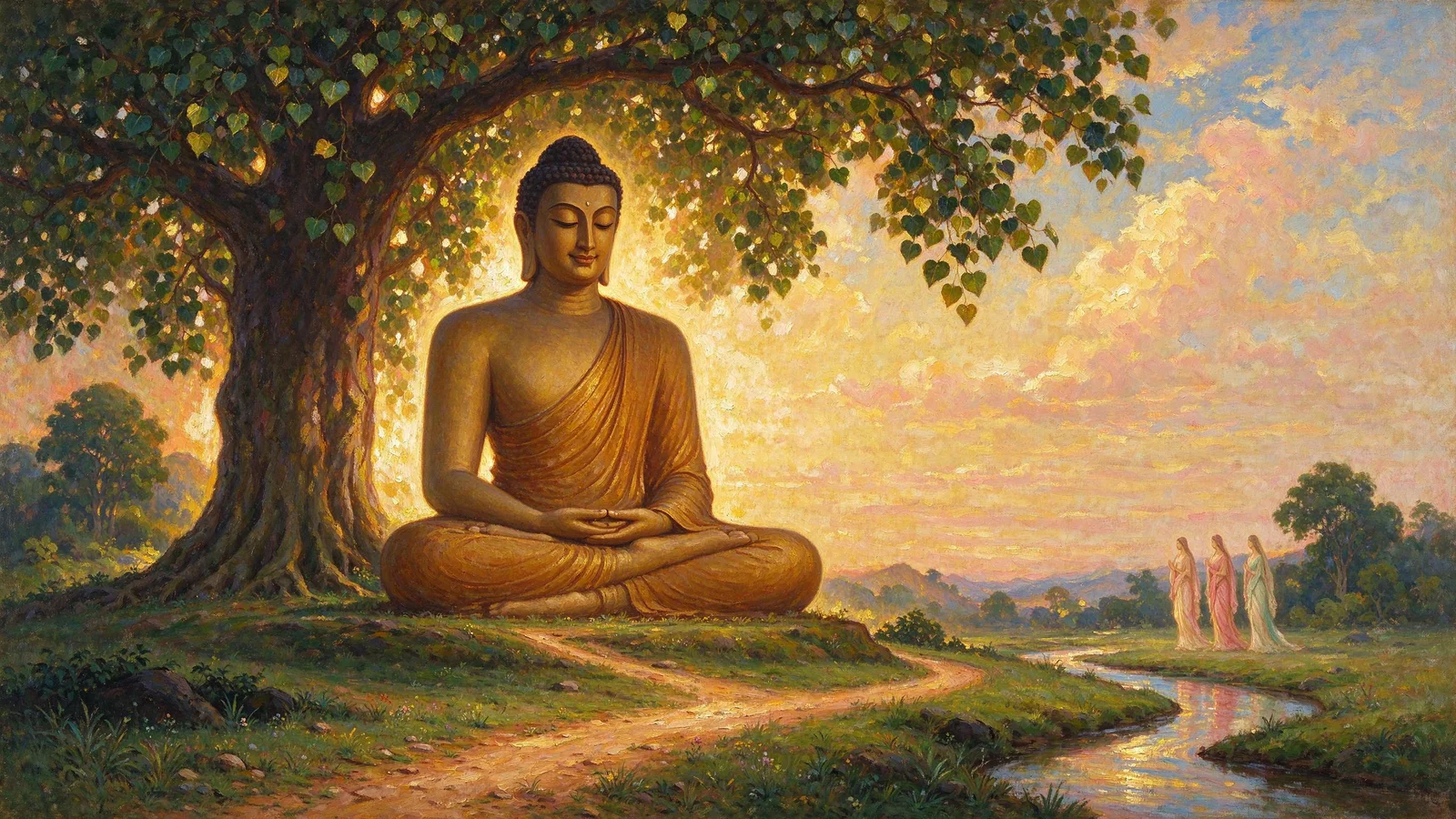
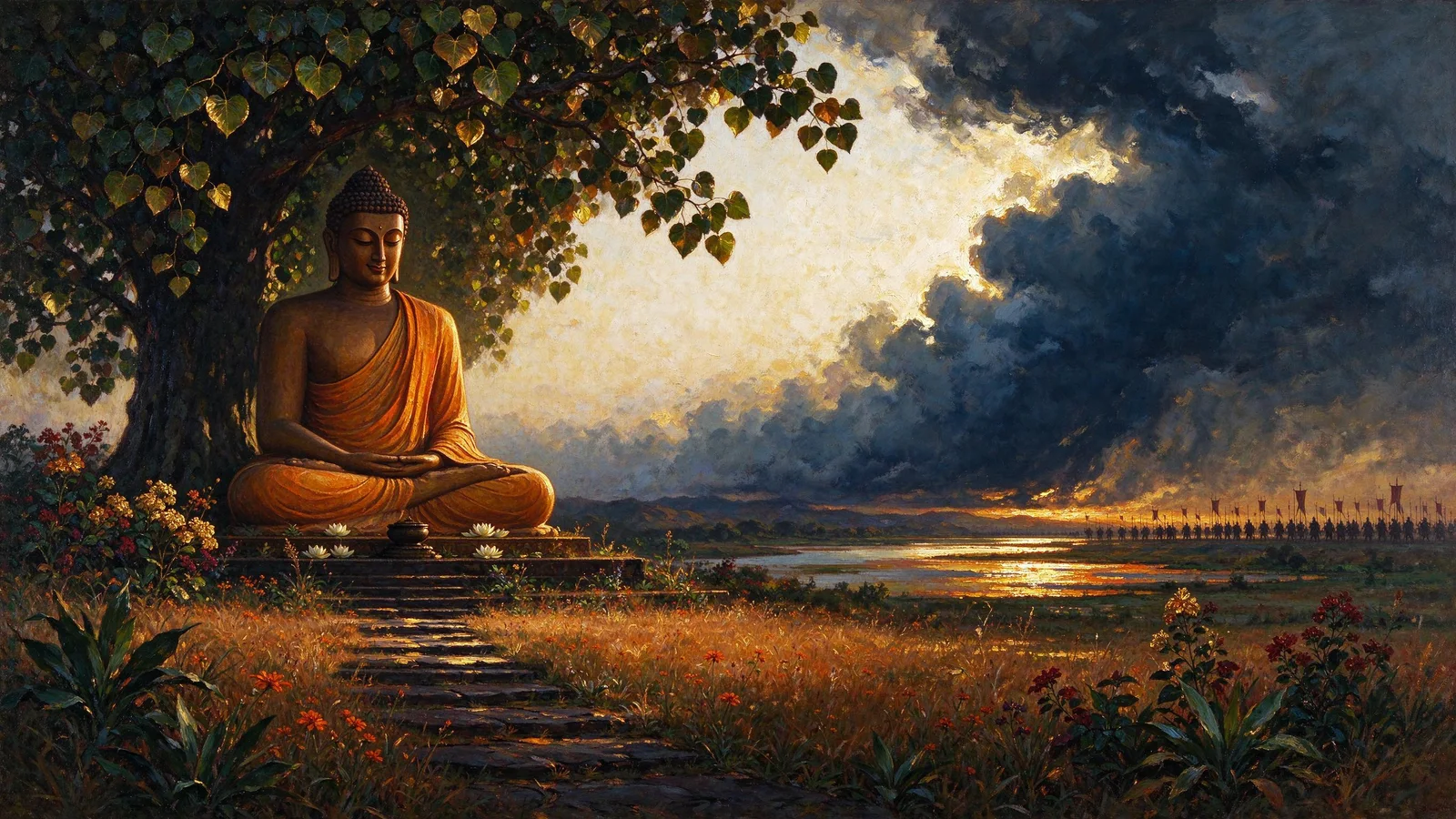
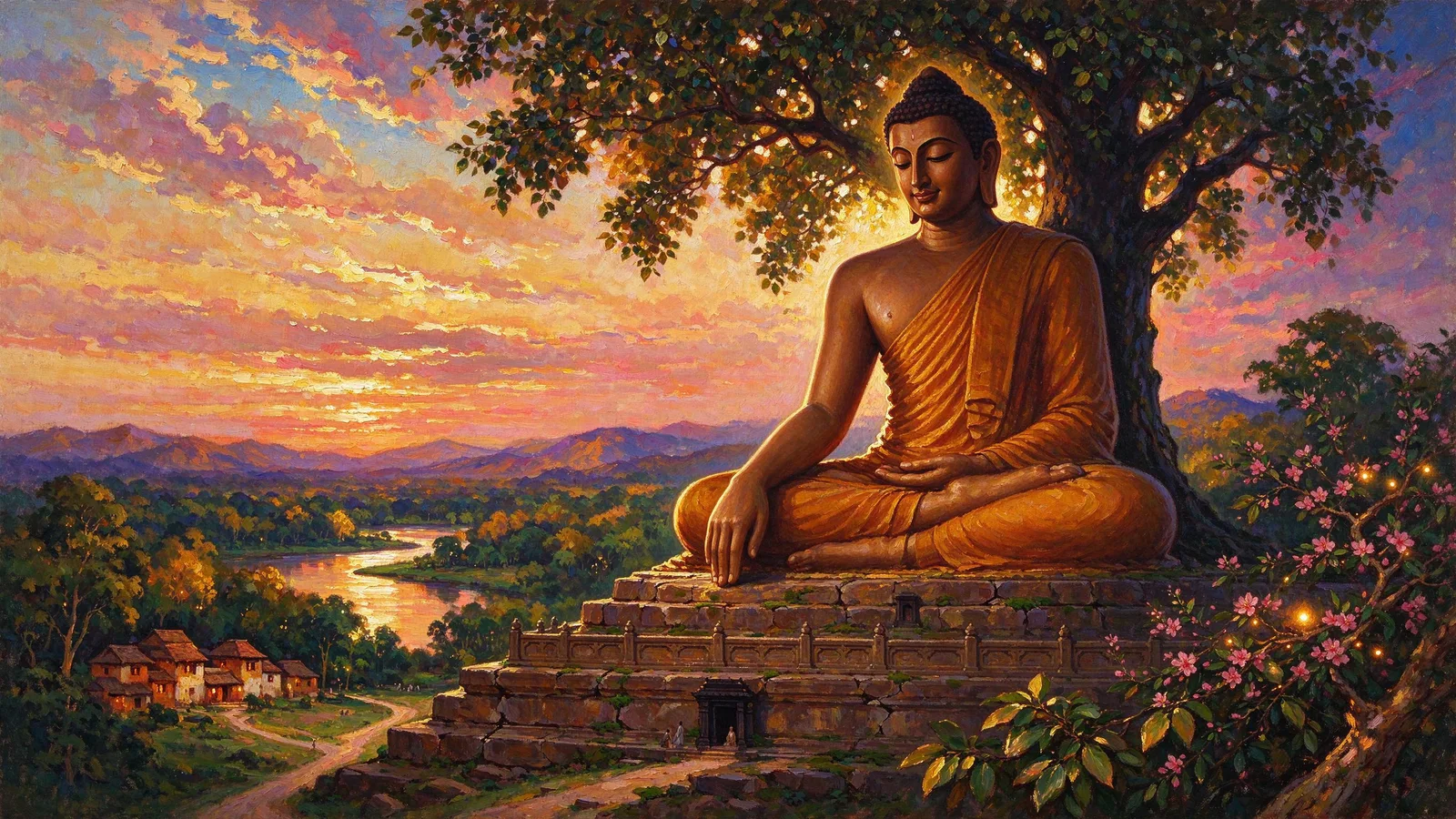
As he sat, the demon Mara, a figure representing desire, fear, and everything that keeps beings trapped in suffering, approached to challenge him. The Buddhacarita's account of this confrontation, gathered in the same Canto 13, describes Mara first sending his three daughters to tempt Siddhartha with sensual pleasure. Siddhartha remained unmoved. Mara then sent a vast army of monstrous forms, storms, and darkness to frighten him away, but Siddhartha did not flinch. Instead, he touched the earth with his right hand, calling the earth itself to witness his countless past acts of generosity and compassion. The earth trembled in response, and Mara's forces were defeated. Buddhist art across Asia has returned to this single gesture more than any other moment in the Buddha's life. Sculptors and painters render the seated figure with the right hand turned downward toward the earth, because it compresses the whole confrontation, temptation resisted, terror withstood, the earth called as witness, into one image a viewer can take in at a glance.
Three Watches of the Night
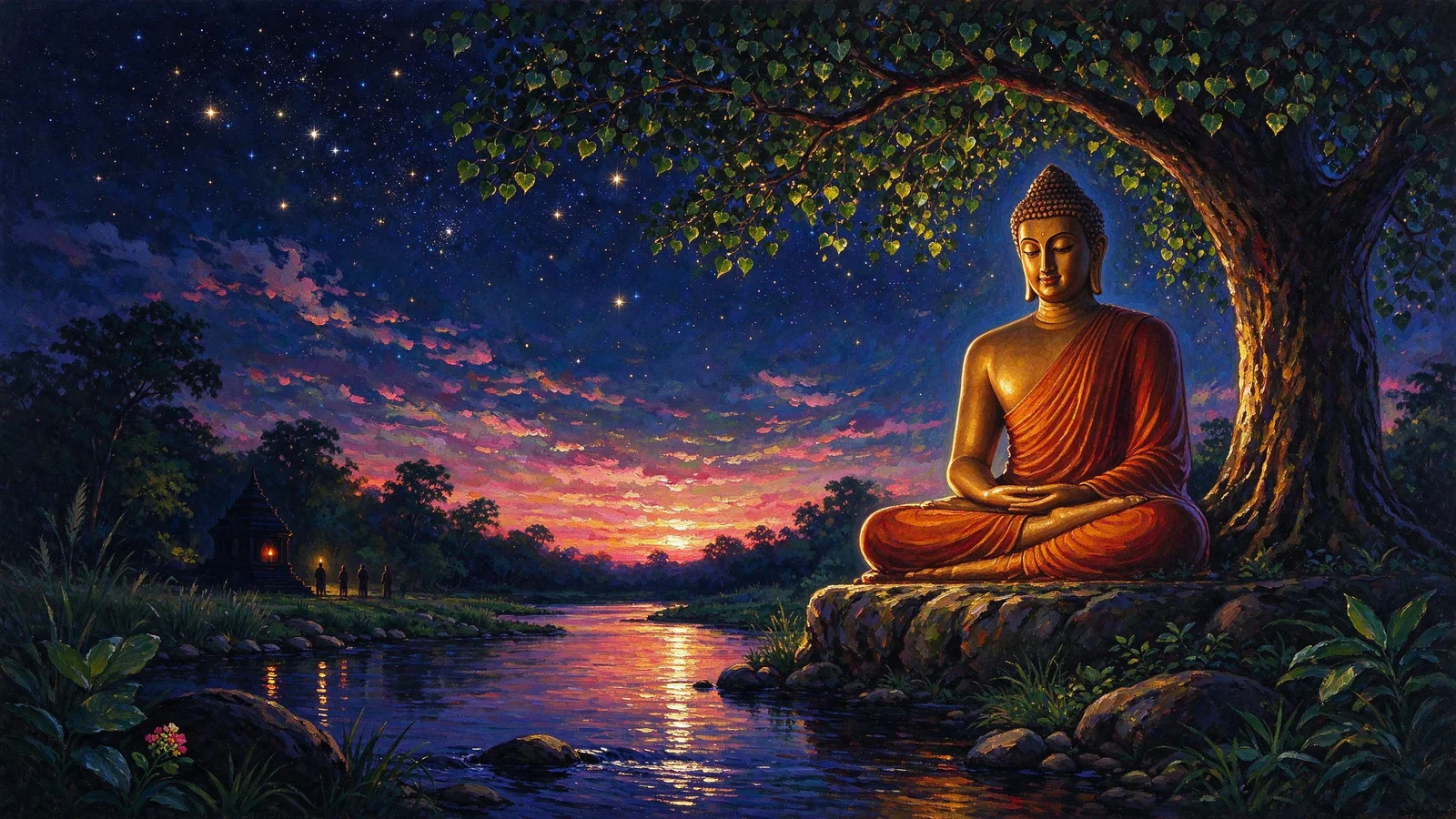
With Mara gone, Siddhartha's mind grew still and clear, and Canto 14 of the Buddhacarita describes the unfolding of his final realization across the watches of the night. In the first watch, he gained knowledge of his own past lives, seeing how he had been born and reborn countless times in many forms. In the second watch, he saw how all beings die and are reborn according to karma, their intentional actions, and understood the law of cause and effect governing this cycle. This second insight is described in the same terms as in the Majjhima Nikaya's Mahasaccaka Sutta, which recounts in the Buddha's own voice the threefold knowledge attained on the night of his awakening. His years of seeking two teachers, Alara Kalama and Uddaka Ramaputta, are recounted separately in the Ariyapariyesana Sutta. He mastered their highest meditative attainments quickly, yet found them insufficient, since neither ended the suffering he sought to end, a frustration that had driven him toward the Bodhi tree in the first place.
The Four Noble Truths
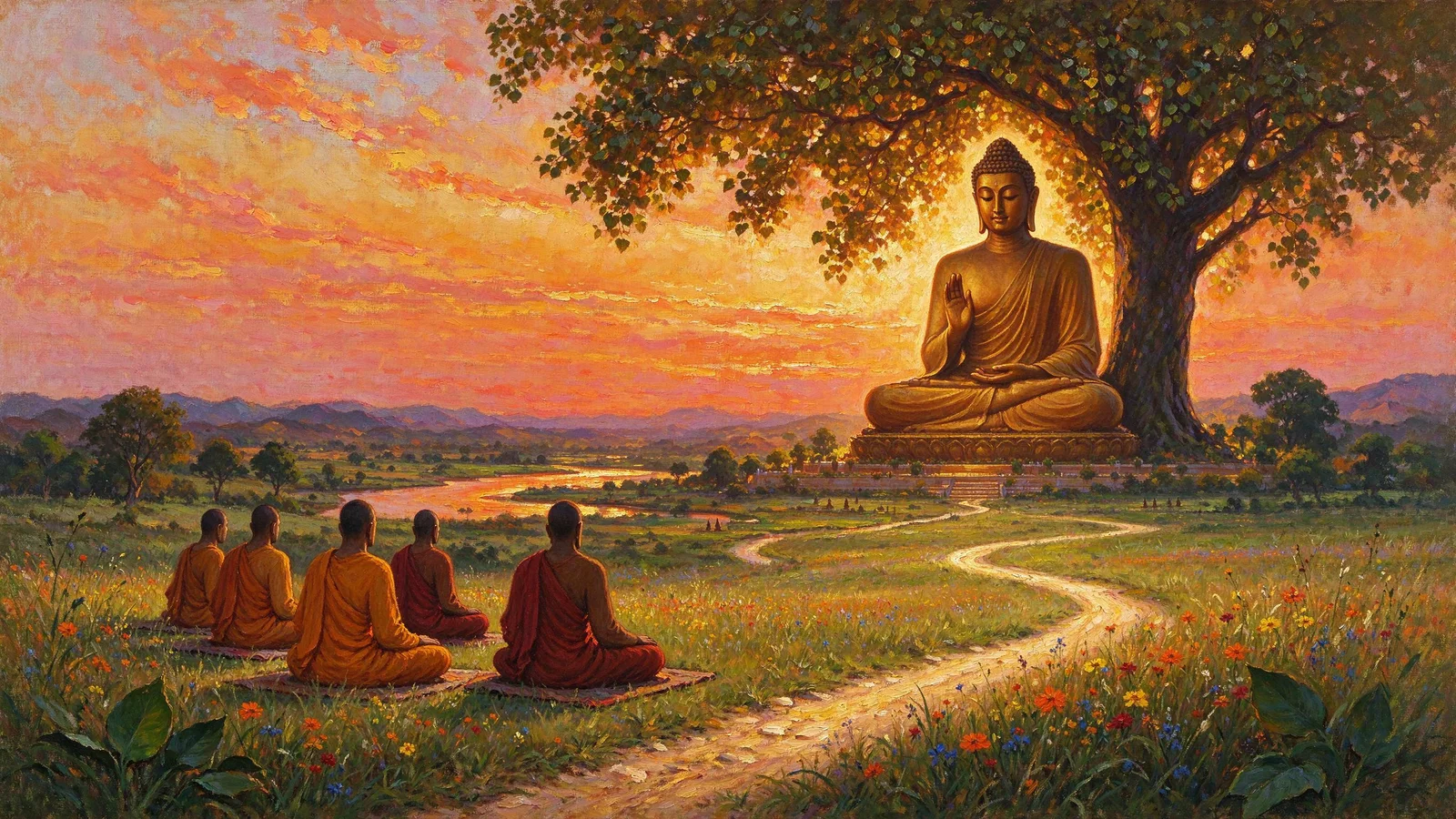
In the third and final watch of the night, just before dawn, Siddhartha penetrated the deepest truth. He saw that suffering arises from craving and ignorance, and that a path exists to end it. This insight became codified as the Four Noble Truths: that life involves suffering, that suffering is caused by craving and attachment, that suffering can be ended, and that the way to end it is the Eightfold Path, a set of ethical, mental, and wisdom practices later taught in full soon afterward at Sarnath, to the five ascetics who had once been his companions in the years of extreme austerity he had already left behind. At that moment, Siddhartha became the Buddha, "the Awakened One," and rose from his seat, his resolve fulfilled. Buddhist texts describe him remaining seated in the same spot for a further period afterward, savoring the stillness of what he had found before rising to consider how, or whether, to share it with a world he initially doubted could grasp it.
Traditions and a Shared Core
Stories of this night vary somewhat across different Buddhist traditions and canonical sources. Some texts emphasize different details of Mara's temptations, and some describe the Buddha's final realization through a more elaborate sequence of insights than the three watches given here. But the core narrative, the determination beneath the tree, the victory over inner and outer obstacles, and the discovery of the Four Noble Truths, is shared by nearly every school of Buddhism, from the Theravada Nikayas to the Sanskrit Buddhacarita composed centuries later for a wider audience. Where the earlier Pali sources speak comparatively briefly of the night itself, focused more on what the Buddha went on to teach, the Buddhacarita was composed generations afterward specifically to give the story the dramatic shape of an epic, complete with a named adversary and a battle, making Mara's temptations and defeat far more vivid and detailed than in the earliest records.
Bodh Gaya Today
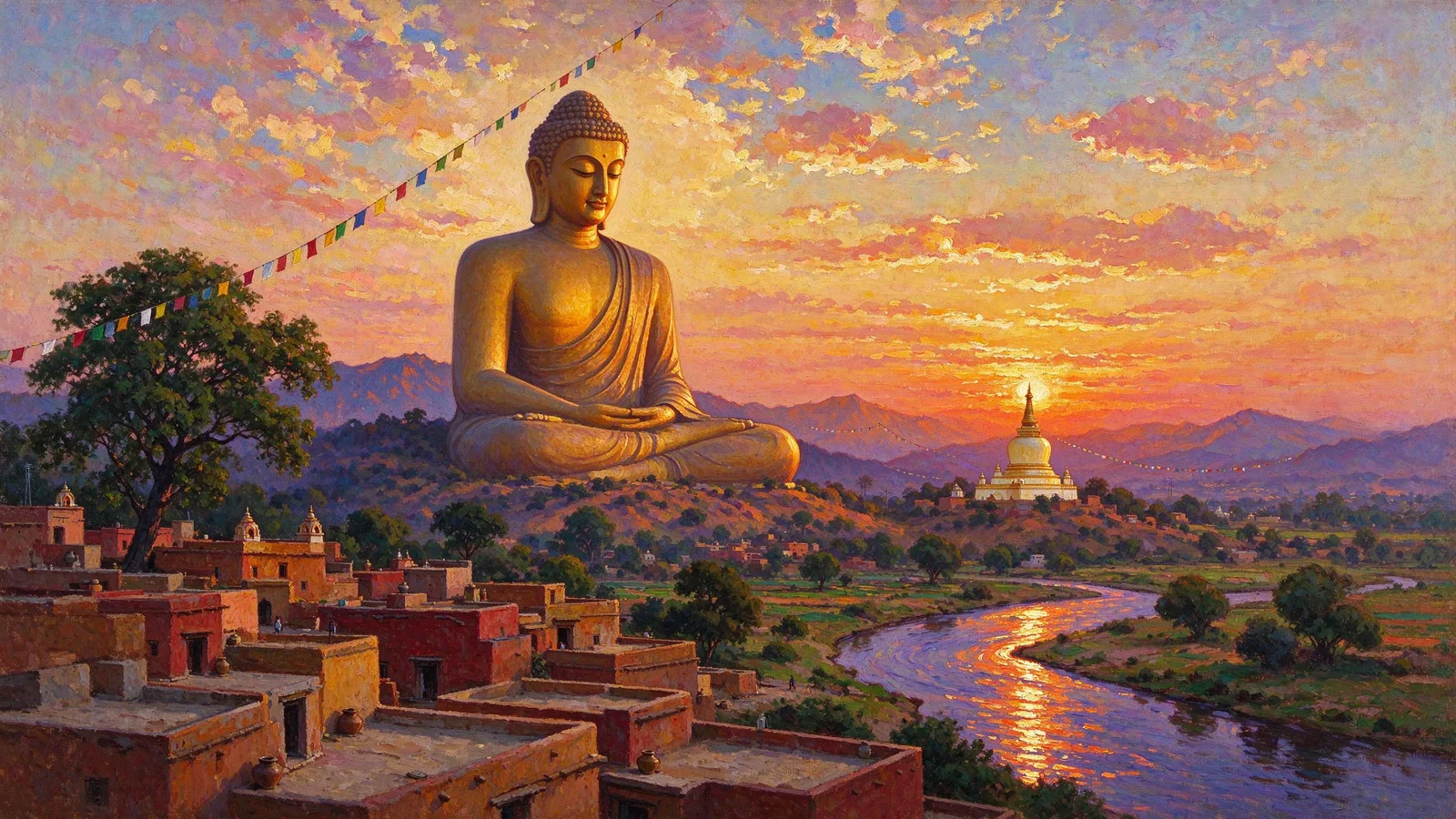
For countless people ever since, Bodh Gaya has remained a sacred place of pilgrimage, marking the turning point where a human being found and taught a way out of suffering. The Mahabodhi Temple that now stands beside a descendant of the original Bodhi tree traces its own history back to a shrine tradition begun in the centuries following the Buddha's own life, and pilgrims from every Buddhist tradition continue to sit in meditation at the same spot, seeking the same stillness Siddhartha found there. Under the Mahabodhi tree today, monks and lay visitors from Sri Lanka, Thailand, Myanmar, Tibet, Japan, and dozens of other Buddhist lands sit together in a single courtyard, a living reminder that the resolve Siddhartha made alone, beneath one tree, on one night, eventually became a teaching shared, in time, across an entire continent and far beyond it.
Did You Know?
Scriptural Source
The night of enlightenment is recorded in Ashvaghosha's Buddhacarita, Canto 13 (the defeat of Mara) and Canto 14 (the enlightenment itself), the classical Sanskrit life of the Buddha.
The Bodhi Tree
The fig tree under which Siddhartha sat is now called the Bodhi tree, "tree of awakening." A direct descendant of the original tree still grows at Bodh Gaya, and pilgrims have visited the site for over two thousand years.
The Earth-Touching Gesture
When Mara attacked, Siddhartha touched the ground with his right hand, calling the earth to witness his countless past lives of generosity. This gesture, the bhumisparsha mudra, remains one of the most iconic images of the Buddha.
Three Watches of the Night
The Buddha's enlightenment unfolded in three stages during a single night: in the first watch he recalled his past lives, in the second he saw how beings are reborn according to karma, and in the third he realized the Four Noble Truths.
Mara as Inner Obstacle
Mara is understood not as a literal demon but as a personification of desire and fear. His three daughters represent sensual temptation and his army represents terror, both overcome through Siddhartha's meditation and compassion.
Buddha
More from Buddhism
Connected Teachings
The same teaching, echoed across traditions