Man Changa To Kathoti Mein Ganga
Inner Purity Above Rituals
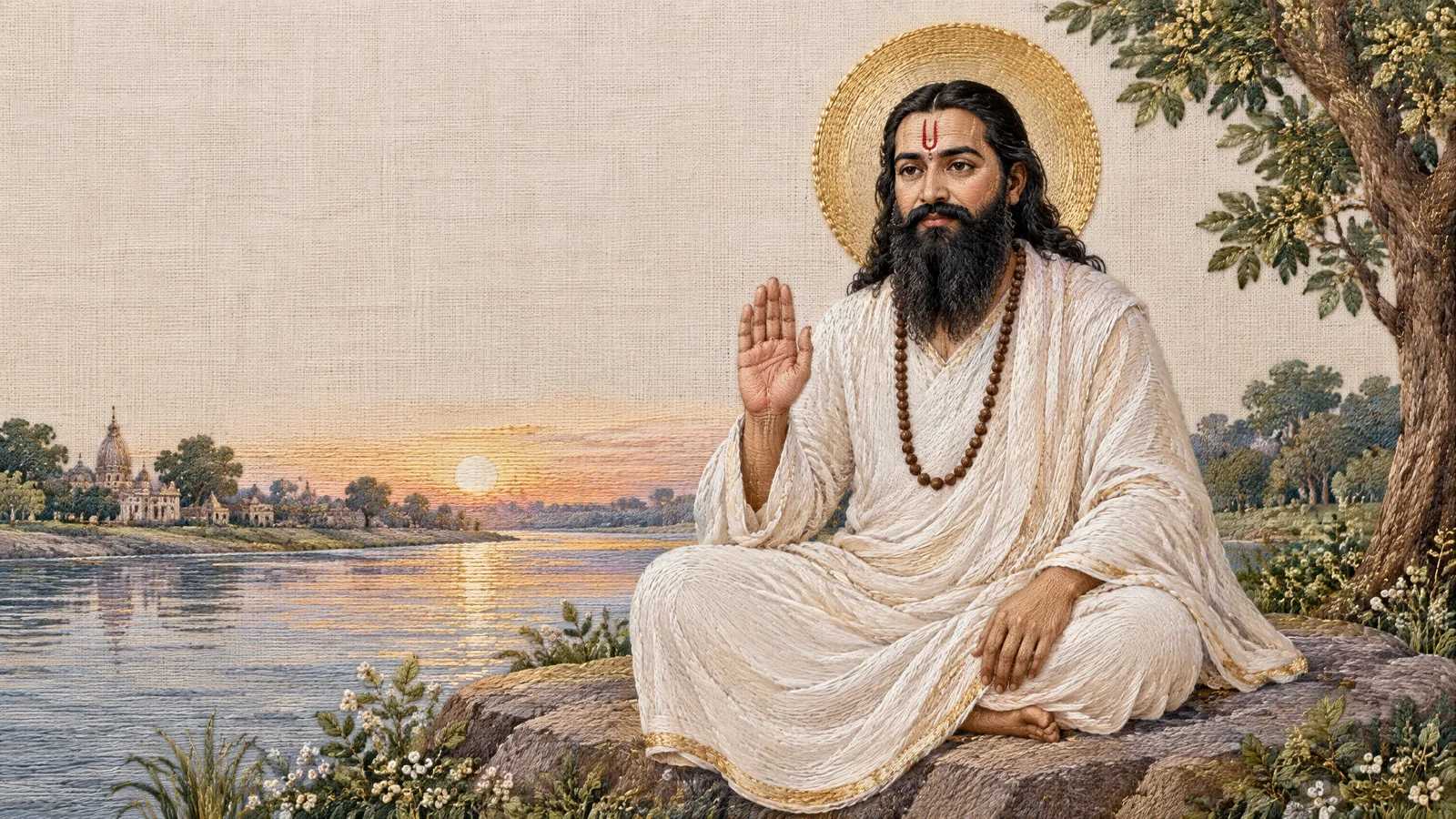
The immortal teaching of Guru Ravidass Ji that pure devotion and a clean heart (Man Changa) are far greater than external ritual bathing.
A Saying Carried Through Devotion
Man Changa To Kathoti Mein Ganga, if the mind is pure, the Ganga flows even in a humble wash-basin, is one of the most widely repeated sayings associated with Guru Ravidass. It is best understood as a cherished teaching preserved through Ravidassia oral tradition and hagiography rather than as a line quoted word for word from the Guru Granth Sahib itself. What the saying compresses into a single memorable image is a conviction that runs consistently through Guru Ravidass's verified compositions: that purity of heart matters more than any external ritual of cleansing, and that this purity is within reach of every person, whatever their birth or circumstance.
The Story Behind the Words
Tradition tells that the saying arose when a priest urged Guru Ravidass to join a pilgrimage to bathe in the Ganga at Kashi for spiritual merit. Guru Ravidass worked as a leather craftsman and was therefore barred by the social customs of his day from many spaces of ritual worship. He is said to have replied that if the mind is truly pure, the sacred river is already present even in the humble kathoti, the wash-basin he used in his daily trade. The story is preserved today at Guru Ravidass's traditional birthplace, Seer Govardhanpur in Varanasi, now the site of a shrine and pilgrimage center for the Ravidassia community.
Teaching Confirmed in Ravidass's Own Bani
While this particular exchange belongs to oral tradition, its message matches the teaching found throughout Guru Ravidass's forty hymns recorded in the Guru Granth Sahib, beginning at Ang 345 in Raag Gauri Guarayri. There, Guru Ravidass describes his own lowly birth and circumstance with unflinching honesty. From that honesty he builds an argument that devotion and remembrance of the Divine Name, not social standing or ritual observance, is what makes a person truly pure. The kathoti story and the verified bani both arrive at the same conviction from different directions, one through legend and one through scripture.
Beyond the Five Thieves
Sikh and Ravidassia teaching commonly describes five inner afflictions that cloud the mind, known as the Panj Vikar, the five thieves: kaam, lust or craving, krodh, anger, lobh, greed, moh, attachment, and hankaar, ego. Guru Ravidass's call to inner purity is best understood against this framework. The washing that matters, in his teaching, is not of the body in any river but of the mind. It is worked free of these five afflictions through sincere remembrance of the Divine, rather than through any external rite that leaves them untouched.
A Radical Message for Its Time
In the social world of fifteenth-century North India, bathing in the Ganga at recognized pilgrimage sites was widely regarded as a necessary and prestigious act of spiritual merit. Access to many temples and sacred spaces was commonly restricted along lines of caste and occupation. Guru Ravidass's teaching, addressed from his own position as a leather worker long denied such access, insisted that none of this external apparatus was required for genuine purity. Sincere inward devotion was available, and sufficient, for anyone, regardless of birth.
Living the Teaching Daily
Applied to ordinary life, the saying is less a rejection of pilgrimage itself than a redirection of attention. Ravidassia practice draws from it a call to truthful speech, compassion toward others, and humility in daily conduct as the real and continuing form of worship. A mind cleansed of hatred and greed is held to carry the same sanctity that a pilgrim seeks in a sacred river. That sanctity is available at home, at work, and in every ordinary encounter, not only at a distant shrine.
Why the Saying Still Resonates
Centuries after Guru Ravidass's lifetime, Man Changa To Kathoti Mein Ganga remains one of the most quoted teachings associated with him. It compresses a demanding theological claim into a single vivid image, one that anyone can carry through an ordinary day. It continues to tell Ravidassia households and worshippers that the deepest cleansing comes from that same honest self-examination, the inward turn Guru Ravidass's own verified hymns in the Guru Granth Sahib have carried for more than five centuries.
Did You Know?
Origin
Man Changa To Kathoti Mein Ganga, if the mind is pure, the Ganga flows even in a wash-basin, is a cherished saying preserved through Ravidassia oral tradition and hagiography, associated with Guru Ravidass's traditional birthplace, Seer Govardhanpur in Varanasi, rather than a line quoted word for word from the Guru Granth Sahib.
Confirmed in His Bani
The same conviction runs through Guru Ravidass Ji's 40 verified hymns in the Guru Granth Sahib, beginning at Ang 345 in Raag Gauri Guarayri, where he argues that devotion to the Divine Name, not social standing or ritual, is what makes a person truly pure.
The Five Thieves
Sikh and Ravidassia teaching describes 5 inner afflictions, the Panj Vikar, that cloud the mind: kaam, krodh, lobh, moh, and hankaar, lust, anger, greed, attachment, and ego. The washing Guru Ravidass Ji calls for is of the mind, freed from these, not of the body in a river.
Contrast with Ritual
In 15th-century North India, ritual bathing in the Ganga at recognized pilgrimage sites was widely considered essential for spiritual merit, and access to many sacred spaces was commonly restricted by caste and occupation. Guru Ravidass Ji's teaching challenged this norm directly, from his own position as a leather worker.
Everyday Application
The saying encourages practitioners to focus on daily ethical living, truthfulness, compassion, and humility, as the true and continuing form of worship. It remains a cornerstone of Ravidassia practice, emphasizing inner transformation over outward displays of piety.
Guru Ravidas Ji
More from Ravidassia
Connected Teachings
The same teaching, echoed across traditions