The Two Millstones
A Kabir Couplet on Impermanence
Kabir wept at a grain mill turning between two stones: in the world's grinding duality, no one comes through whole. A Dohavali couplet on impermanence.
Verses
Beholding the grinding mill, Kabir wept in lament; between the two grinding stones, no one escapes intact.
Worship Guidelines & Chanting Benefits (Phalashruti)
Daily or auspicious lunar days (Ekadashi, Purnima, Pradosham)
Brahma Muhurta (4:00 AM – 6:00 AM) or Evening Dusk (Sandhya)
Ghee lamp (Deepa), Incense (Dhoopa), Fresh flowers & Water offering
- Peace of mind, spiritual upliftment, and harmonious energy in the home
Background
This couplet is recorded in the Kabir Dohavali as doha 187 (Kavitakosh, page 2); the Dohavali's second line reads "dui pat bhitar aaike, saabit bacha na koy", a close variant of the popular wording given here. Kabir (15th century) was a weaver-poet of Varanasi and a voice of the Nirguna Sant tradition, and his dohas are sung in satsangs and by followers of the Kabir Panth. The grinding mill is a household image of how the two stones of worldly duality wear down every creature, and the couplet is read as an invitation to turn toward what does not wear away. The standard anthologies of Kabir's sakhis and padas, such as the Bijak and the Kabir Granthavali, are the tradition's wider textual home.
About this Text
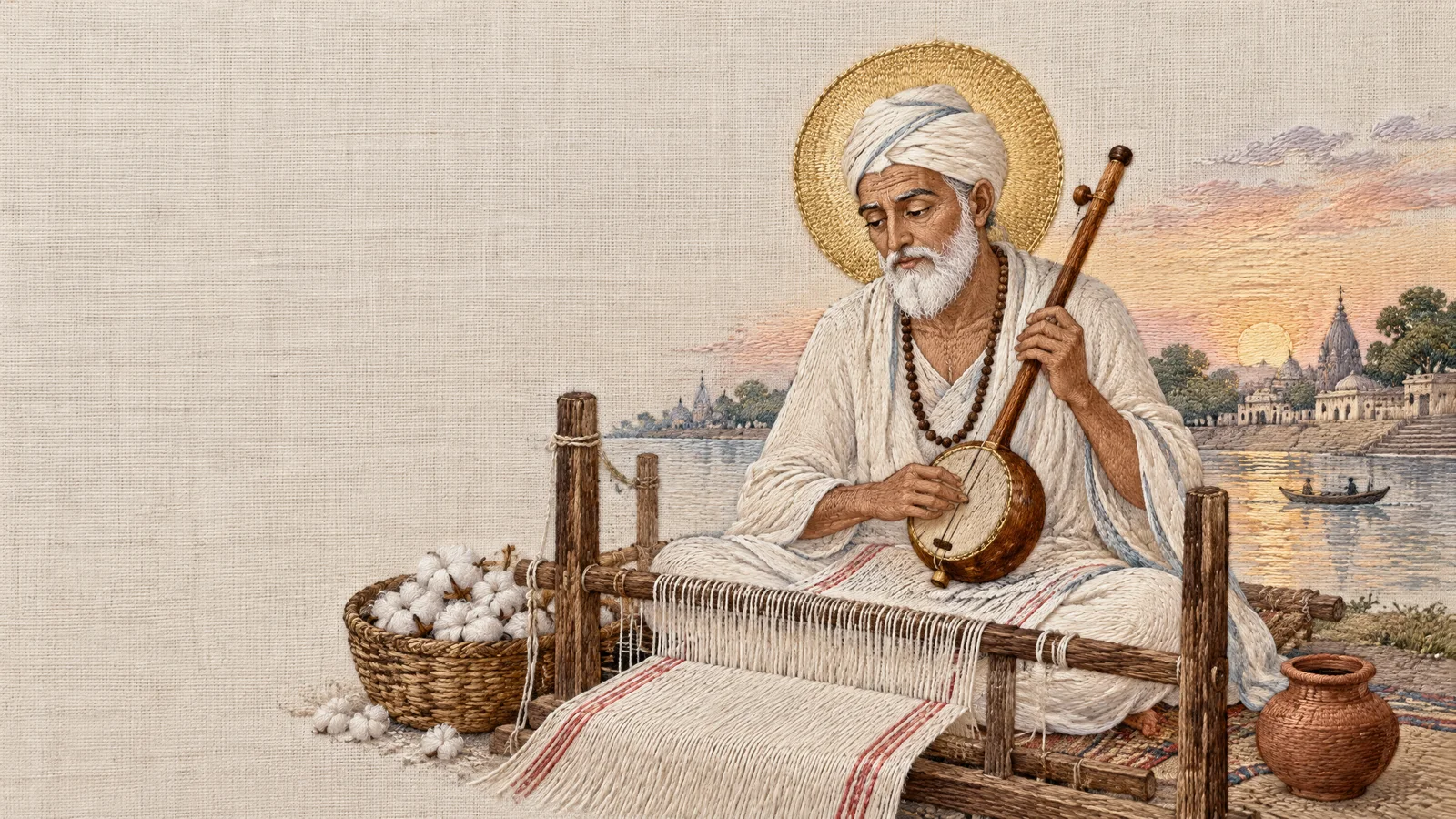
Composed by: Sant Kabir · Medieval Nirguna Bhakti Poet-Saint · 15th century, Varanasi
A mystic poet and weaver by trade from Varanasi, whose blunt, image-rich couplets (dohas) rejected ritualism and caste distinctions in favor of direct, formless (nirguna) devotion. His verses are revered across Hindu, Sikh (many appear in the Guru Granth Sahib), and Sufi-influenced traditions alike.
Did You Know?
Author
Kabir was a 15th-century mystic poet and weaver from Varanasi, revered in both Hindu and Sufi traditions. He composed in a vernacular Hindi, making his teachings accessible to all, and his dohas (two-line verses) remain widely quoted across India.
Poetic Form
This verse is a doha, a couplet with a fixed meter of 13 and 11 syllables per line and an end rhyme. Dohas are designed for oral transmission, packing deep wisdom into a memorable, rhythmic form.
Metaphor
The grinding mill (chakki) with its two stones (paatan) symbolizes the world of duality — pleasure and pain, life and death. Kabir observes that everything caught between these opposing forces is inevitably ground down; nothing remains intact.
Philosophical Insight
Kabir’s weeping is a compassionate recognition of the suffering inherent in worldly existence. The verse urges us to seek the unchanging reality beyond the dualities, where the soul remains whole and untouched.
Cultural Resonance
The chakki was a familiar household object in Kabir’s time, used daily by women to grind grain. By grounding his spiritual teaching in such an everyday image, Kabir made profound philosophy relatable to ordinary people. In the Kabir Dohavali it is doha 187.
Sant Kabir
More from Kabir Panth
See allConnected Teachings
The same teaching, echoed across traditions