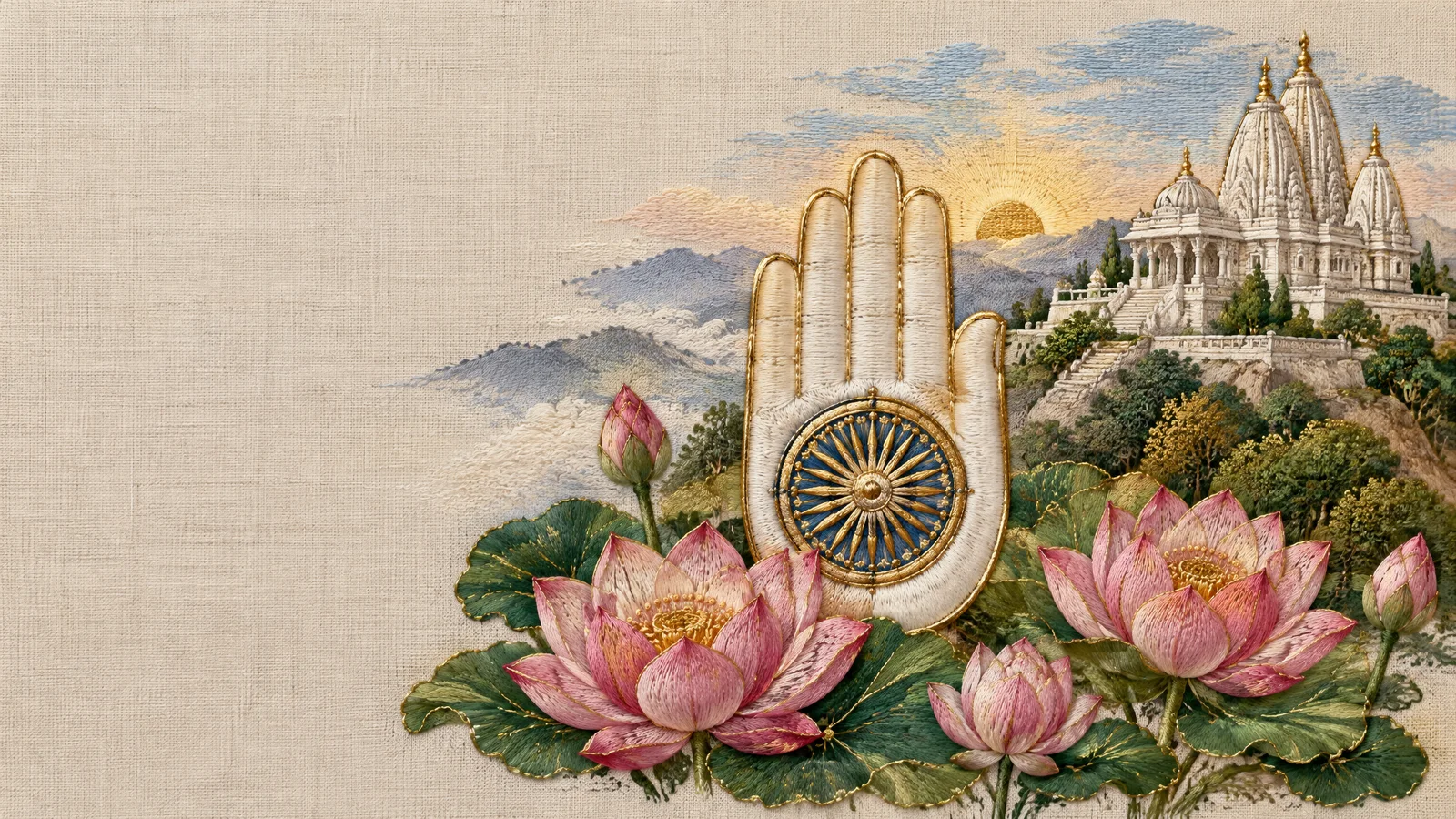
Shri Mahavir Aarti (Aarti to Lord Mahavira)
A Jain aarti praising Lord Mahavira for his birth at Kundalpur, his compassion and ahimsa, and the freedom that remembering his name brings.
Verses
Victory to Lord Mahavira, O Master! Victory to Lord Mahavira, O Lord! He is the guide of the world, the giver of happiness, and exceedingly profound. Om, victory to Lord Mahavira.
Verse 1
He was born in Kundalapura, the son of Queen Trishala. His father was King Siddhartha, and both gods and humans rejoiced. Om, victory to Lord Mahavira.
Verse 2
He is the Lord of the humble, an ocean of compassion, and the bestower of auspiciousness. For the welfare of the world, he embraced the practice of restraint; O Lord, he is the supreme benefactor of others. Om, victory to Lord Mahavira.
Verse 3
He eradicated sinful conduct and showed the path of righteousness. He raised the banner of compassion and dharma throughout the world. Om, victory to Lord Mahavira.
Verse 4
He helped Arjunamali, Gautama, and Shri Chandanabala cross over the ocean of worldly existence. Om, victory to Lord Mahavira.
Verse 5
Your holy name is the savior of the world. The person who meditates upon it day and night sees all their sorrows removed. Om, victory to Lord Mahavira.
Verse 6
O ocean of compassion! Your glory is unique. The sage Jnanamuni sings your virtues; I offer myself in sacrifice at your feet. Om, victory to Lord Mahavira.
Verse 7
Worship Guidelines & Chanting Benefits (Phalashruti)
Daily or auspicious lunar days (Ekadashi, Purnima, Pradosham)
Brahma Muhurta (4:00 AM – 6:00 AM) or Evening Dusk (Sandhya)
Ghee lamp (Deepa), Incense (Dhoopa), Fresh flowers & Water offering
- Peace of mind, spiritual upliftment, and harmonious energy in the home
Background
This is a devotional Jain hymn (aarti) in praise of Lord Mahavira, the 24th and last Tirthankara (spiritual teacher) of Jainism. In Jain temples and homes it is often sung during evening worship as a gesture of reverence and gratitude, and especially on Mahavir Jayanti. Verse 2 follows the account in the Kalpa Sutra of Mahavira's birth to Queen Trishala and King Siddhartha, and verse 5 recalls disciples such as Arjunmali, Gautam and Chandanbala. The text names no composer beyond the closing line, in which the singer-poet gives his name as Gyanmuni; who he was is not established, so the aarti is best described as a traditional devotional hymn of unknown date.
Did You Know?
Aarti in Jain Worship
This hymn is a traditional Jain aarti, a devotional song accompanied by the waving of lamps, sung in praise of Lord Mahavira. It follows the popular 'Om Jai...' aarti pattern but is adapted for Jain devotion, and is often performed in temples and homes.
Mahavira's Birth Details
Verse 2 places Mahavira's birth in Kundalpur (the Kundagrama of Jain tradition, in present-day Bihar), to mother Trishala and father King Siddhartha. This matches the Kalpa Sutra's account of the birth of the 24th Tirthankara, and says that gods and humans alike rejoiced.
Core Teachings
Verses 4 and 5 call Mahavira a destroyer of sinful conduct who showed the right path. The 'flag of compassion' raised over the world stands for dayadharma (the religion of compassion) and non-violence (ahimsa), the heart of his teaching.
Three Named Disciples
Verse 5 names Arjunmali, Gautam and Chandanbala. Arjunmali is the gardener of Jain canonical narrative who turned from violence to the monastic path; Gautam (Indrabhuti Gautama) is Mahavira's chief disciple; Chandanbala is the princess sold into slavery who later led the order of nuns. Their stories show the transforming reach of his compassion.
Devotional Promise
Verse 6 says that whoever meditates on his holy name night and day will see all sorrow end. The closing verse calls Mahavira an ocean of compassion and ends with the singer's name, Gyanmuni, offering himself at the Lord's feet.
Mahavira
More from Jainism
See allConnected Teachings
The same teaching, echoed across traditions