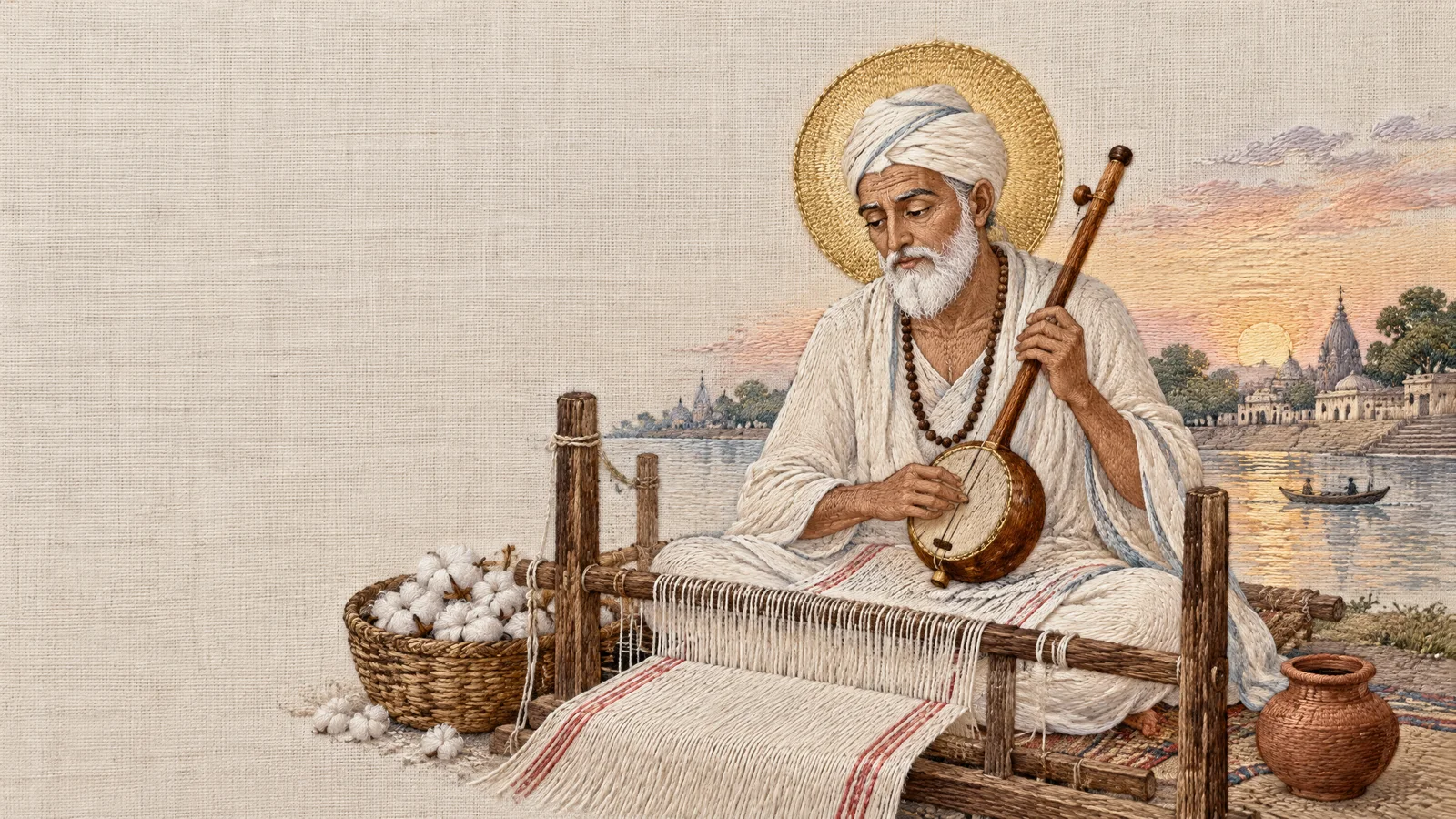
Guru Govind Doau Khade
This is a short devotional couplet (a doha) from the Bhakti tradition that declares the Guru to be greater than even God (Govind), because the Guru is the one who shows the way to the divine.
Verses
Guru and God both stand before me, whose feet should I bow to first? Glory to the Guru who guided me to God.
Worship Guidelines & Chanting Benefits (Phalashruti)
Wednesday (Budhwar), Thursday (Guruwar) & Ekadashi
Early Morning (Brahma Muhurta) or Sandhya (Twilight)
Tulsi leaves, Butter (Makhan), Mishri, Yellow flowers & Chandan
- Awakening of pure divine love (Prema Bhakti), mental joy, and freedom from anxiety
Background
This couplet is a well-known verse from the Bhakti and Sant traditions of North India, often recited in Sikh and Hindu devotional settings to honor the Guru. It is traditionally attributed to the 15th-century poet-saint Kabir, though its exact origin is part of a wider oral and literary heritage. The verse is commonly used in discourses, kirtans, and daily prayers to express the supreme importance of the spiritual teacher, who is seen as the revealer of the divine. This couplet is recorded in the Kabir Dohavali anthology (doha 1) and is also revered as part of the wider Guru Granth Sahib devotional tradition.
About this Text
Composed by: Sant Kabir · Medieval Nirguna Bhakti Poet-Saint · 15th century, Varanasi
A mystic poet and weaver by trade from Varanasi, whose blunt, image-rich couplets (dohas) rejected ritualism and caste distinctions in favor of direct, formless (nirguna) devotion. His verses are revered across Hindu, Sikh (many appear in the Guru Granth Sahib), and Sufi-influenced traditions alike.
Did You Know?
Core message
This couplet places the guru above even God (Govind, a name for Krishna). The poet declares that when both guru and God stand before them, they bow first to the guru, because the guru is the one who revealed God to them.
Attribution and tradition
Though often attributed to the 15th-century poet-saint Kabir, the verse is not found in the earliest collections of his works. It has become a staple of North Indian devotional (bhakti) and Sikh traditions, frequently recited to emphasize the necessity of a spiritual teacher.
Poetic form
The verse is a doha — a two-line couplet with a specific meter (13+11 matras per line) common in Hindi, Punjabi, and other North Indian languages. The rhyme and rhythm make it easy to memorize and chant in devotional gatherings.
Cultural impact
This saying is so widely known that it is often quoted in everyday conversation to express gratitude toward a teacher or mentor. It has also inspired countless commentaries, songs, and even modern adaptations in film and literature, reinforcing the idea that the human guide is indispensable on the spiritual path.
Krishna
More from Kabir Panth
See allConnected Teachings
The same teaching, echoed across traditions