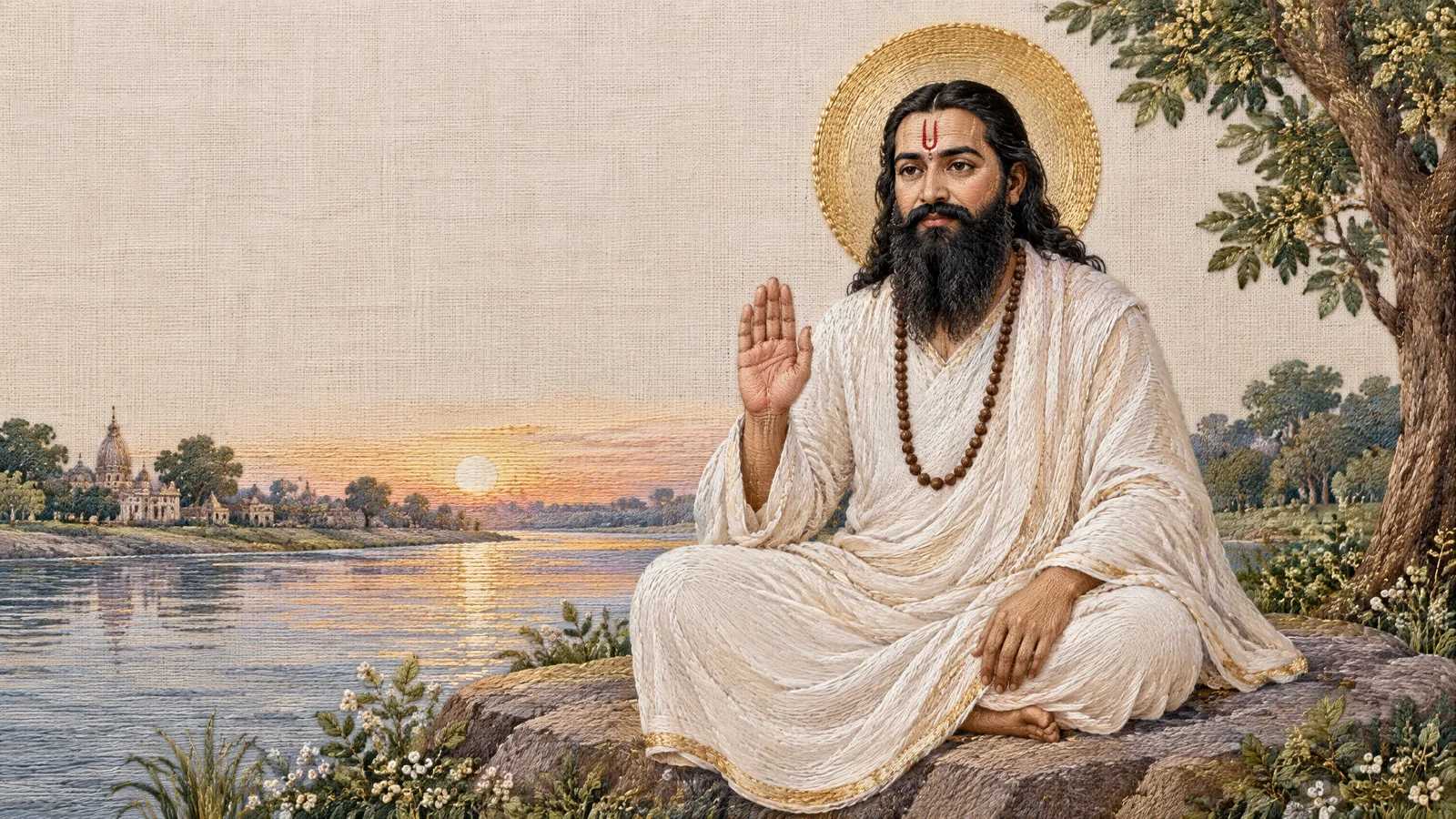
O Nome Divino Purifica Toda a Alma
Este é um hino sagrado do Sikhismo que ensina que a devoção sincera ao Nome Divino purifica a alma e supera todas as distinções de casta e posição social, usando o exemplo do santo Ravidas, que era sapateiro e se tornou um grande devoto.
Versos
No bairro onde vivo, minha casta é conhecida como a dos curtidores. Mas através do Nome do Senhor, eu me torno puro e saboreio a essência divina de Ram. ||1|| Pausa ||
Verso 1
As pessoas clamam “Ganga! Ganga!” repetidamente, banhando-se nela. Mas aquele que recita o Nome de quatro letras (Hari) alcança a pureza da mesma forma. ||1||
Verso 2
Se tua mente está absorta e imersa nos pés do Senhor, então, unindo-te à Santa Congregação, atravessarás o oceano do mundo. ||2||
Verso 3
Aquele em cujo coração reside Govinda (o Senhor Supremo) — que se pode dizer de sua condição? Por grande fortuna ele encarna no mundo, e sua linhagem torna-se purificada. ||3||
Verso 4
Ravidass, o curtidor, e também as mulheres, cruzam os três mundos. Recitando o Nome, ele se purificou e tornou-se um devoto na morada do Senhor. ||4||2||
Verso 5
Worship Guidelines & Chanting Benefits (Phalashruti)
Daily or auspicious lunar days (Ekadashi, Purnima, Pradosham)
Brahma Muhurta (4:00 AM – 6:00 AM) or Evening Dusk (Sandhya)
Ghee lamp (Deepa), Incense (Dhoopa), Fresh flowers & Water offering
- Peace of mind, spiritual upliftment, and harmonious energy in the home
Contexto
Este hino faz parte do Guru Granth Sahib, a escritura central do Sikhismo, e é atribuído ao Terceiro Guru, Guru Amar Das, na melodia clássica (raga) chamada Malar, tradicionalmente associada à estação das chuvas. O texto celebra a devoção sincera como força que supera todas as hierarquias sociais, citando o exemplo do santo-poeta Ravidas, que era sapateiro de casta e, ainda assim, alcançou a união com o Divino. É recitado e cantado em congregações sikhs como lembrança de que a graça de Deus não distingue nascimento ou condição social.
Sobre este Texto
Composto por: Bhagat Ravidas · Medieval Nirguna Bhakti Poet-Saint · 15th–16th century, Varanasi
A poet-saint and leather worker by trade from Varanasi, whose hymns envisioned Begampura — a utopian realm free of sorrow, fear, and caste-based inequality. His compositions are included in the Guru Granth Sahib and form the devotional core of the modern Ravidassia tradition.
Você sabia?
Third Guru's Composition
This hymn (shabad) is in the musical measure of Malar, a rag traditionally sung to evoke the joy of the monsoon. It is attributed to Guru Amar Das, the third Sikh Guru (1479–1574), and is part of the Guru Granth Sahib, the central Sikh scripture.
Premise of Low Caste & Devotion
The opening line identifies the speaker as a woman of the Chamar caste — traditionally considered untouchable, involved in leatherwork — a bold, direct statement of social status that the Guru uses to challenge caste hierarchy. The refrain (rahau) declares that this person tastes the essence of divine love by immersing in God's Name.
Comparison with Ritual Bathing
Verse 1 critiques superficial religiosity: people exalt the Ganges river for its purifying power, yet simply chanting the four-letter Name (i.e., the divine name, rather than the river's name) grants true liberation. This contrasts external ritual with internal devotion.
The Path of Fellowship
Verse 2 teaches that to be absorbed in devotion to God's feet, one must join the holy fellowship (satsangat) — the company of true seekers — which alone can carry one across the ocean of worldly existence.
Most Blessed in the World
Verse 3 says that those with God enshrined in their heart transcend description; they are supremely fortunate to be born into this world, and their very presence sanctifies their entire lineage. This overturns conventional ideas of purity and lineage.
Ravidas as Model Devotee
The closing verse names Ravidas, the famous 15th-century poet-saint of the Chamar caste, as a supreme example. Despite his low social standing, he is said to ferry across all three worlds by chanting God's Name, becoming pure and finding a place in God's household. This seal of approval made Ravidas a central figure in the Sikh tradition.
Guru Ravidas Ji
Mais de Ravidassia
Ensinamentos Conectados
O mesmo ensinamento, ecoado em diferentes tradições