Uttarkashi and Kashi Vishwanath
Shiva's Northern Seat
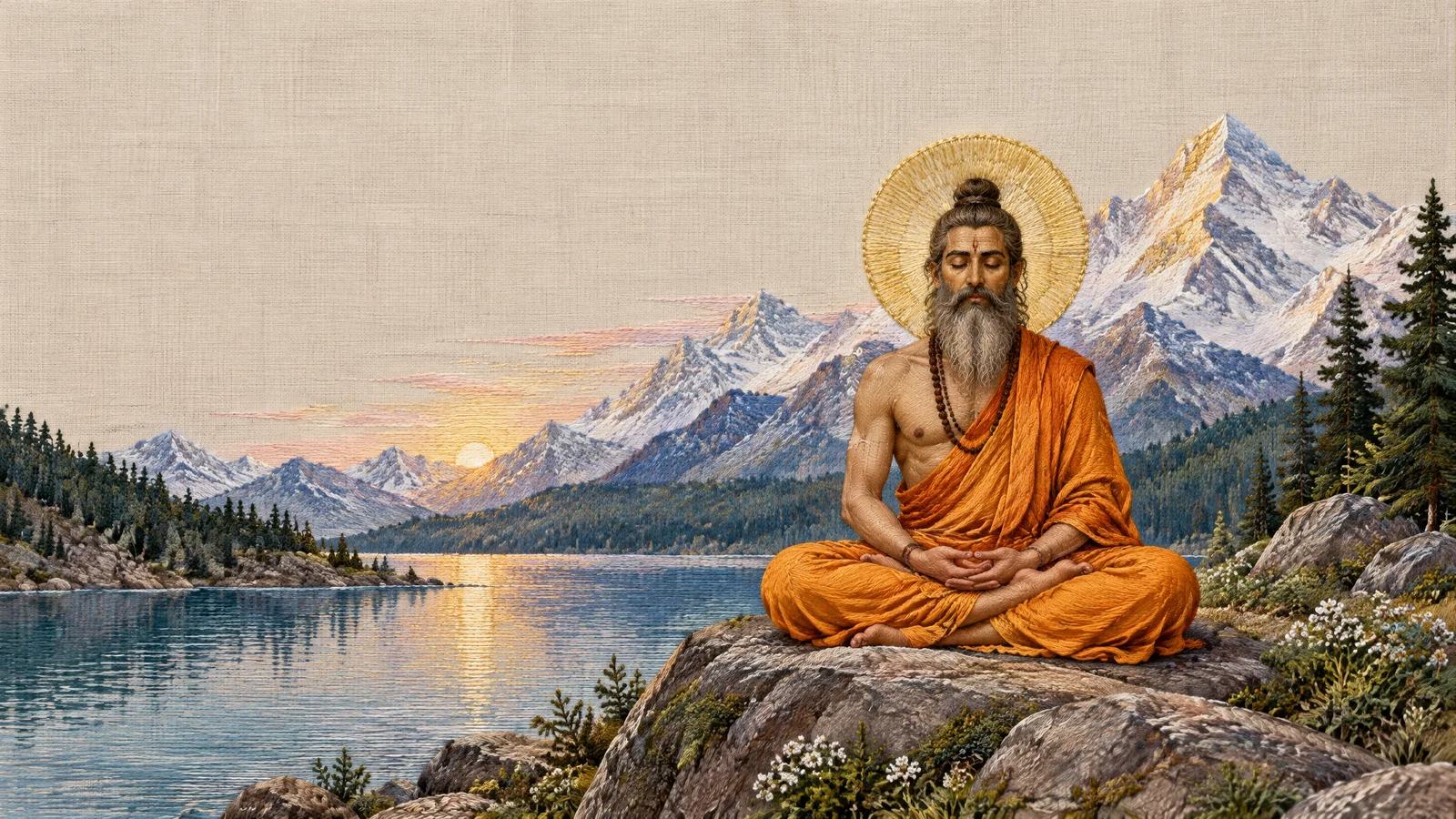
Uttarkashi, the Soumya Kashi of the Himalayas, is a quiet seat of Shiva tapasya on the Bhagirathi, with the Kashi Vishwanath temple and its great trident.
Quick Devotional Guide (At a Glance)
- •WHAT IT IS: Known scripturally as Soumya Kashi (the gentle, contemplative realm of Shiva), Uttarkashi is the northern spiritual anchor of Kashi (Varanasi). It is consecrated by an ancient Swayambhu Lingam at the Kashi Vishwanath Mandir, by the great Shakti Trishula, the trident of the Divine Mother, and by a sacred geography that mirrors Varanasi.
- •WHY VISIT / CHANT: Ideal for practitioners of yoga, silent japa, pranayama, and Vedanta Sravana, the contemplative hearing of the scriptures. Worship and meditation here are held to quiet deep-seated vasanas and to steady the mind.
- •WHEN TO VISIT: Open throughout the year. The best pilgrimage seasons are April to June and September to November. Maha Shivaratri and the month of Shravan bring a special devotional vibrancy.
- •WHERE: Garhwal Himalayas, Uttarakhand, India; at an elevation of about 1,165 meters along the bank of the Bhagirathi River. The nearest railheads are Rishikesh and Dehradun, and the nearest airport is Jolly Grant, Dehradun.
- •HOW (VIDHI & RULES):
- •Begin with a sacred purification dip, called Snana, at Manikarnika Ghat or at the confluence with the Varuna.
- •Enter the Sri Kashi Vishwanath sanctum in modest traditional attire, such as dhoti and kurta for men and saree or salwar for women.
- •Offer bilva leaves, holy Ganga water, and raw cow's milk upon the Swayambhu Lingam while chanting Om Namah Shivaya or the Maha Mrityunjaya Mantra.
- •Perform Pradakshina and proceed to the Shakti Temple opposite, to offer kumkum and red flowers before the great trident.
- •Conclude with seated silent meditation, called Dhyana, in the temple precincts.
Sacred Origin & Puranic / Scriptural Lineage
According to the tradition preserved in the Kedarakhanda of the Skanda Purana, the spiritual radiance of Kashi is sustained in its northern form, Soumya Kashi, which is Uttarkashi. Nestled in the lap of the Garhwal Himalayas, the town echoes Varanasi in its sacred geography. The Varuna and Asi streams flow into the swift, crystal-pure Bhagirathi-Ganga. Shiva is said to dwell here in His quiescent, meditative mood, called Soumya Bhava, blessing those who embrace tapasya.
The central sanctum houses a Swayambhu Lingam, which is believed to have manifested on its own. Local tradition associates the sage Parashurama with penance in this valley. Facing the main Shiva shrine stands the temple of Devi Shakti, which houses a great trident of metal, over six meters high. Tradition holds that it was formed from the collective radiance of the gods to destroy the forces of ignorance. Devotees say that a gentle touch of a single finger makes the whole pillar tremble.
For centuries, Uttarkashi has been a gateway for seekers ascending to Gangotri and Gaumukh. The valley is well suited to Manana, deep reflection, and Nididhyasana, profound meditation. The ceaseless murmur of the Bhagirathi becomes a natural sound that helps still the restless mind.
The Sacred Shrines & Sites
Saints, Mystics & Historical Lineage
Tradition associates Jagadguru Adi Shankaracharya of the 8th century CE with the Himalayan shrines of this region. The Kashi Vishwanath temple is credited in its present form to Maharani Khaneti of Tehri Garhwal, in the year 1857, which kept worship here unbroken.
In the modern era, Uttarkashi is known as a place of Vedantic tapasya. Swami Tapovan Maharaj, the revered guru of Swami Chinmayananda, lived in the Himalayas for many years in silence and study. Wandering sadhus and seekers have long maintained a tradition of meditation along the Bhagirathi.
Sacred Hymn & Contemplation
श्रीविश्वनाथाष्टकम्, श्लोक १
गङ्गातरङ्गरमणीयजटाकलापं गौरीनिरन्तरविभूषितवामभागम् ।
नारायणप्रियमनङ्गमदापहारं वाराणसीपुरपतिं भज विश्वनाथम् ॥
Gaṅgā-taraṅga-ramaṇīya-jaṭā-kalāpaṁ Gaurī-nirantara-vibhūṣita-vāma-bhāgam ।
Nārāyaṇa-priyam-anaṅga-madāpahāraṁ Vārāṇasī-pura-patiṁ Bhaja Viśvanātham ॥
Devotional Meaning: "I take refuge in Lord Vishwanath, the eternal Master of sacred Kashi; whose matted locks are beautified by the dancing waves of Mother Ganga, whose left side is eternally adorned by Devi Gauri, who is infinitely dear to Lord Narayana, and who destroyed the pride of the god of desire (Kama)."
Did You Know?
The great trident in the Shakti Temple facing the Vishwanath shrine stands over six meters high, and devotees say a single finger can make it tremble.
Like Varanasi, Uttarkashi is cradled by two sacred streams, the Varuna and the Asi, which flow into the Bhagirathi-Ganga.
The Swayambhu Lingam in the sanctum is said to tilt gently to the south, which devotees see as the Lord's compassionate gaze toward the pilgrim.
Swami Tapovan Maharaj, the guru of Swami Chinmayananda, lived and taught in the Himalayas for many years and is known for his book on his Himalayan wanderings, Himagiri Vihar.
Uttarkashi is known as the Soumya Kashi, the gentle Kashi, a Himalayan counterpart of Varanasi.
Shiva
More from Yoga
Connected Teachings
The same teaching, echoed across traditions