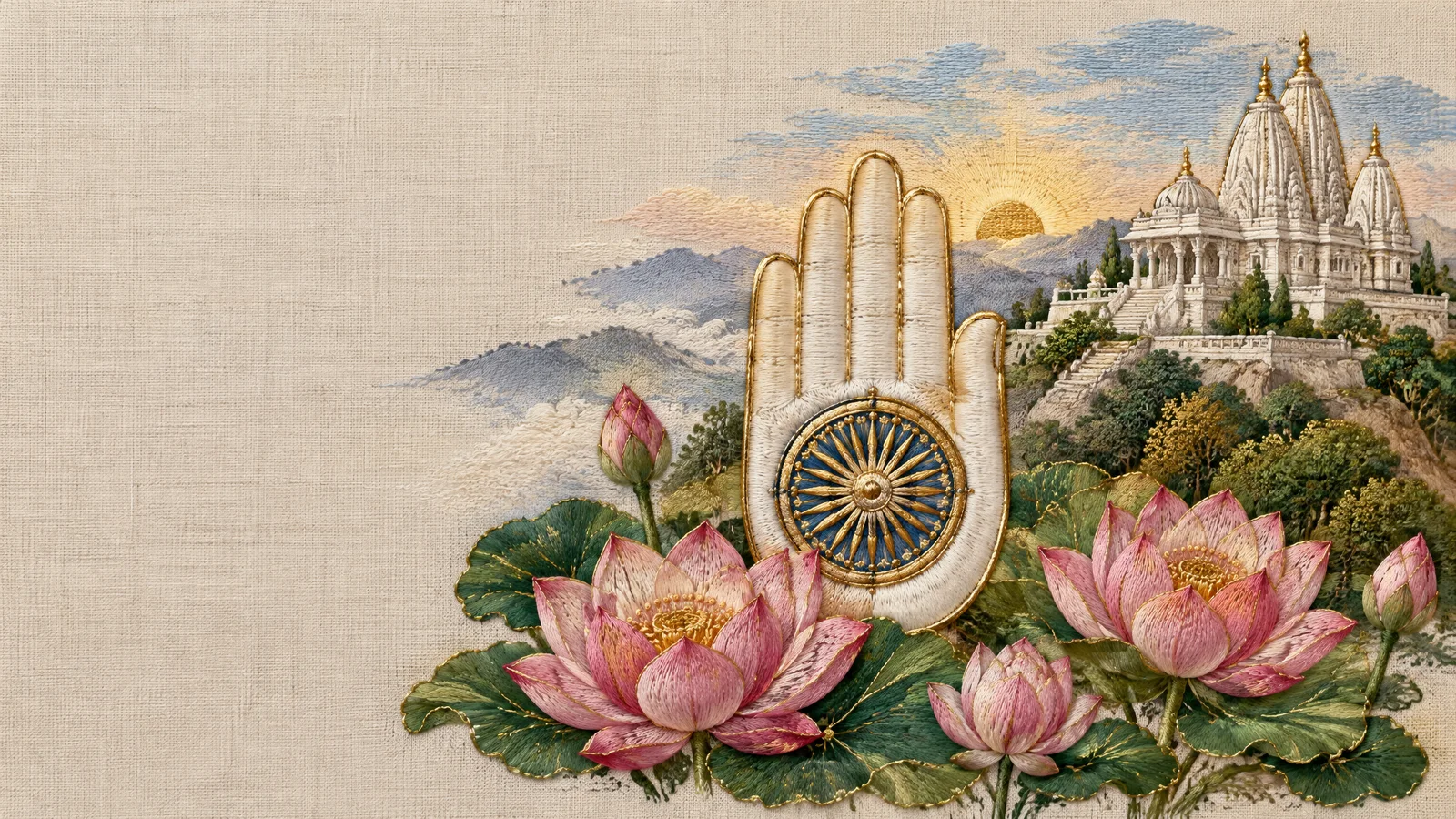
පාවාපුරි ජල් මන්දීර්
භගවාන් මහාවීරයන් වහන්සේගේ නිර්වාණ පද්ම සිද්ධස්ථානය
බිහාර් හි පිහිටි පාවාපුරි යනු 24 වන තීර්ථංකර භගවාන් මහාවීරයන් වහන්සේ ක්රි.පූ. 527 දී දීපවාලි දිනයේදී උත්තරීතර නිර්වාණය සාක්ෂාත් කරගත් පූජනීය සිද්ධ ක්ෂේත්රයයි. සුදු කිරිගරුඬ ජල් මන්දීරය නෙළුම් විලක් මධ්යයේ පිහිටා ඇති අතර එය අහිංසාවේ හා විමුක්තියේ මහා තොටිල්ලකි.
Quick Devotional Guide (At a Glance)
- •WHAT IT IS: The supreme Siddha Kshetra of Jainism where the 24th Tirthankara, Bhagwan Mahavira, delivered his final eternal sermon (Deshna) and attained Nirvana (Moksha) on Kartika Krishna Amavasya (Diwali) in 527 BCE. The iconic Jal Mandir is a pristine white marble sanctum situated in the center of a 16.8-acre lotus-covered sacred lake (Kamal Sarovar).
- •WHY VISIT / CHANT: To annihilate residual karmas, seek eternal freedom from the cycle of birth and death (Samsara), and absorb the supreme vibrations of unconditional compassion (Ahimsa Paramo Dharma). Pilgrims chant the eternal Ṇamōkāra Mahāmantra and offer the traditional Nirvana Ladoo to attain spiritual illumination.
- •WHEN TO VISIT: October to March provides cool, pleasant weather. The grandest spiritual congregation occurs during Diwali (Kartika Amavasya) to celebrate Mahavira's Moksha Kalyanak, and Mahavira Jayanti (Chaitra Shukla Trayodashi).
- •WHERE: Pavapuri (also known as Apapapuri, "the sinless town"), Nalanda District, Bihar, India. Located approximately 90 km from Patna and 38 km from Rajgir.
- •HOW (VIDHI & RULES):
- •Dress Code: Pure, unstitched white cotton clothes (Dhoti-Khes or Sari) are required for entering the inner sanctum (Garbhagriha) to perform Abhishek and Puja. Traditional, modest attire is required for general darshan.
- •Ritual Route: Pilgrims first visit Gaon Mandir (site of the final sermon), walk across the 600-foot stone causeway to the central Jal Mandir for Charan Paduka darshan, and then visit Samosharan Mandir and Gunawanji.
- •Rules: Complete abstention from leather articles, non-vegetarian food, alcohol, and tobacco. Maintain silence and internal contemplation while crossing the sacred bridge over the lotus waters.
Sacred Origin & Puranic / Scriptural Lineage
In the ancient scriptures of the Jain canon, Pavapuri is venerated as Apapapuri—the realm untouched by sin. It was here, in the fourth month of the monsoon retreat (Chaturmas) in 527 BCE, in the royal assembly hall of King Hastipal, that Bhagwan Mahavira sat in divine meditation. For forty-eight continuous hours without interruption, the Lord expounded the final sacred truth to gods, kings, ascetics, and householders. This sublime discourse forms the foundational bedrock of the holy Uttaradhyayana Sutra, illuminating the true nature of the soul (Jiva), matter (Ajiva), and the path of absolute liberation.
On the dark night of Kartika Krishna Amavasya, as the final planetary constellations aligned at dawn, Bhagwan Mahavira severed all eight types of binding karmas (Ghatiya and Aghatiya) and entered the immortal abode of the Siddhas (Siddhashila). The moment his divine physical frame was cremated by the celestial beings (Agnikumar devas), an unceasing wave of millions of celestial beings and human devotees rushed forward to collect the sacred ashes (Bhasma). Driven by boundless devotion, the crowd scooped up not only the ashes but the holy earth upon which the funeral pyre burned. This collective gathering created a deep and vast depression in the ground, which naturally filled with pure waters and blossomed with countless pink lotuses, giving birth to the sacred lake seen today.
King Nandivardhan, the elder brother of Bhagwan Mahavira, grief-stricken yet filled with spiritual reverence, consecrated the first holy memorial on the exact spot of the cremation in the center of this lake. Over the centuries, successive Jain royal patrons, merchant guilds, and enlightened Acharyas restored and embellished the shrine, culminating in the resplendent white marble Jal Mandir that stands today as an eternal beacon of self-conquest and non-violence.
The Sacred Shrines & Sites
Saints, Mystics & Historical Lineage
The sacred precincts of Pavapuri have been sanctified by the greatest masters in Jain spiritual history. Immediately following the Nirvana of Bhagwan Mahavira, his chief disciple (Gandhara) Indrabhuti Gautama Swami, devastated by personal grief over his master's departure, attained Kevalgyana (supreme omniscience) on that very night at Pavapuri, illuminating the first celebration of Diwali as the festival of spiritual light.
Through antiquity, the shrine was visited by the royal devotee Emperor Chandragupta Maurya and his preceptor Acharya Bhadrabahu. During the medieval era, luminaries such as Acharya Hemachandra, Acharya Jinaprabha Suri (who described Pavapuri in his Vividha Tirtha Kalpa), and countless Digambara and Shwetambara Acharyas performed austerities on the lake banks. The current architectural marvel of marble reflects the dedicated patronage of Jain Sanghas over the 17th to 20th centuries, preserved under rigorous monastic traditions where monks and nuns walk hundreds of miles on foot (Vihar) without footwear or vehicles to offer their pranams to the Tirthankara's Charan Padukas.
Sacred Hymn & Contemplation
Before approaching the sacred waters of Jal Mandir, recite this eternal Prakrit gatha from the ancient Agamas to tune your consciousness into the pure state of the liberated soul (Siddha Swaroop):
णमो अरिहंताणं, णमो सिद्धाणं, णमो आयरियाणं।
णमो उवज्झायाणं, णमो लोए सव्वसाहूणं॥
एसोपंचणमोक्कारो, सव्वपावप्पणासणो।
मंगलाणं च सव्वेसिं, पडमम हवई मंगलं॥
Ṇamō Arihantāṇaṁ, Ṇamō Siddhāṇaṁ, Ṇamō Āyariyāṇaṁ.
Ṇamō Uvajjhāyāṇaṁ, Ṇamō Lōē Savvasāhūṇaṁ.
Ēsōpañcaṇamōkkārō, Savvapāvappaṇāsaṇō.
Maṅgalāṇaṁ Ca Savvēsiṁ, Paḍhamama Havaī Maṅgalaṁ.
Devotional Translation: "I bow to the Arihantas (the enlightened conquerors). I bow to the Siddhas (the liberated bodiless souls). I bow to the Acharyas (the spiritual masters). I bow to the Upadhyayas (the sacred preceptors). I bow to all the Sadhus (monks) in the universe. This fivefold salutation destroys all sins and stands supreme as the first and foremost blessing among all auspicious benedictions."
ඔබ දැන සිටියාද?
The Jal Mandir stands in a lake of about 84 bighas, which blooms with lotuses in summer. Local tradition says the lake began as a hollow left when devotees took earth from Mahavira's cremation site.
The Kalpa Sutra says the eighteen allied kings of Kashi and Kosala lit lamps on the night of Mahavira's nirvana, which is why Jains light lamps at Diwali.
The Svetambara tradition dates the nirvana to 527 BCE, while the Digambara tradition gives 510 BCE.
Indrabhuti Gautama, Mahavira's chief disciple, attained Kevala Jnana on the same night that his teacher attained nirvana.
The Kalpa Sutra says Mahavira spent ten Chaturmas at Rajagriha, which makes Rajgir one of the places he stayed longest.
Mahavira
ජෛන ධර්මය වෙතින් තවත්
සම්බන්ධිත ඉගැන්වීම්
එකම ඉගැන්වීම, විවිධ සම්ප්රදායන් හරහා ප්රතිධ්වනිත වේ