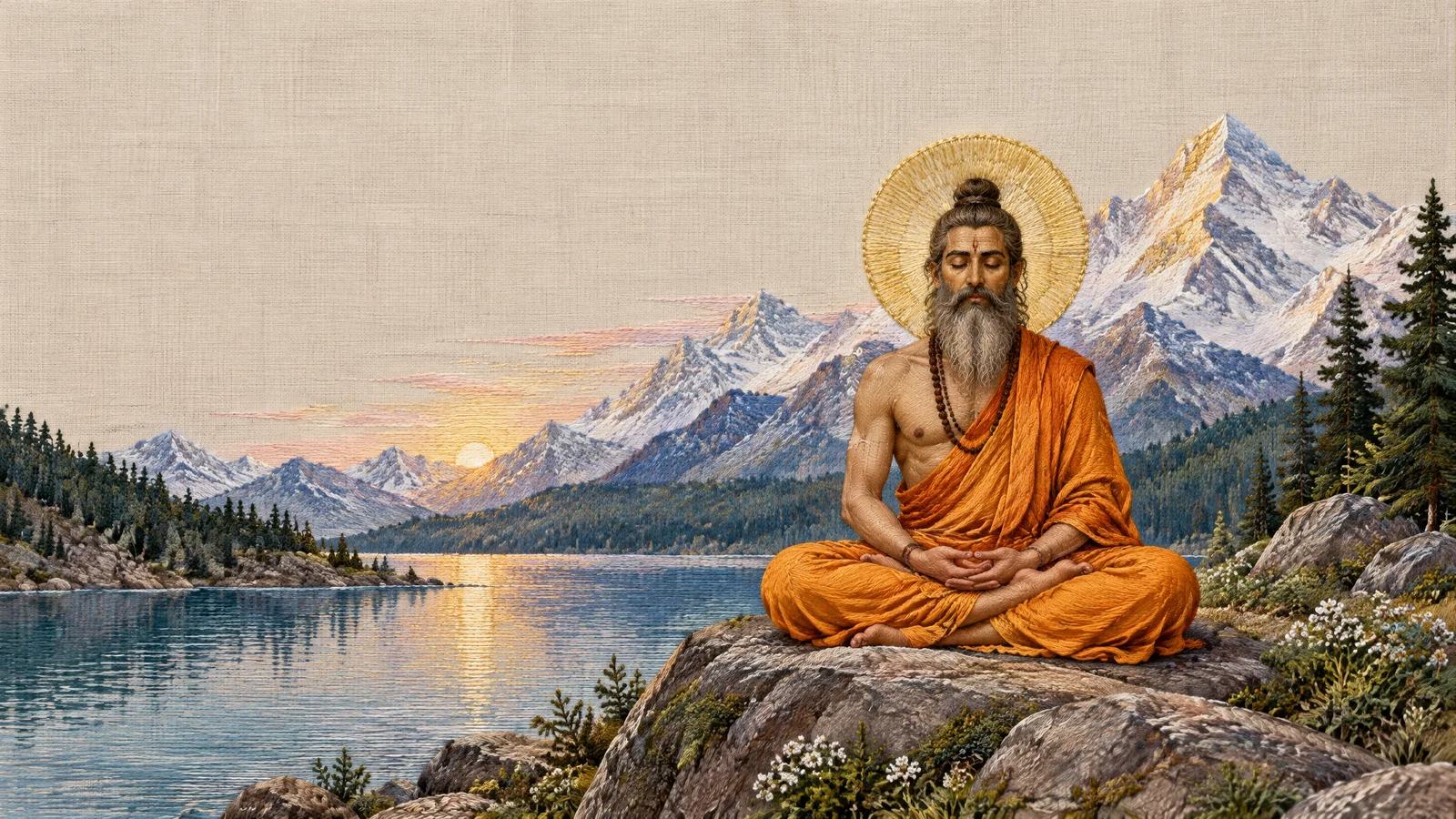
Vasistha Guha and Arundhati Cave
Ganga Bank, Rishikesh
The Himalayan cave of sage Vasistha above Rishikesh, a quiet Ganga-side place for meditation, with the nearby cave of Arundhati.
Quick Devotional Guide (At a Glance)
- •WHAT IT IS: A natural cave on the bank of the Ganga, above Rishikesh, that tradition links with the sage Vasistha. A Shiva lingam is worshipped inside. A second cave nearby is remembered as that of his wife, Arundhati.
- •WHY VISIT: Seekers come for silence and meditation in a place honoured as the retreat of a great rishi. Chanting Om Namah Shivaya or the Maha Mrityunjaya Mantra here is a common practice.
- •WHEN TO VISIT: The site can be visited through the year. October to April has the most pleasant weather. Mahashivratri and Guru Purnima are special days for worship.
- •WHERE: On the Rishikesh to Badrinath road, about 22 km upstream of Rishikesh, on the Ganga bank in Tehri Garhwal District, Uttarakhand.
- •HOW (VIDHI AND RULES):
- •Silence: Keep Mauna, quiet silence, inside the cave. Switch off phones and avoid loud chanting so that others can meditate.
- •Dress: Wear modest clothing that covers the shoulders and knees.
- •Snana: Many pilgrims wash their hands and face at the Ganga before sitting in dhyana.
- •Offerings: Offer a lamp, incense and flowers quietly at the lingam. The cave is a place for meditation, not for noisy ritual.
Sacred Origin and Scriptural Lineage
Vasistha is one of the Saptarshis, the seven great sages. Hindu tradition honours him as a Brahmarshi, a sage who has realised Brahman. The Rigveda credits him as the chief seer of Mandala 7, one of the Rigveda's ten books, which holds hymns to Agni, Indra and Varuna.
In the Valmiki Ramayana he is the family priest and teacher of the Ikshvaku line, and the guide of Rama and his brothers. His quarrel with Vishvamitra over the wish-granting cow Shabala is told in the Bala Kanda.
The Mahabharata tells that Vasistha lost his sons, and that his grief was so great that he wished to end his life. In the story, fire, water and the mountain heights would not harm him. This account is found in the Adi Parva. The tradition adds that, having survived these ordeals, he then turned to long tapasya.
The Himalayan banks of the Ganga are remembered as a place where such rishis meditated. Local tradition holds that Vasistha and his wife Arundhati sat in these caves in tapasya. The cave above Rishikesh bears his name, and a second cave nearby is called Arundhati Guha.
Arundhati is honoured as the model of devotion and steadfastness. In the Hindu wedding rite, a couple is shown the star Arundhati beside the star Vasistha, as a symbol of a lasting marriage.
The teaching tied to Vasistha is the Yoga Vasistha, a long dialogue with Rama on the nature of the mind, suffering and liberation. It begins with Rama's grief and his turn away from worldly life. The work is divided into six books: Vairagya (dispassion), Mumukshu-vyavahara (the seeker's conduct), Utpatti (creation), Sthiti (existence), Upashama (calming) and Nirvana (liberation). Seekers who meditate at Vasistha's cave often reflect on one of these books, beginning with Vairagya.
The Sacred Shrines and Sites
Saints and Pilgrims
For generations, the caves above Rishikesh have drawn wandering sadhus and seekers. Many sit here in silence for hours, and many simply come to rest beside the Ganga.
In 1930, Swami Purushottamanand settled beside Vasistha Guha and founded an ashram there, which kept the cave in regular use for meditation through the twentieth century. The ashram continues today under Swami Chaitanyananda, and it is this lineage of resident monks that maintains the cave and welcomes visiting seekers.
The sage whose name the cave bears is honoured across traditions. Vasistha is remembered as a teacher of kings and as a patient, forgiving rishi who answered conflict with calm. Visitors often recall his example before they begin their own meditation.
A simple practice for visitors is to sit quietly for a few minutes, breathe slowly, and offer one prayer: that the mind may become as still as the Ganga on a calm morning. The approach to the caves can involve walking on uneven ground, so wear sturdy footwear and take extra care after rain.
Sacred Hymn and Contemplation
Devotees sitting in the cave often recall the traditional verse that traces the Vyasa lineage back to Vasistha.
व्यासं वसिष्ठनप्तारं शक्तेः पौत्रमकल्मषम् ।
पराशरात्मजं वन्दे शुकतातं तपोनिधिम् ॥
Vyāsaṁ Vasiṣṭha-naptāraṁ Śakteḥ pautram-akalmaṣam ।
Parāśarātmajaṁ vande Śukatātaṁ taponidhim ॥
Meaning: "I bow to Vyasa, the great-grandson of Vasistha, the spotless grandson of Shakti, the son of Parashara and father of Shuka, a treasure-house of tapasya."
Did You Know?
The Rigveda credits Vasistha as the chief seer of Mandala 7, which makes him one of the oldest named voices in Vedic literature.
The Ramayana presents Vasistha as the family priest of the Ikshvaku line and the teacher of Rama and his brothers.
At Hindu weddings, couples are shown the star Arundhati beside the star Vasistha, as a sign of a steady marriage.
The Yoga Vasistha, a long dialogue between Vasistha and Rama on mind and liberation, takes its name from the sage whose cave stands above Rishikesh.
Shiva
More from Yoga
Connected Teachings
The same teaching, echoed across traditions