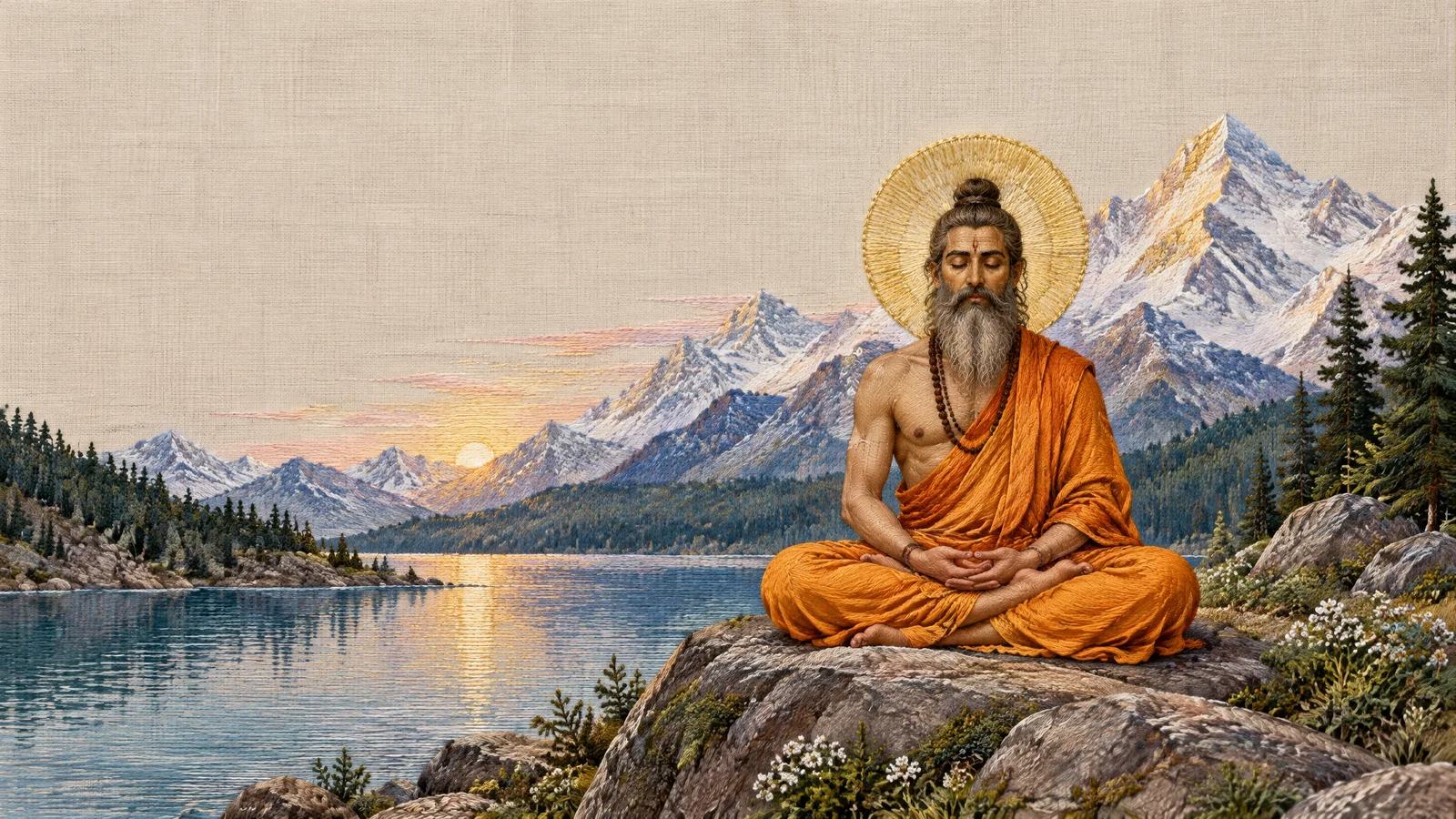
වසිට්ඨ ගුහාව සහ අරුන්ධතී ගුහාව
ගංගා තීරයේ පිහිටි බ්රහ්මර්ෂි වසිට්ඨයන්ගේ පෞරාණික හිමාලියානු තපෝවනය
රිෂිකޭශයට ඉහළින් ගංගා නදී තෙර පිහිටි වසිට්ඨ සහ අරුන්ධතී ගුහා, බ්රහ්මර්ෂි වසිට්ඨයන්ගේ ගැඹුරු තපසින් පරිශුද්ධ වූ නිශ්චලතාවයේ සහ භාවනාවේ පෞරාණික ක්ෂේත්රයකි.
Quick Devotional Guide (At a Glance)
- •WHAT IT IS: An ancient natural subterranean cavern and sacred hermitage where Brahmarshi Vasistha (the royal preceptor of the Ikshvaku dynasty and composer of Vedic hymns) and his divine consort Mata Arundhati performed severe tapasya (penance and meditation). It houses an ancient self-manifest (Swayambhu) Shiva Lingam deep within its womb.
- •WHY VISIT / CHANT: Entering the cave confers immediate stillness of the mind (chitta-vritti-nirodha), dissolves deep-seated karmic grief, and grants spiritual awakening through the living vibrations of Vedic rishis. Meditating here or chanting the Maha Mrityunjaya Mantra and Om Namah Shivaya bears infinite merit.
- •WHEN TO VISIT: Open throughout the year. The optimal pilgrimage window is between October and April when the Himalayan climate is temperate and the sacred Ganga flows with crystal clarity. Mahashivratri and Guru Purnima are celebrated with deep sanctity.
- •WHERE: Situated on the Rishikesh-Badrinath highway (NH-58), approximately 22 km north of Rishikesh in Tehri Garhwal district, Uttarakhand, directly along the pristine white sand banks of the holy Ganga.
- •HOW (VIDHI & RULES):
- •Silence (Mauna): Absolute silence must be maintained inside the cave. No mobile phones, loud chanting, or flash photography are permitted.
- •Attire: Modest, traditional pilgrim clothing covering shoulders and knees (dhoti, kurta, saree, salwar).
- •Sacred Dip: Pilgrims perform snana (holy bath) in the crystalline waters of the adjacent Vasistha Kund on the Ganga shore before sitting in dhyana.
- •Offerings: Silent offering of oil lamps (deepa), dhoop, and mental floral surrender at the Shiva Lingam. No commercial rituals are practiced.
Sacred Origin & Puranic / Scriptural Lineage
According to the timeless narratives of the Srimad Valmiki Ramayana, Mahabharata, and Puranas, Brahmarshi Vasistha—one of the exalted Saptarshis (Seven Sages) and mind-born son (manasaputra) of Lord Brahma—endured immense sorrow when all one hundred of his sons, including Sage Shakti, were slain due to the animosity of King Kalmashapada, instigated by Sage Vishwamitra. Stricken with profound grief, the great sage sought to give up his physical frame, hurling himself from the heights of Mount Meru and into raging torrents, but the cosmic elements and Mother Ganga refused to harm the embodiment of Dharma and deposited him gently upon her banks.
Realizing the divine ordinance, Brahmarshi Vasistha, accompanied by his profoundly devoted and enlightened consort Mata Arundhati, sought this secluded, subterranean cavern on the holy northern banks of the Ganga in the foothills of the Himalayas. Deep inside the darkness of the earth, he established a Shiva Lingam and plunged into supreme samadhi. Mother Arundhati chose an adjacent cave slightly downstream, performing her own austerities of uncompromising purity and devotion.
Their prolonged penance transformed the geological fabric of the cavern into a concentrated field of transcendental consciousness. When Sri Rama, the seventh avatar of Lord Vishnu, returned from his pilgrimage before his coronation and sought spiritual illumination, Brahmarshi Vasistha imparted the supreme non-dual wisdom preserved in the monumental scripture Yoga Vasistha. The vibrational presence of this ancient wisdom remains palpably alive within the cavern walls.
The Sacred Shrines & Sites
Saints, Mystics & Historical Lineage
For millennia, this cave remained hidden from the mundane world, known only to wandering Himalayan ascetics and avadhootas. In the early 20th century, the great sage and Ramakrishna-lineage monk Swami Purushottamananda Ji Maharaj was guided by divine intuition to rediscover this holy site in 1928. Finding the cave overgrown with thick forest and inhabited by wild beasts, Swamiji undertook severe austerities and established the Swami Purushottamananda Ashram to protect the sanctity of the cave.
Divine luminaries such as Swami Shivananda Saraswati of Rishikesh, Swami Chidananda, and later Maharishi Mahesh Yogi regarded Vasistha Guha as one of the holiest power-centers for silent meditation in the Himalayas. The ashram remains strictly committed to the monastic ideals of silence, scriptural study, and uncommercialized devotion.
Sacred Hymn & Contemplation
Devotees entering the cave meditate upon the divine lineage of the Guru and the primordial peace embodied by Brahmarshi Vasistha:
व्यासं वसिष्ठनप्तारं शक्तेः पौत्रमकल्मषम् ।
पराशरात्मजं वन्दे शुकतातं तपोनिधिम् ॥
Vyāsaṁ Vasiṣṭha-naptāraṁ Śakteḥ pautram-akalmaṣam ।
Parāśarātmajaṁ vande Śukatātaṁ taponidhim ॥
"I bow to Sage Vyasa, the great-grandson of Vasistha, the spotless grandson of Shakti, the divine son of Parashara, and the father of Sri Shuka—the supreme treasure-house of tapasya and wisdom."
ඔබ දැන සිටියාද?
The Rigveda credits Vasistha as the chief seer of Mandala 7, which makes him one of the oldest named voices in Vedic literature.
The Ramayana presents Vasistha as the family priest of the Ikshvaku line and the teacher of Rama and his brothers.
At Hindu weddings, couples are shown the star Arundhati beside the star Vasistha, as a sign of a steady marriage.
The Yoga Vasistha, a long dialogue between Vasistha and Rama on mind and liberation, takes its name from the sage whose cave stands above Rishikesh.
Shiva
යෝගා වෙතින් තවත්
සම්බන්ධිත ඉගැන්වීම්
එකම ඉගැන්වීම, විවිධ සම්ප්රදායන් හරහා ප්රතිධ්වනිත වේ