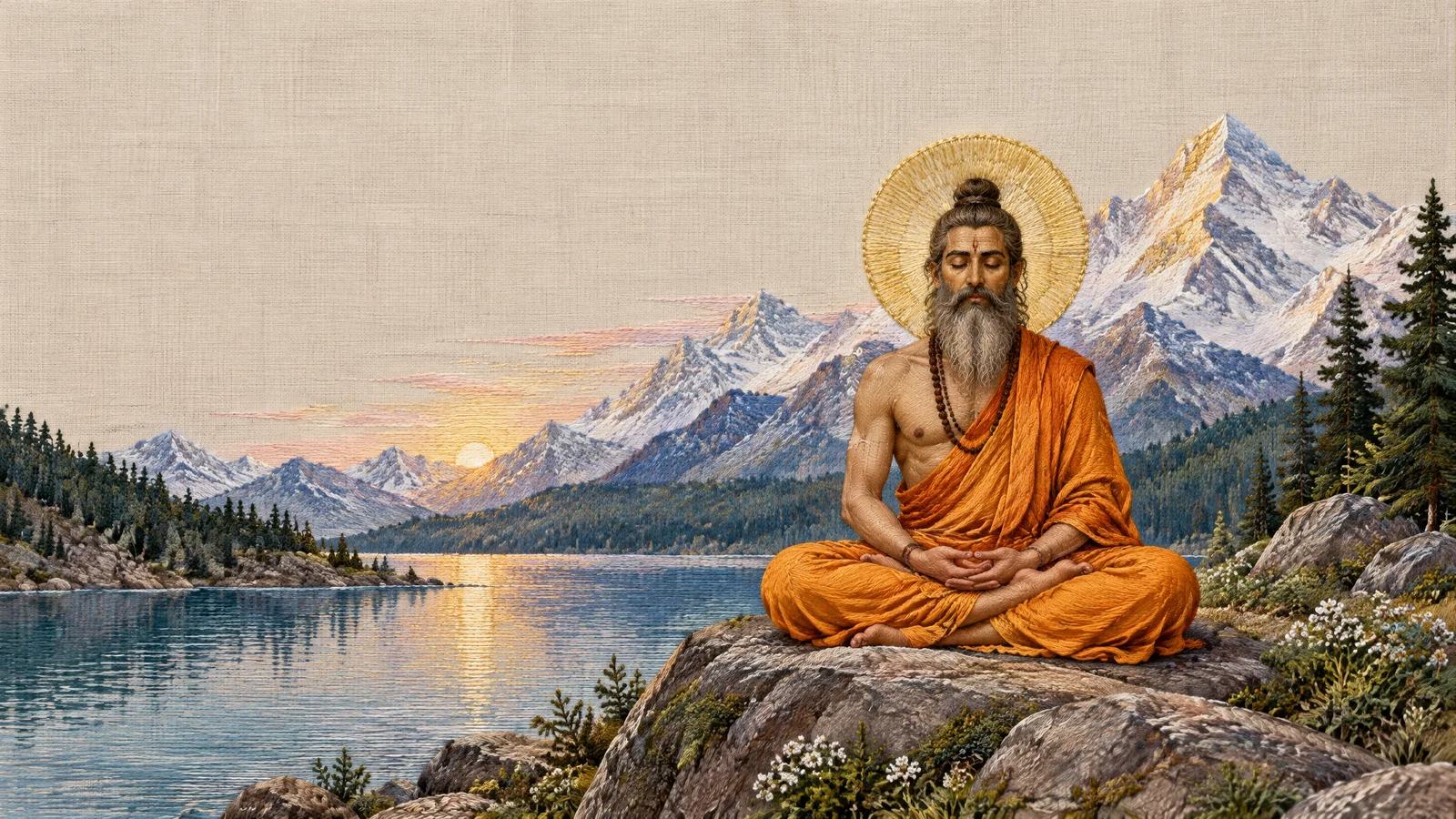
ගෝමුඛ සහ තපෝවන
ශිවලිංග පර්වත පාමුල භාගීරථී-ගංගා හි පූජනීය ග්ලැසියර ප්රභවය
උත්තරාඛන්ඩ් හි පිහිටි ගෝමුඛ යනු භාගීරථී-ගංගා මෑණියන් මනුලොවට බසින ප්රභවයයි. ශිවලිංග කඳු පාමුල පිහිටි තපෝවනය ඍෂිවරුන්ගේ සදාකාලික භාවනා භූමියයි.
Quick Devotional Guide (At a Glance)
- •WHAT IT IS: The physical and metaphysical birth-cradle of the holy River Ganga (Bhagirathi). Gaumukh (~4,000 m) is the snout of the 30-km Gangotri Glacier resembling the mouth of a sacred cow. Tapovan (~4,463 m) is a pristine high-altitude alpine meadow resting directly beneath the majestic pyramid of Mount Shivling (6,543 m), renowned as an unbroken seat of Vedic tapasya (austerities).
- •WHY VISIT / CHANT: Scriptural texts declare that a single respectful touch or sip of the glacial Bhagirathi waters at Gaumukh washes away lifetimes of accumulated karmic impressions (sanchita karma). Meditating in Tapovan under Mount Shivling bestows liberation (moksha), awakens inner Kundalini shakti, and silences the restless mind.
- •WHEN TO VISIT: Open annually from Akshaya Tritiya (April/May) until Diwali (October/November). Ideal months are May to June and September to mid-October. Completely closed during winter under massive snowpacks.
- •WHERE: Gangotri National Park, Uttarkashi District, Uttarakhand, India. Base camp begins at Gangotri Dham (3,100 m), trekking 18 km to Gaumukh via Bhojwasa, and an additional steep 4 km ascent across the glacier to Tapovan.
- •HOW (VIDHI & RULES):
- •Permits & Ecology: Mandatory inner-line permits from Uttarkashi Forest Department; strictly eco-sensitive, zero-plastic, and sacred silence zones.
- •Snana & Archana: Pilgrims offer achamana (sacred sipping) and gentle cleansing at safe river bends near Bhojwasa or Gaumukh (never step directly onto unstable calving glacial ice).
- •Devotional Conduct: Observance of pure vegetarianism (sattvic diet), chanting of the Ganga Stotram and Maha Mrityunjaya Mantra, and maintaining deep reverent silence (mauna) in the presence of meditating yogis at Tapovan.
Sacred Origin & Puranic / Scriptural Lineage
According to the Srimad Bhagavatam, Skanda Purana (Kedar Khanda), and Valmiki Ramayana, the descent of Ganga (Ganga Avatarna) stands as the supreme testament of resolute faith and divine grace. King Bhagiratha, seeking the liberation of sixty thousand ancestor princes of the Ikshvaku lineage who had been reduced to ashes by the fiery gaze of Sage Kapila, undertook severe, unyielding austerities. Pleased by his unswerving devotion, Devi Ganga agreed to descend from the celestial heavens to earth, but warned that her torrential momentum would shatter the planet into the nether realms.
Bhagiratha then prayed fervently to Lord Shiva, who alone possessed the capacity to absorb the celestial river's cosmic force. Standing in supreme yogic stillness amid these very Himalayan ranges, Mahadeva opened his matted dreadlocks (jata) to receive the crashing torrent of Ganga. He pacified her pride, gentled her fury within his cosmic locks, and released her in sanctifying, life-giving streams. Gaumukh is the hallowed threshold where this divine stream first emerges physically into the terrestrial realm.
Rising directly behind the glacial origin is Mount Shivling—an awe-inspiring natural monolith shaped like a cosmic Shivalinga, crowned with eternal snow. The plateau of Tapovan, sprawling directly beneath this divine peak, is revered as the primordial sacrificial ground where celestial beings (devas), siddhas, and great rishis have sat in unbroken meditation since the Satya Yuga. It is believed that even today, invisible masters of the Nath and Giri lineages abide here in subtle bodies, bathing in the supreme spiritual currents that perpetually emanate from Mount Shivling.
The Sacred Shrines & Sites
Saints, Mystics & Historical Lineage
From time immemorial, the Gaumukh-Tapovan sanctuary has magnetically drawn the greatest mystics of Sanatana Dharma. Following the primordial footsteps of King Bhagiratha and Sage Kapila, Adi Shankaracharya traversed these daunting glaciers in the 8th century CE to re-establish the Vedic sanctums of Garhwal and ignite the unbroken worship of Mother Ganga.
In modern times, this high-altitude realm was illuminated by Swami Tapovan Maharaj (1889–1957), the revered preceptor of Swami Chinmayananda. Swami Tapovan Maharaj spent months in profound samadhi in caves across Gangotri, Gaumukh, and Tapovan, chronicling his sublime communion with the Himalayan divinity in classic scriptural treatises like Himagiri Vihar and Wanderings in the Himalayas.
Similarly, Swami Sundaranand (1926–2020), a direct disciple of Swami Tapovan Maharaj and famously known as "the sadhu who photographed the Himalayas," lived in intense penance at Tapovan for decades, capturing the changing majesty of the glacier and fiercely advocating for its spiritual and ecological sanctity. Even today, solitary ascetics (kutia-vasis) endure sub-zero temperatures in stone huts and natural caves in Tapovan, dedicated solely to global peace and cosmic realization.
Sacred Hymn & Contemplation
Pilgrims and seekers sitting before the sacred waters of Gaumukh and gazing upon Mount Shivling chant the immortal verses of Sri Adi Shankaracharya's Ganga Stotram:
देवी सुरेश्वरि भगवति गङ्गे त्रिभुवनतारिणि तरलतरङ्गे।
शङ्करमौलिविहारिणि विमले मम मतिरास्तां तव पदकमले ॥
Devī Sureśvari Bhagavati Gaṅge Tribhuvana-tāriṇi Tarala-taraṅge।
Śaṅkara-mauli-vihāriṇi Vimale Mama Matir-āstāṁ Tava Pada-kamale॥
Meaning:
"O Divine Goddess, Queen of the Devas, O Bhagavati Ganga! You are the savior of all three worlds, moving in playful, shimmering waves. O Immaculate Mother who dances upon the matted locks of Lord Shiva, may my mind forever remain devotedly anchored at Your lotus feet."
ඔබ දැන සිටියාද?
The Gangotri Glacier is about 30 km long, and Gaumukh, the Bhagirathi source at its snout, has been retreating. Between 1936 and 1996 it retreated about 1,147 metres, and more recently at over 30 metres a year.
The name Gaumukh means cow's mouth. It comes from the shape of the ice cave from which the Bhagirathi once emerged.
Mount Shivling rises to 6,543 metres. Early European visitors called it the Matterhorn peak. Its first ascent was made in 1974 by an Indo-Tibetan Border Police team.
Swami Tapovan Maharaj, the teacher of Swami Chinmayananda, wrote of his Himalayan journeys in Himagiri Viharam, translated as Wanderings in the Himalayas.
Swami Sundaranand, known as the Sadhu Who Clicks, made over 100,000 photographs of the Gangotri region, recording the retreat of the glacier.
Shiva
යෝගා වෙතින් තවත්
සම්බන්ධිත ඉගැන්වීම්
එකම ඉගැන්වීම, විවිධ සම්ප්රදායන් හරහා ප්රතිධ්වනිත වේ