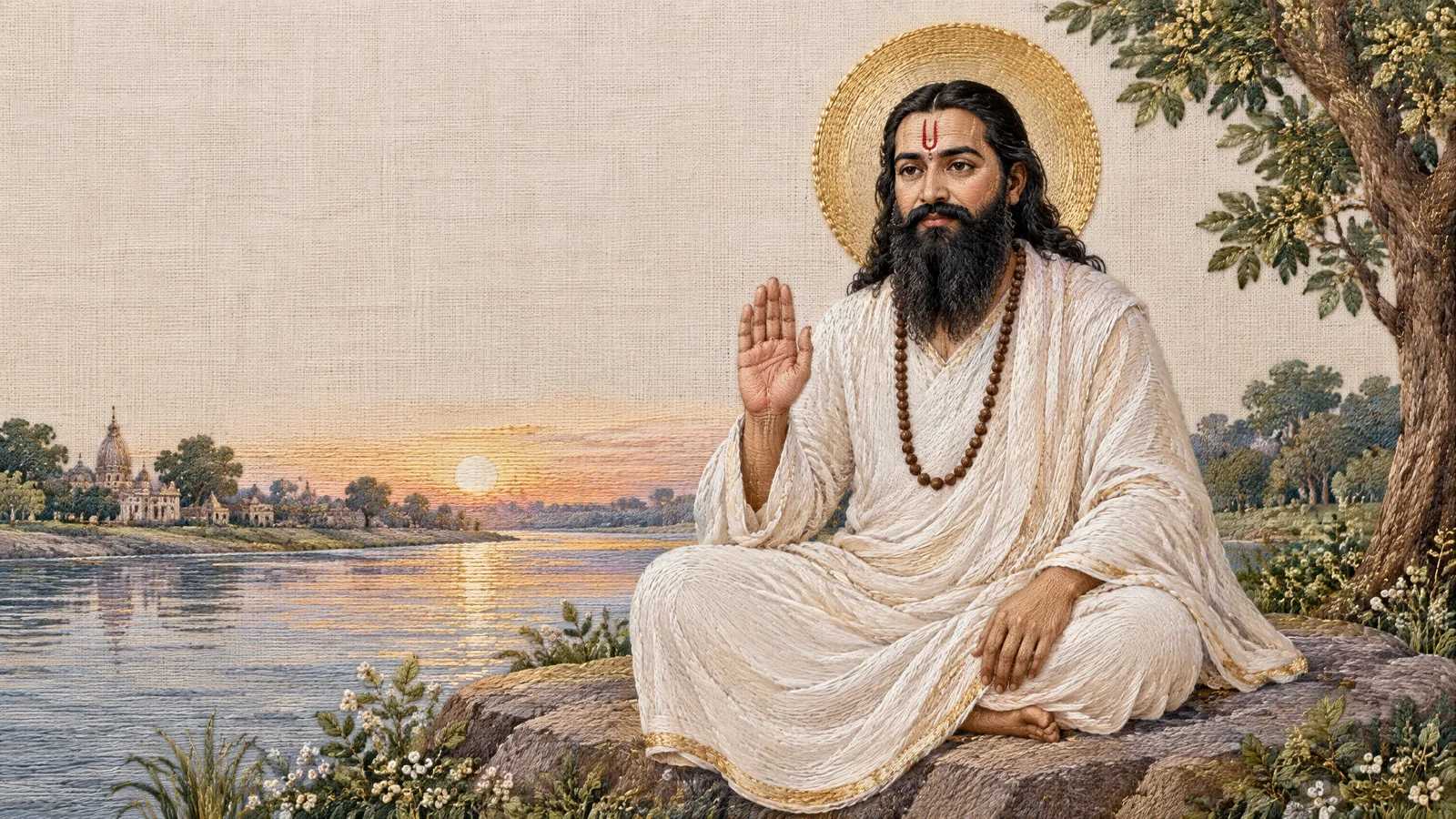
The Clay Puppet
A Hymn of Awakening
Ravidas likens the human body to a clay puppet that dances with pride in gain and weeps in loss, and points beyond that illusion.
Verses
O how does this child of clay dance about? It sees and hears, yet remains deluded. From where did it come, and where will it dissolve? ||Pause||
Verse 1
When it obtains something, it becomes proud; when maya comes, it feels settled. But when that possession is lost, it begins to weep. Wrapping and clinging to things, in the end it all scatters away. ||1||
Verse 2
Says Ravidas: this illusion is not dispelled—just as a night's dream fades from memory and is forgotten. ||2||4||
Verse 3
Worship Guidelines & Chanting Benefits (Phalashruti)
Daily or auspicious lunar days (Ekadashi, Purnima, Pradosham)
Brahma Muhurta (4:00 AM – 6:00 AM) or Evening Dusk (Sandhya)
Ghee lamp (Deepa), Incense (Dhoopa), Fresh flowers & Water offering
- Peace of mind, spiritual upliftment, and harmonious energy in the home
Background
This shabad of Bhagat Ravidas is in Raag Asa on Ang 487 of the Guru Granth Sahib, the central scripture of Sikhism. Ravidas was a 15th-century mystic born into a leatherworker family, and the hymn uses the image of a clay puppet to speak of attachment to the world and the fleeting nature of life. It is sung in kirtan and in gatherings centred on the bhakti and Sant traditions.
About this Text
Composed by: Bhagat Ravidas · Medieval Nirguna Bhakti Poet-Saint · 15th–16th century, Varanasi
A poet-saint and leather worker by trade from Varanasi, whose hymns envisioned Begampura — a utopian realm free of sorrow, fear, and caste-based inequality. His compositions are included in the Guru Granth Sahib and form the devotional core of the modern Ravidassia tradition.
Did You Know?
Author
Bhagat Ravidas, a 15th-century saint-poet and a revered figure of the Bhakti movement. His hymns are included in the Guru Granth Sahib, and this one stands at Ang 487.
Musical Setting
The composition is set to Raag Asa, a melody meant to be sung at dawn. This raga often evokes a mood of reflection and hope, fitting the poem's call to awaken from worldly illusion.
The Puppet Metaphor
The refrain compares a human being to a puppet made of clay that sees, hears, speaks and runs about. It is a striking image of how attachment to the material world (Maya) keeps us dancing without understanding where we came from or where we are going.
Gain and Loss
When something is gained the puppet grows proud, and when Maya departs it begins to weep. Joy and sorrow are both temporary, rooted in the illusion of separateness.
The Game and the Player
In the canonical text at Ang 487, Ravidas calls the world a game and says his love is for the Player, the Creator behind it. The Gurmukhi shown on this page is a loose rendering of the shabad, so consult Ang 487 for the exact words.
Guru Ravidas Ji
More from Ravidassia
Connected Teachings
The same teaching, echoed across traditions