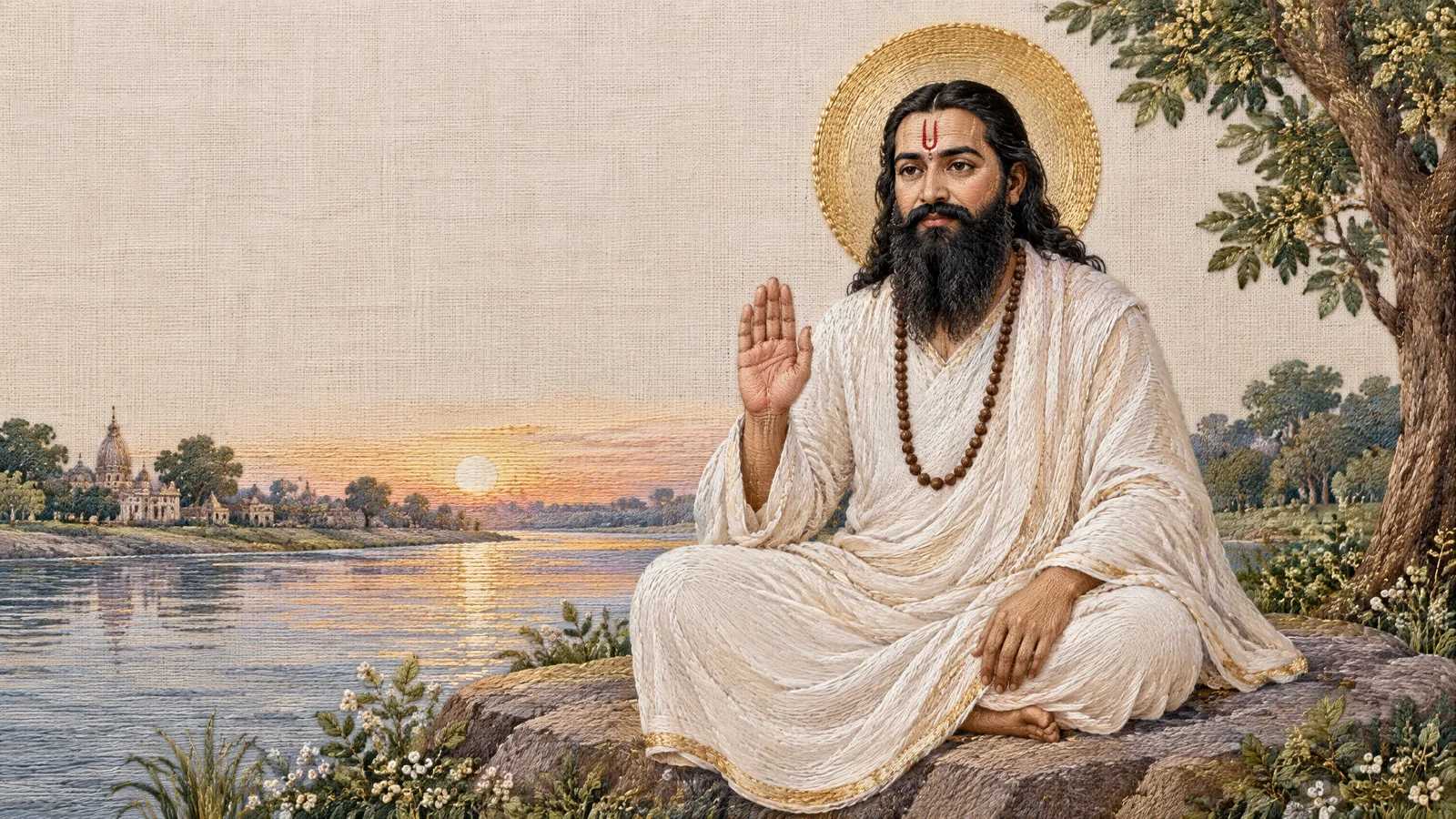
Guru Ravidas Janam Asthan, Varanasi
Guru Ravidas Janam Asthan in Seer Govardhanpur, Varanasi, marks his birthplace and is the most significant pilgrimage site for the Ravidassia community.
The Sacred Ground of Seer Govardhanpur
On the outskirts of Varanasi, in the locality of Seer Govardhanpur, stands a temple. It is traditionally believed to mark the exact birthplace of Guru Ravidas Ji, the 15th- and 16th-century mystic poet-saint whose devotional hymns are woven into the Guru Granth Sahib. The site has grown from a modest local shrine into a major pilgrimage complex, reflecting the growing global reach of the Ravidassia community.
The Life of Guru Ravidas Ji
Guru Ravidas Ji was born into a family of leatherworkers in Varanasi, a community then placed at the margins of a rigidly stratified society. Rather than treating his family's trade as a mark of unworthiness, he turned his life toward devotion. He became one of the great poet-saints of the North Indian Bhakti movement, alongside contemporaries such as Kabir. His compositions, numbering several dozen hymns set across a range of ragas, were later collected into the Guru Granth Sahib, the central scripture of Sikhism. This placed the words of a leatherworker's son permanently alongside those of Gurus and other revered Bhagats. Among these hymns, one stands above the rest: his vision of Begampura, Ang 345, a city without sorrow, fear, or caste distinction. It remains his most widely quoted composition and the philosophical heart of the Ravidassia tradition.
A Global Gathering Point
Every year on Guru Ravidas Jayanti, the full moon of the month of Magh, hundreds of thousands of pilgrims converge at this shrine. They arrive from Punjab, from across India, and from Ravidassia diaspora communities in the United Kingdom, Canada, Italy, and beyond. For many devotees, especially those tracing their roots to Punjab's Doaba region, a pilgrimage here is considered a defining act of faith and identity.
Living Memory of a Teacher of Equality
The shrine keeps alive Guru Ravidas Ji's core teaching: a rejection of caste hierarchy and ritual exclusion in favor of direct devotion open to everyone. The site's continued growth reflects how his 500-year-old message remains a living, organizing force for the community today, not simply a historical memory. It is a message captured in verses like his vision of Begampura, a city free of sorrow and division.
Dignity of Labor, Dignity of Devotion
Even as his reputation as a poet-saint spread, tradition holds that Guru Ravidas Ji continued working at his family's trade of leatherwork and cobbling. He refused to treat spiritual attainment as a reason to abandon, or feel shame over, honest labor. This insistence that devotion and ordinary work could coexist struck directly at the logic of caste hierarchy. No occupation, he taught, placed a person beyond the reach of the divine; caste ranked people by birth and trade, not by conduct or sincerity of heart. His teaching held that the formless, nirguna divine could be reached through simple remembrance and sincere living, without priestly mediation or ritual expense. This made his message accessible to the very communities that orthodox religious structures had long kept at a distance. It is this teaching, as much as the miracle of his birthplace, that pilgrims come to Seer Govardhanpur to honor.
The Shrine's Growth Across Centuries
For generations, the site at Seer Govardhanpur remained a modest local shrine, tended by residents who preserved the memory of Guru Ravidas Ji's birth there. Its transformation into a major pilgrimage complex is a comparatively recent development. It is closely tied to the institutional presence established here by Dera Sachkhand Ballan, a prominent Ravidassia religious seat based in Punjab, which helped cement the site as a focal point for Ravidassia identity distinct from broader Sikh institutions. Since the late twentieth century, the temple complex has expanded substantially. Funding has come in large part from Ravidassia communities who emigrated to the United Kingdom, Canada, and Western Europe, and who continue to channel resources back toward the shrine of their spiritual homeland.
Worship and Daily Practice
Pilgrims arriving at the shrine take part in practices common to Ravidassia devotional life. These include kirtan, the singing of Guru Ravidas Ji's hymns set to melody; recitation from the Amritbani, the collected compositions attributed to him; and langar, the communal meal served without distinction to all visitors regardless of background. These practices enact in daily life the very teaching the shrine exists to commemorate. Devotion and dignity, this teaching holds, are available to every person equally, with no one excluded by birth from the presence of the divine.
A Living Legacy
The continued growth of Seer Govardhanpur, from a modest local shrine into a global pilgrimage site, mirrors something larger. It mirrors the growth of the Ravidassia community's own confidence in its distinct identity. What began as a local memorial to a single poet-saint has become a gathering point. Here, his five-hundred-year-old message of equality is renewed each year by hundreds of thousands of pilgrims, carrying forward a teaching that was radical in Guru Ravidas Ji's own time and remains, for many of his followers, just as necessary today.
Did You Know?
The site rose to particular prominence after the founding of Dera Sachkhand Ballan's institutional presence here, cementing it as a focal point for Ravidassia identity distinct from broader Sikh institutions.
The temple complex has expanded substantially since the late 20th century, funded largely by the Ravidassia diaspora in the UK, Canada, and Western Europe.
Guru Ravidas Jayanti at this site is one of the largest annual gatherings of the Ravidassia community anywhere in the world.
Guru Ravidas Ji
More from Ravidassia
Connected Teachings
The same teaching, echoed across traditions