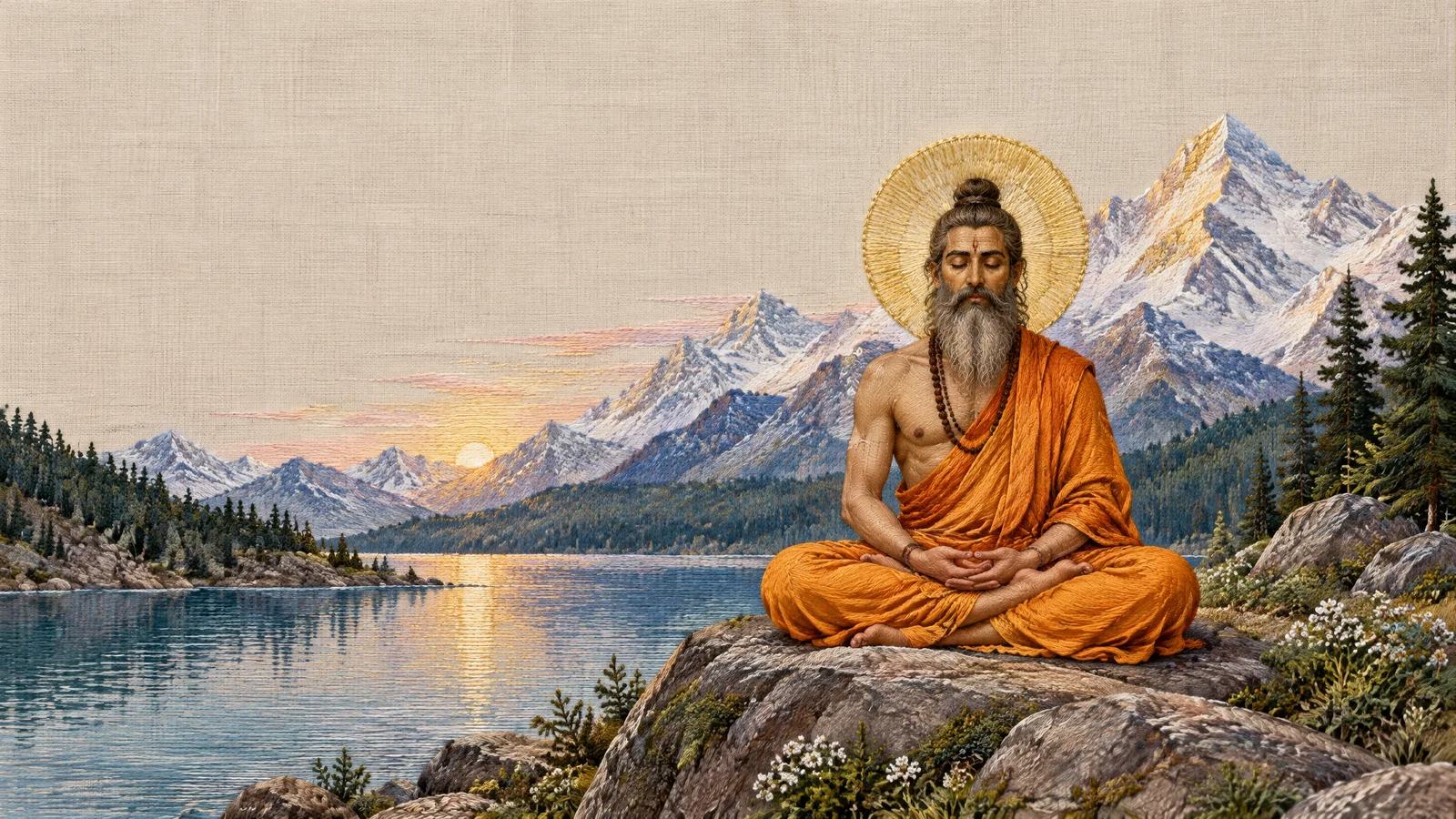
Rishikesh and Haridwar
Yoga Capital and Ganga Gateway
Rishikesh and Haridwar on the Ganga, the world's yoga capital and a Himalayan gateway of ashrams, Har Ki Pauri, and the Kumbh Mela.
The Yogic Atmosphere of the Himalayan Foothills
Where the celestial Ganga leaves the high glaciers and enters the plains, the energy field of Rishikesh and Haridwar creates an ideal natural environment for deep meditation, Kundalini awakening (the rousing of the body's dormant spiritual energy), and Hatha Yoga practice.
The high prana, the vital life force carried by mountain breezes, joins the constant sound of flowing river water, called Nada in this context, to naturally quieten the restless modifications of the mind, the Chitta Vrittis, toward the stillness that yogic tradition calls Chitta Vritti Nirodha. This is why, long before any formal ashram existed on these banks, wandering sadhus already treated the stretch between Haridwar and Rishikesh as a single continuous tapobhoomi, a land set apart for austerity, and modern teachers inherited rather than invented that reputation.
Prominent Yogic Sanctuaries & Ashrams
The Four Paths of Classical Yoga Practiced Here
Seekers in Rishikesh integrate the four classical yogic paths:
- •Raja & Hatha Yoga: Asana alignment, Pranayama breath control, and sensory withdrawal, known as Pratyahara.
- •Jnana Yoga: Contemplating the Upanishads and Non-Dual Vedanta on the rocky riverbanks.
- •Bhakti Yoga: Chanting evening bhajans and participating in the sacred Ganga Aarti.
- •Karma Yoga: Selfless service in free charitable clinics and community food distributions.
A City Named for the Lord of the Senses
Rishikesh takes its name from Hrishikesh, "Lord of the Senses," the forty-seventh name of Vishnu in the Vishnu Sahasranama. The Skanda Purana connects this name directly to the town. It tells of the sage Raibhya, who practiced severe austerity here in mastery of his own senses, until Vishnu appeared before him as Hrishikesh beneath a mango tree, in a spot the text calls Kubjamraka. Pleased by that mastery, Vishnu blessed him by declaring that this ground would forever be known by that very name. Centuries of yogis and seekers have treated the legend as more than an origin story. They have taken Raibhya's sense-mastery as the town's founding instruction, the same discipline that Hatha Yoga, Pratyahara, and silent meditation along the Ganga still aim to cultivate today.
Haridwar: Gateway of the Gods and the Kumbh Mela
Haridwar's own sanctity rests on Har Ki Pauri, the ghat where, tradition holds, Vishnu himself once stood and left a footprint still marked in the stone above the Brahmakund. Every evening, pilgrims gather here for the Ganga Aarti, setting small lamps afloat on the current as priests wave larger flames in rhythm with bells and chanting. Once every twelve years, Haridwar hosts the Kumbh Mela, when millions of pilgrims and ascetics converge on these banks for a ritual bath believed to wash away lifetimes of karma. The scale of this gathering makes it among the largest peaceful assemblies of people anywhere in the world, drawing renunciates from every lineage of Indian asceticism to bathe together at the same auspicious hour.
A few kilometres away in Kankhal, the Daksheshwar Mahadev temple marks the site that the Shiva Purana identifies with King Daksha's great sacrifice. According to that telling, Daksha excluded his own daughter Sati's husband, Lord Shiva, from the ceremony, and Sati, unable to bear the insult to him, gave up her body in the sacrificial fire itself. Her act of grief-stricken devotion, and Shiva's anguished response to it, are remembered at the temple's Sati Kund to this day.
On the two hills overlooking the city, the goddess is honored again at the Mansa Devi and Chandi Devi temples, each reached by cable car or by a steep climb on foot. Pilgrims circling Haridwar therefore move continually between river, fire, and hilltop shrine, never quite leaving her presence. Between the footprint at Har Ki Pauri and the sorrow remembered at Daksheshwar, Haridwar holds together two moods at once. One is boundless joy in the presence of the divine, and the other is the willingness to surrender everything for it, and together they define the whole stretch of river from here to Rishikesh.
Sacred Yogic Invocation: Patanjali Stotram
The traditional invocation honoring Maharshi Patanjali:
Yogena Chittasya Padena Vacham
Malam Sharirasya Cha Vaidyakena
Yopakarottam Pravaram Muninam
Patanjalim Pranjalir Anato Asmi।
I bow with folded hands to Patanjali,
Who purified the mind through Yoga,
Who purified speech through Grammar,
And who healed the body through Medicine.
Did You Know?
International Yoga Capital
Rishikesh hosts the annual International Yoga Festival every March, uniting masters and practitioners from more than 100 countries.
The Beatles Ashram
In 1968, the Beatles stayed at Maharishi Mahesh Yogi's ashram in Rishikesh to study Transcendental Meditation, introducing Indian spirituality to global youth culture.
Vashishta Gufa Cave
The natural cave where Sage Vashishta meditated maintains deep silence and cool temperatures even during peak summer heat.
Har Ki Pauri Footprint
The Brahmakund at Har Ki Pauri in Haridwar is traditionally believed to bear the sacred footprint of Bhagwan Vishnu.
Shiva
More from Yoga
Connected Teachings
The same teaching, echoed across traditions