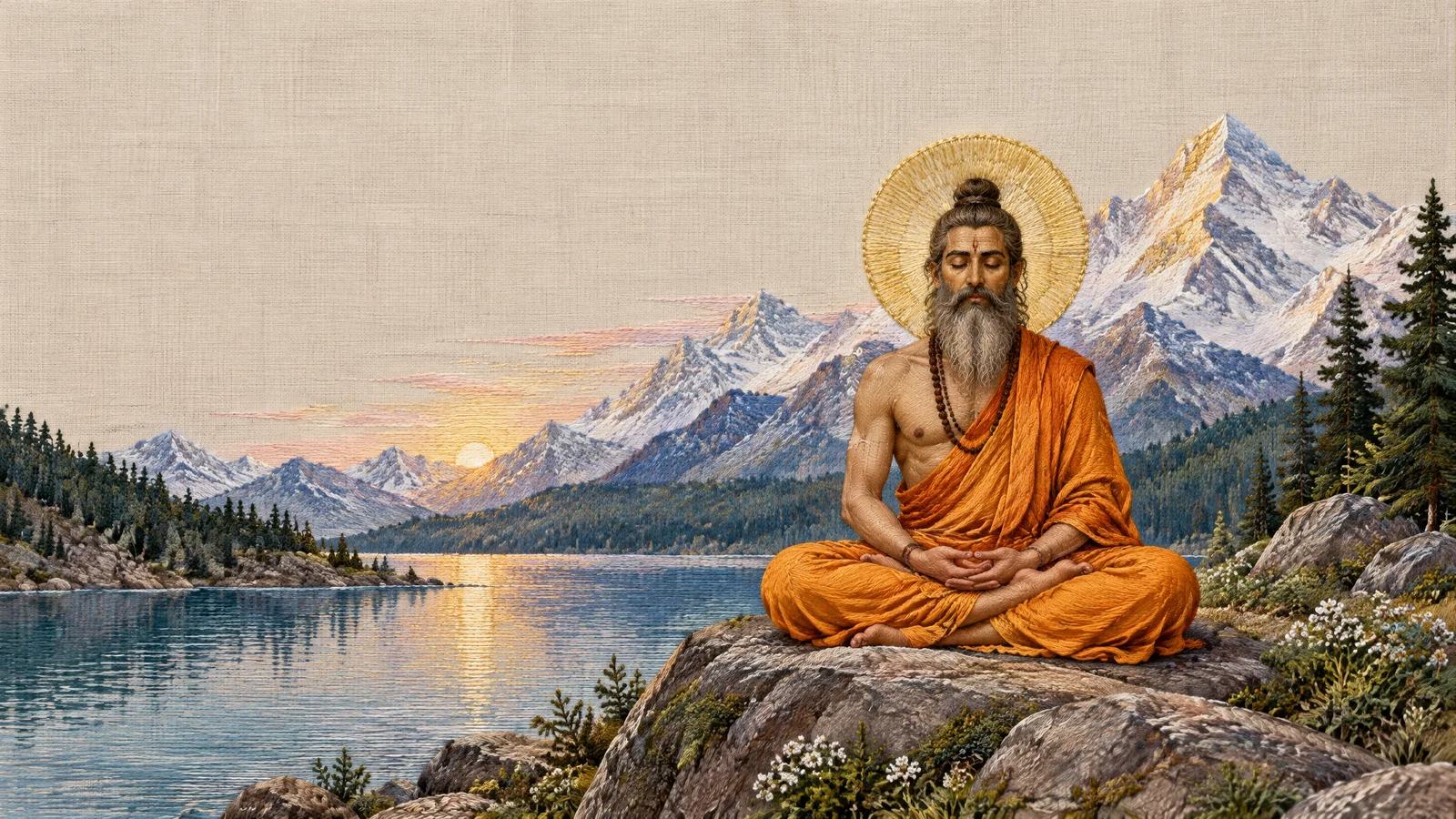
Amarnath Holy Cave
The Himalayan Ice Lingam of Immortality
The Amarnath Cave, where Shiva revealed the secret of immortality to Parvati, and where a natural ice Lingam forms each year high in the Kashmir Himalayas.
The Revelation of Eternal Consciousness
According to the Nilamata Purana and Bhrigu Samhita, Maa Parvati once asked Bhagwan Shiva why He wears a garland of skulls (Mundamala) and remains deathless while all creation undergoes birth and dissolution. Mahadeva agreed to impart the supreme secret of immortality (Amar Katha).
Shiva sought a place so remote and pure that no mortal being could overhear the cosmic truth. He journeyed into the high glaciated Himalayas, shedding His sacred emblems along the way: Nandi at Pahalgam, the Moon at Chandanwari, snakes at Sheshnag, and Ganesha at Mahagunas Pass. Only then did He enter the sanctuary of the Amarnath cave.
Sacred Stations of the Amarnath Pilgrimage
The Eternal Pigeon Pair (Amar Pakshi)
Devotional lore recounts that two dove eggs hidden beneath Shiva's deer skin absorbed the vibration of the Amar Katha as Shiva spoke:
- •The pair hatched into immortal celestial pigeons who continue to inhabit the freezing cave.
- •Pilgrims crossing the icy riverbeds rejoice when catching sight of the sacred white pigeons soaring above the snowfields.
- •The pilgrimage tests physical endurance and rewards seekers with fearless detachment from death.
The Natural Formation of the Ice Lingam
The Amarnath Ice Lingam is not carved or installed; it forms on its own each year inside the cave. Water seeping through the limestone ceiling freezes drop by drop into a stalagmite that slowly rises from the cave floor. Devotees hold that the Lingam waxes with the moon through the month of Shravana. It reaches its fullest height on Shravana Purnima, the full-moon day also celebrated as Raksha Bandhan, before waning again as the lunar cycle turns. Pilgrims who time their visit to this day consider themselves fortunate to witness the Lingam at its most complete form.
Rediscovery and the Legend of Buta Malik
Devotional memory holds that sages and seers have visited the cave since ancient times. Kalhana's twelfth-century Rajatarangini already records pilgrimage to Amareshwara: in Book 1, verse 267 (1.267), it tells of the Naga Susravas, a serpent deity said still to be seen by pilgrims journeying to Amareshwara. Even so, popular tradition credits a Muslim shepherd named Buta Malik with its rediscovery in more recent centuries. According to the account, a wandering sadhu gave Buta Malik a bag of coal in gratitude for his hospitality. When the shepherd opened the bag at home, he found it filled with gold. Returning to the spot to thank the sadhu, he found no one there, only the mouth of a snow-filled cave, and within it the glistening ice Lingam. The site passed into his family's care for generations. Even today, a share of the offerings collected during the Yatra is set aside for his descendants, a living reminder that devotion at Amarnath has long crossed lines of faith.
The Pilgrimage Today
The modern Amarnath Yatra is organized each year by the Shri Amarnathji Shrine Board, constituted by an act of the Jammu and Kashmir legislature. It coordinates registration, medical camps, and route facilities for the hundreds of thousands of pilgrims who undertake the journey during the Shravana season. Two routes lead to the cave. The traditional path from Pahalgam runs roughly 46 kilometers, a gentler but longer trek through the stations described above. The steeper, shorter route from Baltal covers about 14 kilometers and can be completed in a single determined day. Both routes climb through terrain that is bitterly cold and thin of oxygen, even in midsummer. The Shrine Board issues compulsory health certificates before granting permits, a practical acknowledgment of how seriously the mountain itself is taken as part of the test of devotion.
Spiritual Significance
For pilgrims, the hardship of the climb is inseparable from the teaching at its center. Shiva chose this remote, frozen height precisely because it demanded that every listener leave behind comfort, possessions, and even companionship to receive the secret of deathlessness. The Yatra is therefore understood not merely as a visit to a shrine, but as a deliberate re-enactment of Parvati's own journey. Each hardship shed along the trail mirrors Shiva setting aside Nandi, the moon, his serpents, and the elements. What remains at the end is only the bare, attentive self, standing before the ice Lingam, ready to receive what no mortal ear was ever meant to overhear.
Sacred Chanting: Shiva Tandava Stotram
The energetic hymn composed by Ravana celebrating Mahadeva's supreme majesty:
Jata Kataha Sambhrama
Bhraman Nilimpa Nirjhari
Vilola Vichi Vallari
Viraja Mana Murdhani।
Dhagadhagaddha Gajjalal
Lalata Patta Pavake
Kishora Chandra Shekhare
Ratih Pratikshanam Mama॥
Did You Know?
Natural Waxing and Waning
The Ice Lingam naturally grows from the subterranean dripping water from May to August, reaching its peak size on the full moon day of Shravana Purnima (Raksha Bandhan).
Discovered by Buta Malik
In the 19th century, a local shepherd named Buta Malik was gifted a bag of coals by a holy sadhu which miraculously turned into pure gold, leading him to discover the holy cave.
Ice Trio
Beside the main Lingam representing Shiva, two smaller ice formations form naturally representing Maa Parvati and Lord Ganesha.
Ancient Kalhana Chronicle
The 12th-century Sanskrit historical chronicle Rajatarangini records the sacred pilgrimage to Amarnath (Amareshwara).
Shiva
More from Yoga
Connected Teachings
The same teaching, echoed across traditions