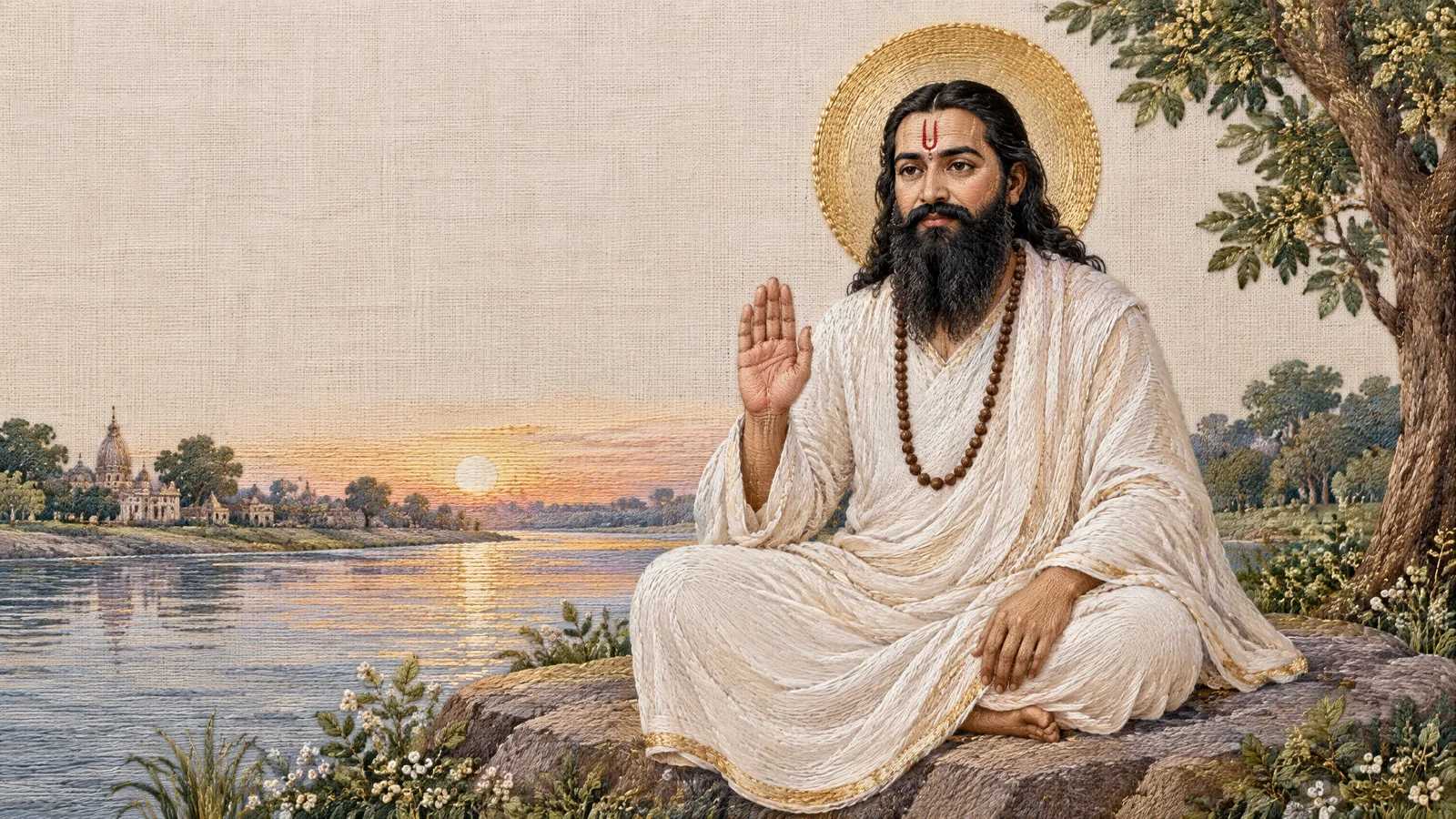
The Illusion of Separation
Bhagat Ravidas uses waves and water, gold and ornaments to teach that the soul and God are one, and that separateness is an illusion.
Verses
In the melody of Sorath, this sacred hymn is sung.
Verse 1
When I existed in ego, You were not in my awareness; now that You alone are, I am no more. As the wave arises from the ocean and merges back into it, so the soul is but water within the Water.
Verse 2
O Lord, what can be said of this wondrous illusion? It is like a person who is wholly absorbed in the Divine, just as a wave is absorbed in the sea.
Verse 3
As gold ornaments are but gold, and as water in a pitcher is one with the water of the ocean, so all creation is absorbed in the Divine. Though one may speak and speak endlessly, no one can know Brahman by words alone; only by recognizing the Sovereign Lord within does one truly know.
Verse 4
As the sun's rays deceive the thirsty deer into chasing a mirage of water, so the world wanders lost in illusion. Though one may speak and speak endlessly, no one can know Brahman by words alone; only by recognizing the Sovereign Lord within does one truly know.
Verse 5
The mind is dyed in the true color of the Sovereign Lord, like cloth steeped in the deep red of madder root—a color that never fades, unlike the false and fleeting dye of Maya.
Verse 6
Says Ravidas, when the heart is pleased with the Beloved, then like cloth, like a moth drawn to flame, like a wave merging into the sea, this body and mind are absorbed into You, O Lord.
Verse 7
Worship Guidelines & Chanting Benefits (Phalashruti)
Daily or auspicious lunar days (Ekadashi, Purnima, Pradosham)
Brahma Muhurta (4:00 AM – 6:00 AM) or Evening Dusk (Sandhya)
Ghee lamp (Deepa), Incense (Dhoopa), Fresh flowers & Water offering
- Peace of mind, spiritual upliftment, and harmonious energy in the home
Background
This shabad by Bhagat Ravidas is in Raag Sorath on Ang 657 of the Guru Granth Sahib, the central scripture of Sikhism. Ravidas was a 15th-century saint-poet of the Bhakti movement, a devotional tradition in medieval India that emphasized personal love for God. The hymn is sung and recited as a meditation on the non-dual nature of reality, reminding devotees that the divine is not separate from creation.
About this Text
Composed by: Bhagat Ravidas · Medieval Nirguna Bhakti Poet-Saint · 15th–16th century, Varanasi
A poet-saint and leather worker by trade from Varanasi, whose hymns envisioned Begampura — a utopian realm free of sorrow, fear, and caste-based inequality. His compositions are included in the Guru Granth Sahib and form the devotional core of the modern Ravidassia tradition.
Did You Know?
Author and Context
Bhagat Ravidas, a 15th-century saint-poet of the Bhakti movement who worked as a cobbler, composed this hymn in Raag Sorath. It stands at Ang 657 of the Guru Granth Sahib, and Sorath is a musical mode traditionally associated with longing and devotion.
Wave and Water Metaphor
The hymn's first image is a wave and the ocean: when the wave appears, the water seems separate, but in truth only water exists. This illustrates the non-dual idea that the individual self (the wave) has no independent existence apart from the Divine (the water).
Gold and Ornament, Pot and Water
Next, the hymn compares the relationship between God and creation to gold and an ornament made from it, or to water inside a pot and the water around it. The ornament and pot are distinct in form but identical in substance, a reminder that the world is a temporary expression of the one Divine reality.
Mirage and the Deer
The hymn then evokes a deer deceived by sunlight into chasing a mirage of water. This highlights how human beings are misled by the illusion (Maya) of the material world, mistaking the temporary for the real and failing to recognize the Divine within.
Dyeing with Madder Root
Another image speaks of dyeing cloth with madder (majith), a natural dye that gives a fast, permanent color. Likewise, when the mind is dyed in the true color of God, it becomes steadfast, unlike the fleeting attractions of Maya.
Thread, Moth and Wave
In its closing lines Ravidas speaks of his body and mind being absorbed into the Divine, using images such as a thread, a moth and a wave. This is the goal of devotion: total union with God.
Guru Ravidas Ji
More from Ravidassia
Connected Teachings
The same teaching, echoed across traditions