Dera Ballan
Heart of the Ravidassia Movement
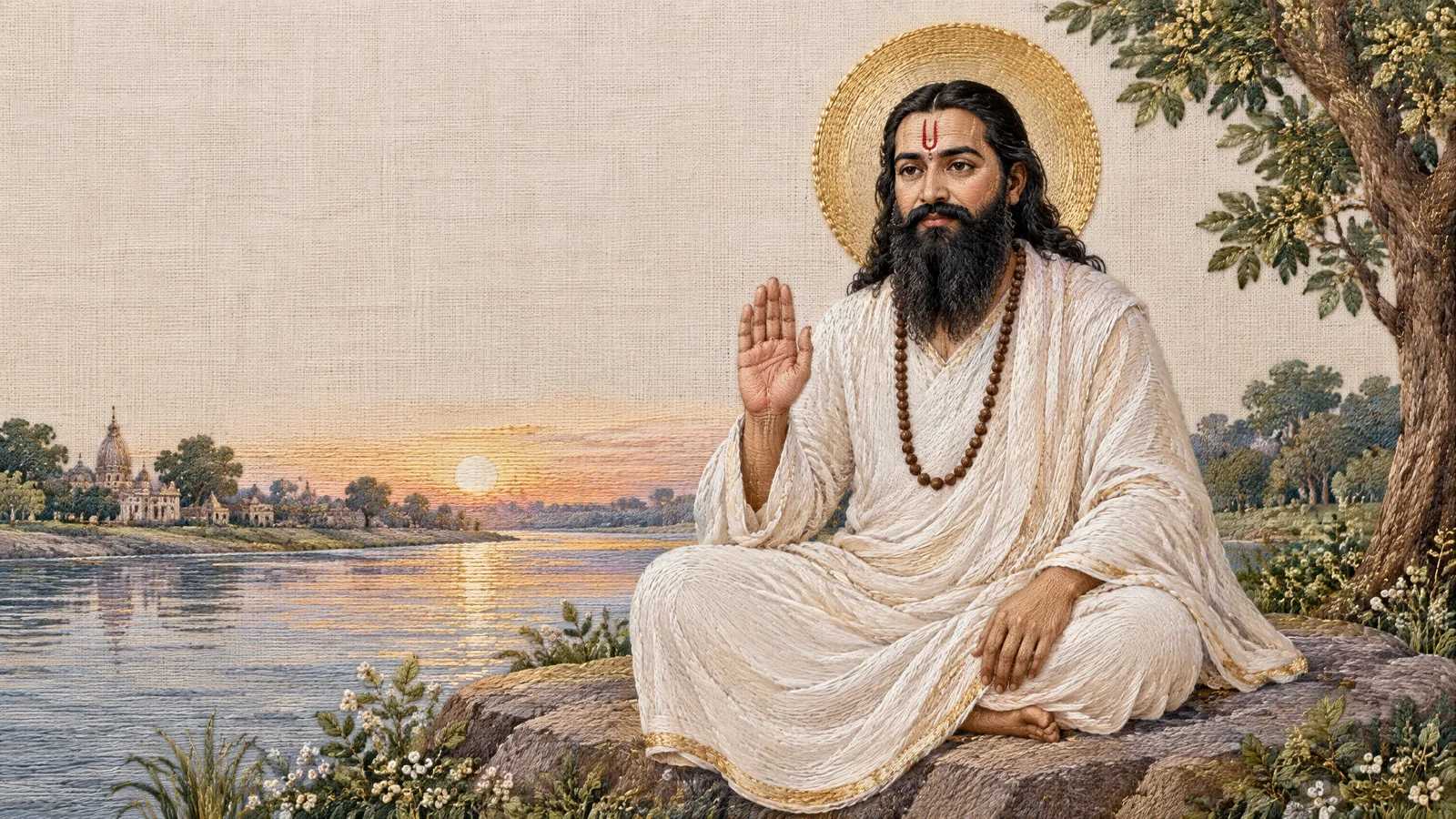
Dera Sant Sarwan Dass, known as Dera Ballan, near Jalandhar is the principal center of the Ravidassia movement and compiler of the Amritbani Guru Ravidass Ji.
A Dried Tree Revived Near Jalandhar
Around the year 1900, a wandering saint named Pipal Das, born Harnam Dass in the village of Gill Patti in Bathinda district, arrived near the village of Ballan in the Doaba belt, the fertile region of Punjab between the Beas and Sutlej rivers. There he found a dried pipal tree standing. He revived it through patient irrigation, took its renewal as an auspicious sign, and persuaded local residents to donate the surrounding land. On that ground he established what would grow into Dera Sant Sarwan Dass, known to devotees simply as Dera Ballan, devoted to spreading the teachings of the saint-poet Guru Ravidas among communities who had long been denied access to such teaching.
A Lineage of Five Sants
Pipal Das led the Dera until his passing in 1928, when his son Sant Sarwan Dass succeeded him. Sarwan Dass expanded the institution dramatically, founding Ravidas temples across the region, establishing schools, and building hospitals for those who could not otherwise afford treatment. Sant Hari Dass led from 1972 until 1982, followed by Sant Garib Dass, who established the Sarwan Dass Charitable Hospital and launched the weekly newspaper Begumpura Shaher in 1991. Sant Niranjan Dass has held the seat since 1994, overseeing the opening of the Sarwan Dass Model School in Phagwara and the Sarwan Dass Charitable Eye Hospital at Ballan.
A Partner in the Ad Dharm Movement
In the early twentieth century, the Ad Dharm movement arose to combat untouchability and build Dalit consciousness across Punjab. Its founder, Mangu Ram, visited Pipal Das directly seeking guidance on popularizing Guru Ravidas's teachings among Dalit communities. In 1932, Sant Sarwan Dass personally offered juice to Mangu Ram to break a fast he was observing in protest of a political decision affecting the community. The Dera's own history remembers this gesture as an expression of solidarity between two movements working toward the same dignity for the same people.
Compiling the Amritbani Guru Ravidass Ji
Dera Ballan's most significant institutional achievement is its role in compiling the Amritbani Guru Ravidass Ji, a collection of two hundred forty (240) hymns attributed to Guru Ravidas. Forty-one (41) of these hymns are the same compositions long preserved among the hymns of the Guru Granth Sahib, while the remaining hymns were gathered from other sources the Dera held to be authentic to Guru Ravidas's own voice. The Dera translated this compilation into languages including English, Hindi, and Punjabi to reach the growing Ravidassia diaspora across Europe and North America. This work made the Dera a bridge between Punjab's Doaba homeland and Ravidassia communities as far afield as Italy and the United Kingdom.
A Season of Grief and a New Chapter
In 2009, a religious ceremony at a Ravidas temple in Vienna was struck by a violent attack. The attack left Sant Niranjan Dass's second-in-command, Ramanand Dass, among its casualties, a loss still mourned deeply within the community. In the aftermath, on the twenty-ninth of January in 2010, Dera Sach Khand, the Dera's formal name, formally established Ravidassia Dharm as a distinct faith tradition at Seer Goverdhanpur in Varanasi, the birthplace of Guru Ravidas himself. This gave the community's long devotion to its own Guru an institutional home fully its own.
A Center for a Distinct Identity
Beyond its religious functions, Dera Ballan has played a central role in the Ravidassia community's assertion of a distinct religious identity, including the establishment of dedicated Ravidass Bhawans and temples in diaspora cities. For many Ravidassia families, connection to Dera Ballan, whether through pilgrimage, its publications, or its network of affiliated temples abroad, is a defining thread of communal life.
Why a Dera Became a Movement's Headquarters
Most sacred sites mark a single historical event, a birth, a death, a vision, and remain primarily places of pilgrimage memory. Dera Ballan's significance grew differently, through an unbroken chain of five Sants each adding an institution the last one had not yet built, a hospital here, a school there, a scripture compiled, a newspaper launched. What began as one revived tree and a plot of donated land became, across five successive leaders and well over a century, the organizing center of an entire community's religious, educational, and charitable life. This transformation was achieved less through any single dramatic moment than through sustained institution-building across generations.
Why the Amritbani Needed Both Continuity and Independence
The compilation's structure, forty-one hymns already familiar from the Guru Granth Sahib joined to additional hymns gathered from elsewhere, reflects the delicate position Dera Ballan occupied for most of its history. The familiar hymns maintained an unbroken continuity with devotional practice the community had always known, while the additional material allowed the compilation to stand as something more than an extract, a scripture capable of representing Guru Ravidas's teaching in its own right. This balance between honoring what came before and building something distinctly the community's own runs through nearly every chapter of the Dera's history, from Pipal Das's first donated plot of land to the founding of Ravidassia Dharm itself.
Did You Know?
Dera Ballan's translation work is why the Amritbani exists today in German and Italian editions — a direct response to the size of the Ravidassia diaspora in those countries.
The Dera's Sant lineage has historically played a key role in encouraging Ravidassia communities to build independent Ravidass Bhawans rather than sharing gurdwara space, reinforcing a distinct communal identity.
Doaba, the region surrounding Jalandhar, remains the demographic heartland of the Ravidassia community in Punjab, with the largest concentration of Ravidassia families anywhere in India.
Guru Ravidas Ji
More from Ravidassia
Connected Teachings
The same teaching, echoed across traditions